Wailuku: The Cultural Heartbeat of Maui
Discover the authentic soul of Maui beyond the resorts

Written by a Local Expert
Jade KawanuiMost visitors land at Kahului Airport and immediately turn south toward the resorts of Wailea or west to the beaches of Kāʻanapali. They're chasing the postcard, but they're missing the story. For me, and for so many who call this island home, that story lives in Wailuku. It's not our resort town; it's our hometown, the true soul of Maui.
Picture this: sunrise breaking over Haleakalā crater while the iron-rich mud squishes like chocolate cake beneath my hiking boots. That's been my morning routine since I was keiki, growing up in the upcountry slopes of Makawao. But when I need to feel the real pulse of this island, when I want to remember why I could never leave this rock, I head down to Wailuku.
Wailuku is where the past isn't just remembered; it's alive in the charming wooden storefronts, in the recipes passed down through generations, and in the powerful presence of the West Maui Mountains that cradle the town.
Wailuku sits at the unique intersection of Maui's history and its vibrant present. As the county seat, it's the center of our island's government, but its significance runs far deeper. This is where Hawaiian kings once ruled, where pivotal battles shaped the course of Hawaiian history, and where waves of immigrants laid the foundations of our modern, multicultural community. Today, that legacy blossoms in a thriving hub for local arts, family-run eateries, and authentic culture that you won't find anywhere else on the island.
In this exploration, I'm going to take you beyond the surface. We'll walk the streets where Hawaiian royalty held court, feel the spiritual energy of the sacred ʻĪao Valley, and discover the family-run bakeries that have fed our community for nearly a century. I'll share my secrets for the best plate lunch, the most moving historical sites, and the most unique shops. And for those of you planning a grander Hawaiian adventure, I'll even show you how to weave this authentic Maui experience into a multi-island journey that captures the full spectrum of what our islands have to offer.
The Heart of Maui: A Deep Dive into Wailuku's History & Culture
To truly appreciate Wailuku, you have to understand its stories. The town's name itself, Wailuku, translates to "waters of destruction," a powerful name that hints at both the life-giving streams flowing from the mountains and the area's turbulent history. This history is layered, and you can feel each chapter as you walk through its streets.
Wailuku's Name and Ancient Power
The name Wailuku is inextricably linked to the 1790 Battle of Kepaniwai, one of the most significant and brutal battles in Hawaiian history. Fought in the lush ʻĪao Valley just beyond the town, this is where King Kamehameha I of Hawaiʻi Island defeated the forces of Maui's army. The battle was so fierce it was said that the bodies of the fallen dammed the ʻĪao Stream, giving the site its name, Kepaniwai, or "the damming of the waters". This victory was a critical step in Kamehameha's campaign to unify the Hawaiian Islands under a single rule.
Long before this battle, however, the area was a center of power for Maui's ruling chiefs, the aliʻi. ʻĪao Valley was considered a sacred burial ground, a place where the bones, and therefore the spiritual power, or mana, of the highest royalty were laid to rest in secret locations. This deep spiritual significance established Wailuku as a place of immense cultural importance from its earliest days.
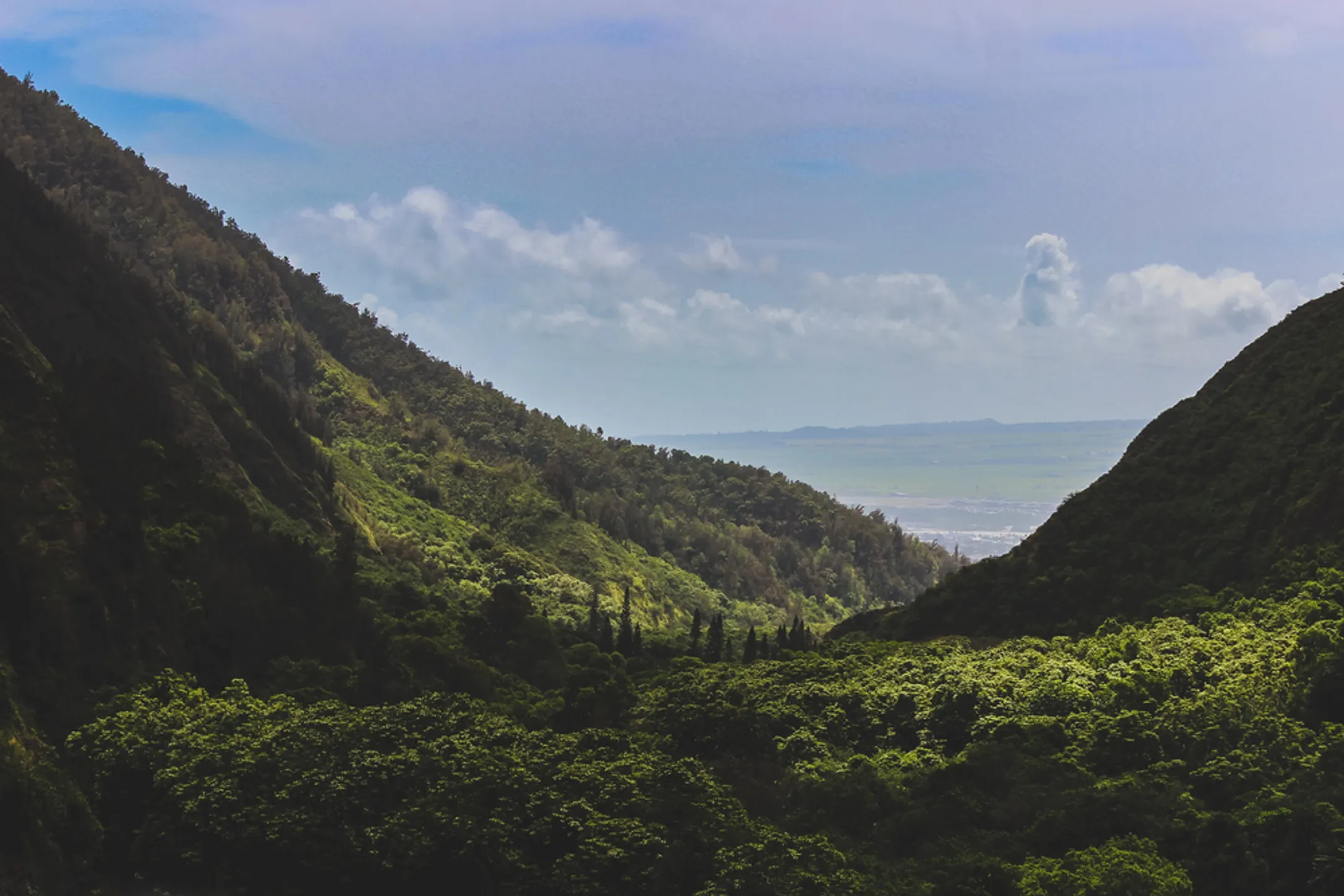
When I photograph the mist rolling through ʻĪao Valley at dawn, I'm capturing more than just light and shadow. I'm documenting the same sacred energy that has drawn people to this place for over a thousand years. The valley doesn't just look powerful; it feels powerful.
The Great Transformation: Missionaries and Sugar
In the mid-1800s, the arrival of New England missionaries brought irrevocable change to Wailuku, introducing Western culture, religion, and architecture. This period gave rise to some of the town's most enduring landmarks, including the stately Kaʻahumanu Church. Named for Queen Kaʻahumanu, the favorite wife of Kamehameha I who embraced Christianity, the current structure dates back to 1876 and remains a cornerstone of the community.
Following the missionaries came the sugar boom. By the 1860s, the Wailuku Sugar Company, owned by C. Brewer & Co., began transforming the vast central plains of Maui into a sea of sugarcane. This agricultural revolution required a massive labor force, which led to one of the most important developments in Maui's history: the immigration of thousands of workers from around the globe.
People from China, Japan, Korea, the Philippines, Portugal, and other parts of Europe and America arrived to work in the fields and mills. They settled in and around Wailuku, bringing with them their distinct cultures, foods, and traditions, creating the rich, multicultural tapestry that defines the town to this day. When you eat at a local restaurant in Wailuku today, you are often tasting a direct result of the economic and social forces that shaped Maui over 150 years ago.
The diverse flavors found in the town's eateries are a living legacy of the sugar industry's global labor demands. Every time I host a food tour through Wailuku's streets, I'm sharing stories that began in those plantation camps more than a century ago.
The County Seat and Golden Age
In 1905, Wailuku was officially designated the County Seat of Maui, cementing its role as the island's administrative and commercial center. This kicked off a "golden age" for the town. It became a bustling hub of government, business, and entertainment. Grand civic buildings were constructed, and the streets came alive with hotels, markets, and theaters, including the magnificent ʻĪao Theater, which hosted vaudeville acts and movies.
You can still feel these layers of history today. When I walk down Vineyard Street with my camera, hunting for that perfect golden hour shot, I see the charming old homes from the plantation era, each with its own story. It's a living museum, and the legacies of those who built this town are everywhere, from the art deco facades on Market Street to the family names that have graced the same storefronts for generations.
Explore More of Wailuku
Discover the food scene, walking tours, things to do, and practical planning tips for your visit.
ℹ️ Quick Info
- Location: Central Maui
- From Airport: 20 minutes
- Best For: Culture & Food
- Time Needed: Half to full day
- Parking: $1/hour
📍 Explore Wailuku
⭐ Top Attractions
- ʻĪao Valley State Monument
- Bailey House Museum
- ʻĪao Theater
- Market Street Murals
- Sam Sato's Restaurant
ʻĪao Valley State Monument: A Sacred Place Beyond the Scenery
Just a few minutes' drive from the heart of Wailuku lies one of the most sacred and visually stunning places in all of Hawaiʻi: ʻĪao Valley State Monument. To visit is to step into a world of towering green cliffs, the gentle rush of flowing water, and a palpable sense of spiritual power. But to truly experience it, you must understand that it is far more than just a beautiful park.
[Image Placeholder: ʻĪao Needle rising from lush valley with morning mist - aerial or elevated perspective showing the dramatic scale and sacred nature of the valley]
Understanding the Sacred
The profound spiritual importance of ʻĪao Valley is the key to appreciating it. For centuries, it was a sacred burial ground for Maui's highest chiefs, a place where their mana was protected within the valley's steep, inaccessible cliffs. The valley was also known as a puʻuhonua, a place of refuge where those who had broken a sacred law, or kapu, could seek sanctuary in times of war.
The valley's most iconic feature, the 1,200-foot ʻĪao Needle (Kūkaʻemoku), is not merely a geological curiosity. This emerald-draped pinnacle, an erosional remnant of the West Maui Mountains, holds deep cultural significance as the phallic stone of Kanaloa, the Hawaiian god of the ocean and the underworld. It stands as a powerful symbol of life and creation.
Understanding this context transforms a visit from simple sightseeing into a respectful pilgrimage. Every time I bring my photography clients here, I make sure they understand they're not just capturing pretty pictures. They're documenting one of the most sacred sites in Hawaiian culture.
Navigating the Reservation System
To protect this fragile and sacred environment, the State of Hawaiʻi has implemented a mandatory reservation system for all non-resident visitors. In a way, this modern system serves a purpose similar to the traditional kapu that once governed access to sacred sites. By limiting the number of visitors, it helps preserve the valley's natural and spiritual integrity.
Participating in this system is not just a logistical step; it's an act of mālama ʻāina (caring for the land) and a way to show respect for Hawaiian culture.
Reservation Details
- Website: All reservations must be made online in advance at gostateparks.hawaii.gov
- Fees: $5 per person entrance fee + $10 per vehicle parking fee (children 3 and under free)
- Booking Window: Up to 30 days in advance - book early during peak season
- Arrival: Must arrive within first 30 minutes of your reservation time slot
My Tips for the Best Visit
As someone who's been hiking these trails since I was bombing down Haleakalā on my bike before sunrise, my number one tip is to book the earliest possible time slot, ideally before 10:00 AM. The morning light filtering into the valley is breathtaking, the air is cool and crisp, and you'll experience a sense of tranquility before the larger crowds and tour buses arrive.
Furthermore, clouds often gather around the Needle in the afternoon, so an early visit gives you the best chance for an unobstructed, picture-perfect view. Trust me on this one—I've photographed this valley in every possible light condition.
Once inside, you'll find well-maintained, paved pathways. The main ʻĪao Needle Lookout Trail is a 0.6-mile walk that includes a climb of over 100 steps to a viewing platform, offering the classic, stunning vista of Kūkaʻemoku and the surrounding valley. Don't miss the short Ethnobotanical Loop near the entrance. This gentle walk takes you through a garden showcasing "canoe plants"—the essential plants like taro (kalo) and breadfruit (ʻulu) that were brought to Hawaiʻi by the first Polynesian voyagers.
A final note on safety and respect: You will almost certainly see local kids jumping from the bridge into the stream below. While it looks like fun, I strongly advise against swimming here. The rocks are notoriously slippery, and this valley is prone to dangerous flash floods that can occur with little warning, even if it's not raining where you are.
The most profound way to show respect for this sacred place is to stay on the marked trails, pack out everything you bring in, and take a moment in silence to appreciate the powerful spirit of the valley.