The Journey to the Overlook
A complete trail experience from Hulopoe Beach to Sweetheart Rock

Written by a Local Cultural Guide
Kalani MillerStarting at Hulopoe Beach: Paradise Begins Here
Starting at Hulopoe Beach feels like stepping into paradise. The soft white sand stretches along crystal-clear waters that are protected as a marine life conservation district. I always tell visitors to take a moment here before beginning the hike. Watch for the spinner dolphins that often play just offshore, their graceful leaps creating rings of silver spray in the morning light.
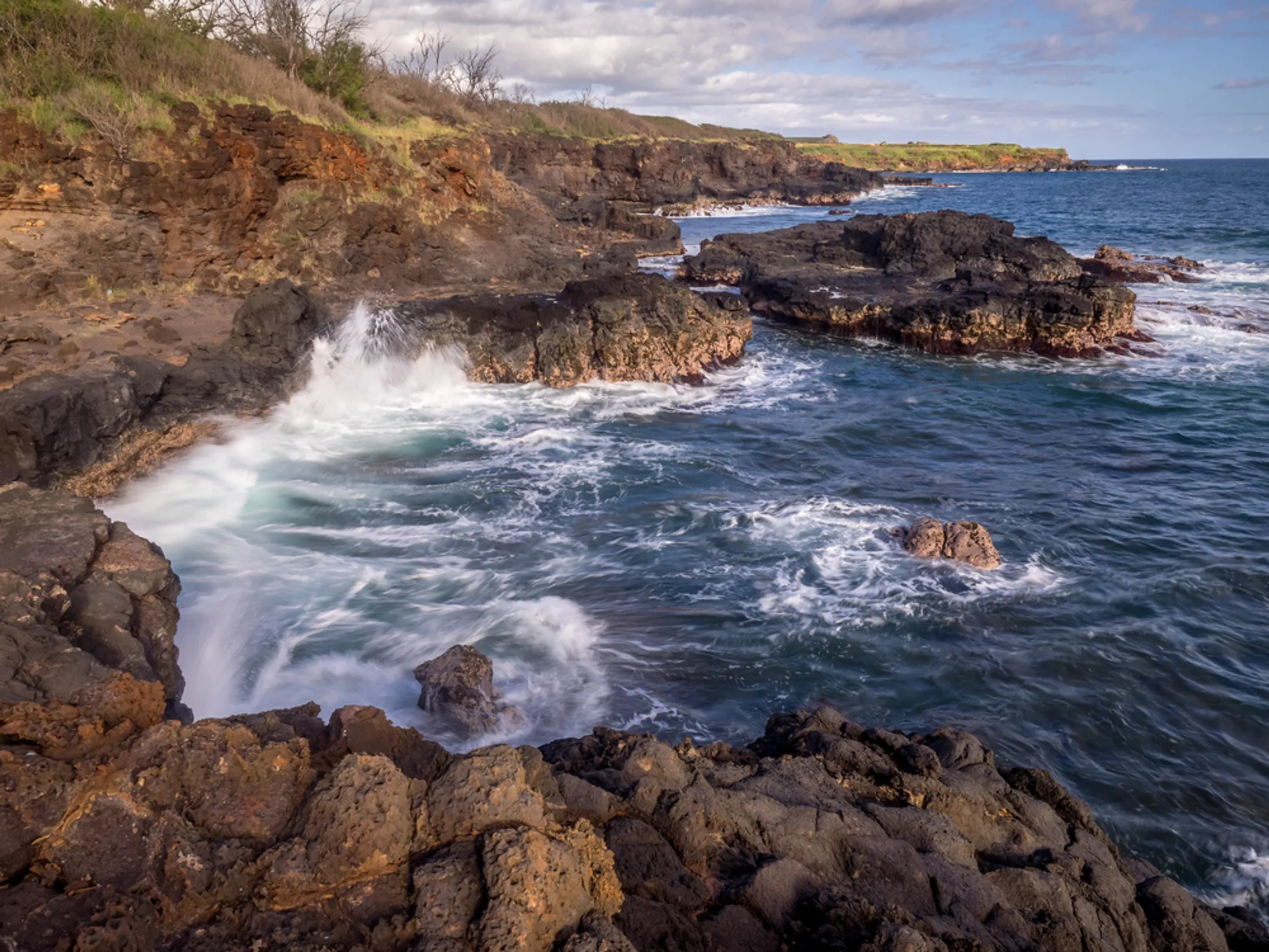
The trail begins at the southern edge of the beach, clearly marked and easy to follow. As you leave the sand behind, you'll walk along the rocky red lava coastline that gives this part of Lānaʻi its distinctive character. The path is well-defined but uneven in places, winding through native vegetation and offering constant views of the sparkling ocean.
About 200 yards into the hike, don't miss the tide pools on your right. A wooden staircase provides easy access to this fascinating underwater world. If you're hiking at low tide, these pools reveal a miniature universe of sea anemones, hermit crabs, and colorful fish trapped in the volcanic rock basins.
The Trail Experience: Step by Step
The trail continues along the coastline, and the footing remains manageable in sturdy sandals or walking shoes. I've made this hike in my rubber slippers plenty of times, though I recommend proper footwear for the final climb to the overlook.
The magic moment comes about a third of a mile into the hike when the trail makes a distinct turn inland. Suddenly, dramatically, Puʻu Pehe reveals itself rising from the ocean like something from a dream. The first sight of this 80-foot sea stack never fails to take my breath away, no matter how many times I've seen it.
From this point, the trail climbs more steeply toward the main overlook. It's not a difficult ascent, but it requires more attention to footing as you navigate the volcanic rock. The effort is worth every step. When you reach the clifftop viewpoint, you'll stand directly across from the legendary sea stack with unobstructed views of one of Hawaii's most photographed landmarks.
Beyond the Main Overlook: Hidden Perspectives
For those seeking adventure beyond the main overlook, smaller paths lead down toward sea level. Here you can discover intimate sea caves and natural arches called puka that create perfect frames for creative photography. The lower vantage points offer a completely different perspective on Puʻu Pehe and reveal details of the coastline that aren't visible from above.
| Feature | Detail |
|---|---|
| Trail Name | Puʻu Pehe Trail (Sweetheart Rock Trail) |
| Location | South Shore, Lānaʻi (between Manele & Hulopoe Bays) |
| Starting Point | Southern/Eastern edge of Hulopoe Beach |
| Total Distance | 0.9 miles (1.4 km) out-and-back |
| Hiking Time | 45-60 minutes round-trip (15-30 minutes one-way) |
| Elevation Gain | 50-134 feet (15-41 meters) |
| Difficulty | Beginner / Easy |
| Best For | Sunrises, sunsets, coastal views, photography, wildlife |
| What to Bring | Water, camera, sturdy footwear, sun protection |
🥾 Trail Stats
- Distance: 0.9 miles RT
- Time: 45-60 minutes
- Elevation: 50-134 feet
- Difficulty: Easy/Beginner
📖 Page Sections
⭐ Trail Highlights
- Tide pools with marine life
- Dramatic first view of sea stack
- Main clifftop overlook
- Sea caves & natural arches
Kuleana: Hiking with Respect, Safety, and Awareness
The Hawaiian concept of kuleana means responsibility and stewardship, and nowhere is this more important than at Puʻu Pehe. This isn't just a scenic walk. It's a journey through sacred space that demands our care and respect.
Cliff Safety: Your Life Depends on It
The cliff edges at the overlook are unstable, unfenced, and extremely dangerous. The volcanic rock crumbles easily, and the terrain slopes downward toward the precipice in ways that can deceive the eye. I've seen too many visitors approach the edge for dramatic photos without understanding the very real risk they're taking.
The loose rocks and weathered lava can give way without warning. A simple slip or stumble that might be harmless on level ground can become fatal near these cliffs. Please resist the urge to get that perfect edge shot. The views are spectacular from safe distances, and no photograph is worth your life.
Strong trade winds are common along this exposed coastline, and they can easily knock someone off balance. What feels like a gentle breeze at the trailhead can become a powerful force on the open clifftops. Always maintain a safe distance from the edge and be aware of changing weather conditions.
Ecological Responsibility: Protecting the ʻUaʻu kani
The area along the Puʻu Pehe trail serves as critical nesting habitat for the native Wedge-tailed Shearwater, known in Hawaiian as ʻuaʻu kani. These protected seabirds dig burrows directly into the ground beside the path, often in spots that look like ordinary dirt to passing hikers.
Stepping off the marked trail, even briefly, can crush these hidden nests and destroy eggs or kill young birds inside. The damage is immediate and irreversible. What might seem like a harmless detour for a photo or a bathroom break can actually be an act of ecological destruction.
⚠️ Critical Rules
- • Stay on marked trails at all times
- • No dogs allowed in conservation district
- • Keep noise levels down near burrows
- • Never approach or disturb seabirds
- • Maintain safe distance from cliff edges
✅ Best Practices
- • Pack out all trash and waste
- • Use reef-safe sunscreen only
- • Respect cultural sites you pass
- • Share conservation knowledge
- • Report injured wildlife to authorities
This is why dogs are prohibited within the Mānele-Hulopoʻe Marine Life Conservation District. Even well-behaved pets can disturb nesting birds or damage burrows. The seemingly easy nature of this hike can lead to complacency, but the stakes for wildlife are incredibly high.
Cultural Respect: Honoring the Past
Remember that you're walking through the historic landscape of Kapihaʻā Village, where Native Hawaiians lived and thrived for hundreds of years. The islet itself is both a sacred place in Hawaiian tradition and a protected State Seabird Sanctuary.
It is a federal offense to attempt to climb or access Puʻu Pehe itself. Beyond the legal consequences, such actions represent profound disrespect for both the cultural significance of the site and the fragile ecosystem it supports. The rock is meant to be observed and appreciated from the overlook, not conquered or touched.
Treat this place with the same reverence you would show any sacred site. Keep voices low, pack out all trash, and leave no trace of your visit except footprints on the designated trail.