A Visitor's Definitive Guide to Pohoiki Today
Part III: How to Visit Safely and Respectfully

Written by a Local Expert
Kalani MillerPart III: A Visitor's Definitive Guide to Pohoiki Today
Visiting Pohoiki is an unforgettable experience. But it requires planning and awareness. The setting is new, the infrastructure is still recovering, and nature here demands respect. This guide provides the most current, practical information to ensure your visit is safe and memorable.
Getting There: Navigating the New Puna
The 2018 eruption completely rerouted access to this part of the Puna coast. Old maps and many GPS systems are wrong. Do not follow directions that take you down Pohoiki Road from Pāhoa or along Highway 132. These routes were severed by the lava flow.
The only way to reach Isaac Hale Beach Park is via Highway 137 (the Kapoho-Kalapana Road, also known as the "Red Road").
🚗 From Hilo (26 miles)
Take Highway 11 south toward Keaʻau. Take the exit for Highway 130 toward Pāhoa. Continue on Hwy 130 all the way to its end, where it T-intersects with Highway 137. Turn right onto Hwy 137 and follow it to the park entrance on the left.
🌴 From Kona (100+ miles)
Take Highway 11 south, driving past Hawaiʻi Volcanoes National Park. Continue on Hwy 11 toward Keaʻau/Pāhoa and follow the directions above.
Road Construction Update: As of early 2025, major road reconstruction projects are underway on both Highway 137 and Pohoiki Road. Completion is projected for 2026. While access to the park is maintained, be prepared for construction activity and potential delays.
Isaac Kepoʻokalani Hale Beach Park: What to Expect
To make your visit easier, here is a summary of the park's current status and facilities:
The New Black Sand Beach: A Walk on Young Earth
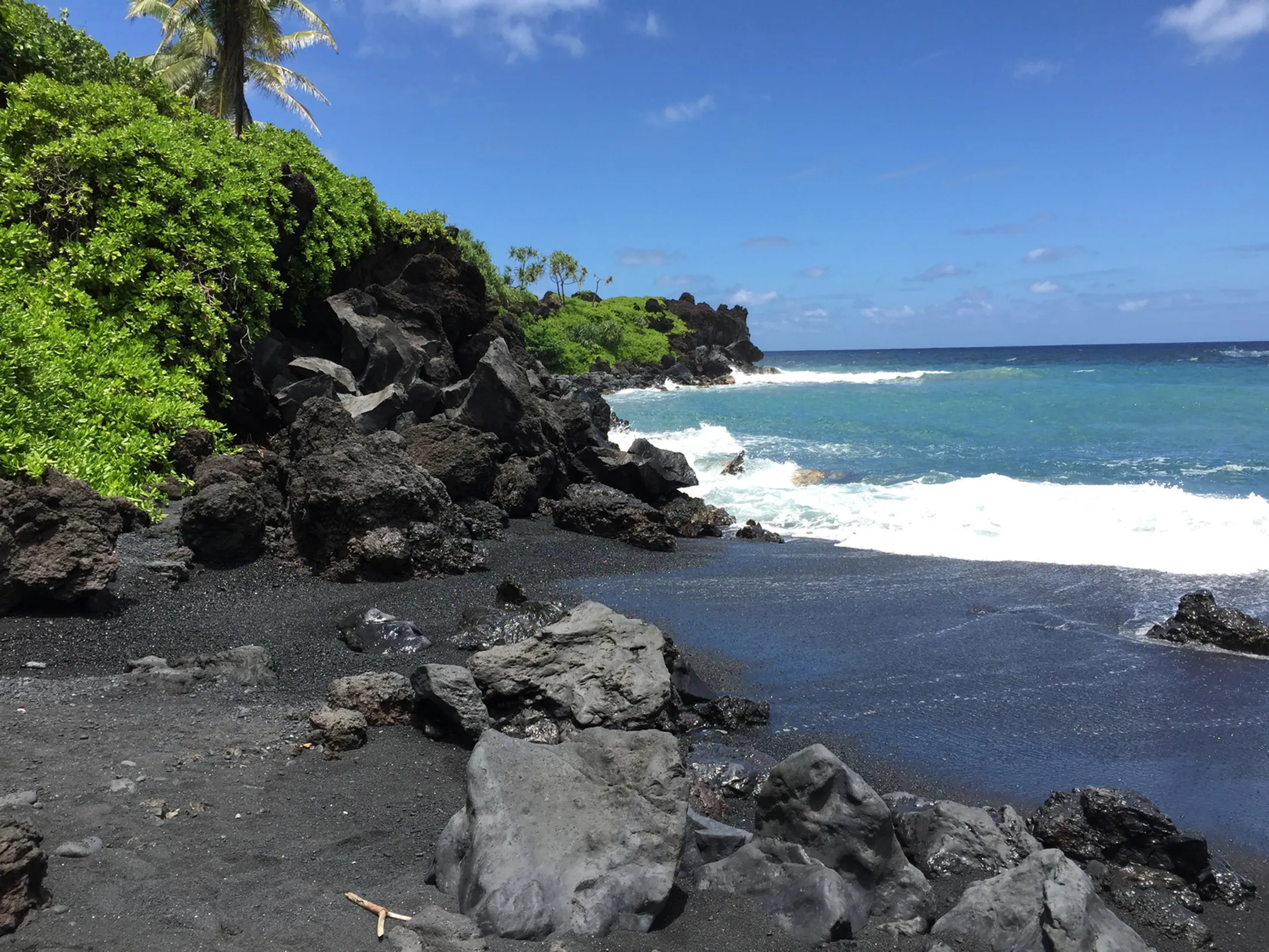
The first thing that strikes you about the new beach is the sand itself. It's not the soft, powdery sand of a white sand beach. It's coarse, almost like fine gravel in places. It crunches under your feet. Look closely, and you'll see it sparkle with tiny, green crystals of olivine. A mineral common in Hawaiian lava, sometimes called "Pele's diamonds."
⚠️ Critical Swimming Warning
As beautiful as it is, this beach must be approached with extreme caution. The eruption buried the protective offshore reefs that once broke up wave energy. Now, powerful ocean swells crash directly onto the shoreline. They create a dangerous shore break and strong, unpredictable currents.
Since the park reopened, lifeguard rescues have increased from fewer than 20 a year to nearly 100 in the first year alone. This is not a safe swimming beach for most people. Especially children and inexperienced ocean-goers. Always speak with the lifeguards on duty before even considering entering the water.
The Pohoiki Thermal Ponds: An In-Depth Analysis
One of the most alluring features of the new Pohoiki are the thermal ponds that formed in low-lying areas. They are warmed by geothermal heat. There are several ponds. A large one in the basin of the now-landlocked boat ramp. A few smaller, hotter, and more secluded pools nestled against the jungle.
The Science of the Heat
A fascinating aspect of these ponds is that they actually got hotter over time. For nearly two years after the eruption, the ponds were pleasantly warm. Around body temperature (98.6°F or 37°C). Then, in mid-2020, their temperature began to rise significantly. They now consistently measure between 100°F and 106°F (38°C to 41°C).
Scientific analysis suggests a delayed reaction to the eruption. The 2018 magma intrusion added a massive amount of heat to the deep, brackish aquifer that feeds these springs. It took about two years for this thermal pulse to conduct through the groundwater and finally reach the surface. This raised the temperature of the ponds to their current, hot-tub-like state.
Water Quality and Critical Health Risks
While the idea of a natural hot spring is tempting, I cannot stress this enough: you must be aware of the serious health risks. This is perhaps the most critical piece of information for any visitor.
The official sign posted by the county and the Department of Health (DOH) is clear: "Enter at own risk. This natural thermal ocean pond is not disinfected. Do not enter if you have open wounds due to risk of bacterial infections."
This is not an idle warning. The water in these ponds is brackish (a mix of fresh and salt water) and has limited circulation. This creates a potential breeding ground for bacteria. There are numerous, credible firsthand accounts from locals and visitors on forums like Reddit who have contracted serious infections after soaking in these ponds. Including staph and even necrotizing fasciitis (flesh-eating bacteria). Unlike designated swimming beaches, there is no regular, official water quality testing program for these ponds that is made public.
The allure of these ponds is undeniable. But they represent a dichotomy: a potential paradise that could also be a petri dish. The decision to enter is a personal one. But it should be made with full knowledge of the potential consequences.
Boat Ramp Pond
- • Temperature: ~100°F
- • Bacterial infection risk
- • Stagnant brackish water
- • Enter at own risk
- • No open wounds
- • Will be removed during 2025 dredging
Jungle Ponds
- • Temperature: 100-106°F
- • Higher risk (smaller, enclosed)
- • Bacterial infection risk
- • Enter at own risk
- • No open wounds
- • Recent tree clearing altered ambiance
📖 Complete Guide
📋 Essential Info
- Bring water
None available at park
- Check road conditions
Construction ongoing
- Speak with lifeguards
About current conditions
- Avoid 3rd Thursday
Monthly maintenance closure
🚨 Safety Reminders
Swimming
Dangerous conditions, strong currents
Thermal Ponds
Bacterial infection risk
Black Sand
Gets extremely hot in sun