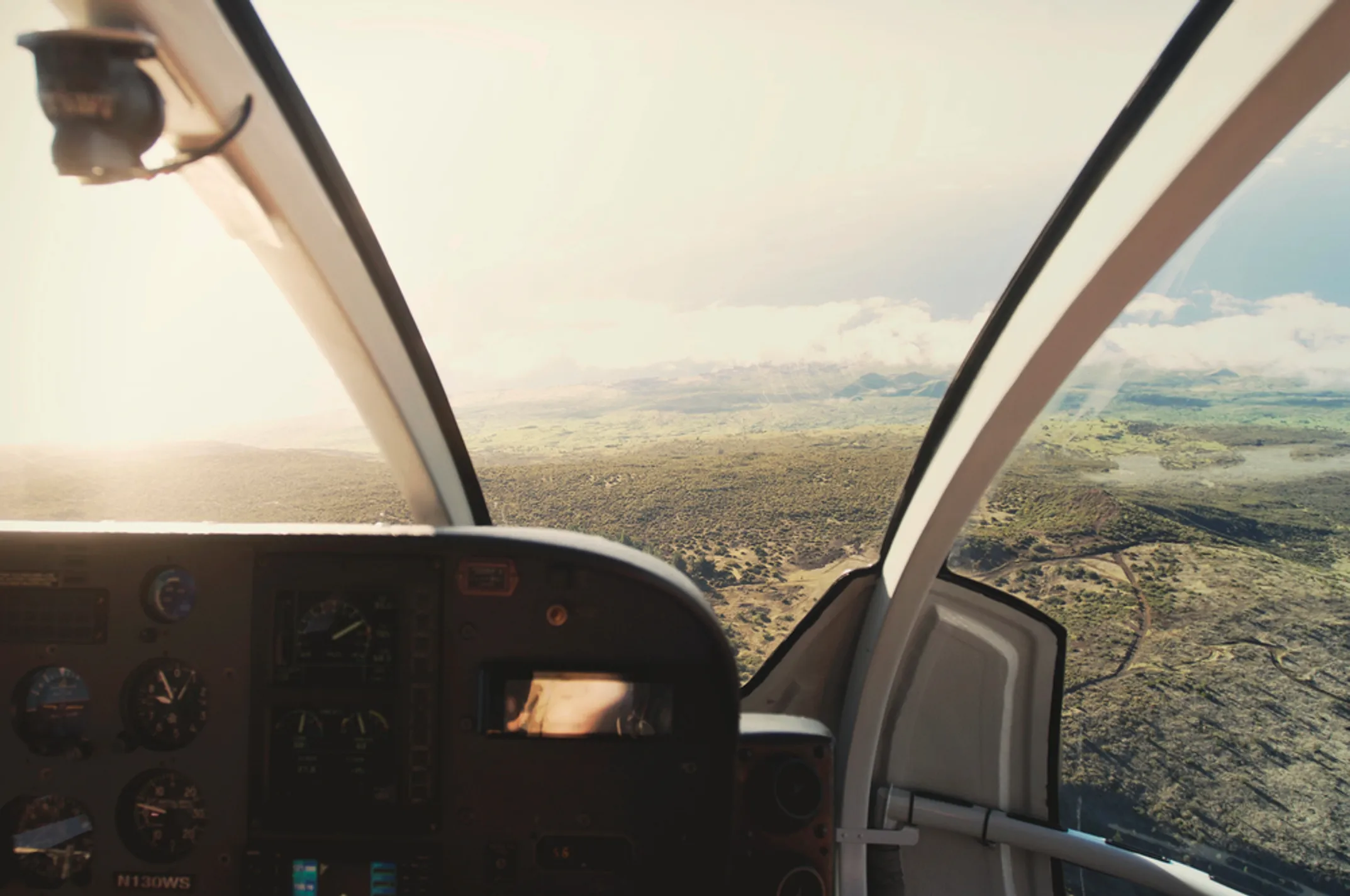
Beyond the Helicopter: Other Ways to Soar Over Maui
Parasailing, biplane, and glider—different thrills, different views

Written by a Local Expert
Jade KawanuiWhile a helicopter offers an unparalleled view of Maui's hidden interiors, there are other fantastic ways to experience the island's coastline and skies, often at a more accessible price point. These adventures offer a different kind of thrill and a unique perspective on the island's beauty.
The Thrill of the Coastline: Parasailing in Maui
If the idea of a helicopter feels a bit too intense, or if you're looking for a fun and breezy aerial adventure for the whole family, parasailing is an absolutely perfect choice. The experience is a beautiful blend of serenity and exhilaration.
After a short boat ride out from the shore, you're securely strapped into a harness, and as the boat speeds up, a giant parachute gently lifts you into the air. The takeoff is smooth and gradual. One moment you're standing on the platform at the back of the boat, and the next moment your feet leave the deck. The line plays out, and you rise higher and higher, eventually reaching heights of 500 to 800 feet above the water.
The initial rush of ascent quickly gives way to a feeling of peaceful suspension. High above the water, the sound of the boat's engine fades to a distant hum, and a surprising silence takes over. From this vantage point, you get a stunning panoramic view of the Kāʻanapali coastline, with its golden beaches and turquoise water, all set against the majestic backdrop of the West Maui Mountains.
It's a completely different experience from a helicopter tour. There's no engine noise except for the faint hum of the boat far below. No enclosed cabin. No rapid movement. Just you, the harness, the parachute, and the view. The gentle swaying motion is soothing rather than jarring. The warm sun, the cool breeze, and the expansive view create a sense of peace that's hard to describe.
You can go solo or tandem, depending on your preference and weight limits. Tandem flights are popular with couples or with a parent and child. Solo flights give you the entire experience to yourself. Some operators offer the option to get "dipped," where they bring you down close to the water's surface at the end of your flight, giving you a quick splash before reeling you back in for landing.
Logistics and Seasonal Considerations
It's important to know the logistics. Parasailing in Maui primarily operates off the famous Kāʻanapali Beach. It is a seasonal activity. To protect the migrating humpback whales that visit Hawaiian waters each winter, parasailing is not permitted during whale season, which typically runs from mid-December through mid-May. This restriction is strictly enforced and exists to prevent any disturbance to these magnificent creatures during their breeding and calving season.
If you're visiting Maui during the summer or fall months, parasailing is available and operates daily, weather permitting. The entire excursion usually lasts about an hour, with the actual flight time in the air ranging from 8 to 12 minutes. While that might sound short, when you're suspended hundreds of feet above the ocean, time takes on a different quality. The minutes feel longer, and the experience is surprisingly satisfying.
You take off and land directly from a specialized platform on the back of the boat, so you don't even have to get wet unless you choose the dip option. This makes parasailing accessible to people who might not be comfortable with extensive water activities. You don't need to know how to swim, though a basic comfort level around water is helpful.
The experience is suitable for ages roughly 6 and up, though specific age and weight restrictions vary by operator. Check with your chosen company for their specific requirements. Most operators have a minimum weight requirement and a maximum weight limit for safety reasons.
Why Parasailing Complements a Helicopter Tour
Parasailing offers a very different perspective than a helicopter. Where a helicopter tour is dynamic, covering vast distances and showing you the island's hidden interiors, parasailing is static and contemplative. You're suspended in one spot, slowly drifting as the boat motors along the coastline. You have time to really look, to soak in the details, to watch the waves breaking on the reef below.
For photographers, parasailing presents unique challenges. You're in a harness, so your range of motion is limited. The swaying motion means you need a fast shutter speed. You also need to be very careful with your equipment. Use a wrist strap on your camera at all times. Many people opt to bring a GoPro or action camera instead of a larger DSLR, as it's lighter and easier to manage in the harness.
The views you get while parasailing are beautiful but different. You see the coastline from a moderate altitude. You can pick out individual hotels, swimming pools, and beachgoers. You see the color gradations in the water, from pale turquoise near shore to deep blue offshore. You can watch other boats and surfers. It's more about observing the human activity on the coast than about exploring untouched wilderness.
Parasailing is the perfect "taste" of an aerial adventure and a fantastic way to see the coast from a new angle. It's less expensive than a helicopter tour, less time-intensive, and less physically demanding. For families with young children or mixed age groups, it can be a great option that everyone can enjoy together.
Niche Flights for the True Enthusiast
For those with a passion for aviation or anyone looking for a truly unique flying experience, Maui offers a couple of wonderful niche options that deserve mention.
You can find operators offering tours in a vintage open-cockpit biplane. This is a journey back in time, giving you a sense of what early aviation was like, complete with the wind in your hair and a classic leather helmet. The biplane experience is nostalgic and romantic. These aircraft typically date from the 1940s or are faithful reproductions of aircraft from that era. The sound of the radial engine, the sight of the fabric wings, and the feeling of the wind in your face create an experience that's fundamentally different from modern aircraft.
Biplane tours typically fly along the coast, offering views of beaches, resorts, and the ocean. The aircraft can't access the mountainous interiors that helicopters reach, but that's not the point. The experience is about the flying itself, the romance of open-cockpit aviation, and the connection to the history of flight. These tours are often shorter than helicopter tours, ranging from 15 to 30 minutes.
Alternatively, for the ultimate in peaceful flight, you can take a glider tour. With no engine, these aircraft are towed into the air by another plane and then released to soar silently on thermal updrafts. The silence is profound, broken only by the sound of the wind. It's a graceful, serene, and almost meditative way to experience the sky and the landscapes below.
Glider flights require specific wind and thermal conditions, so availability can be weather-dependent. The experience is entirely different from powered flight. Without an engine, you're at the mercy of the air currents. The pilot uses the natural rising air from thermal currents to gain altitude and stay aloft. It's a dance with the wind, requiring skill and sensitivity to the subtle movements of the aircraft.
The sensation of gliding is incredibly peaceful. There's no vibration from an engine. No noise. Just smooth, quiet flight. You hear the air rushing past the canopy and the occasional creak of the airframe, but otherwise, it's silent. For people who find the noise and vibration of helicopters or planes overwhelming, gliding offers a completely different sensory experience.
These are highly specialized experiences that offer a memorable alternative to the more common aerial tours. They appeal to aviation enthusiasts, romantics, and anyone looking for something truly different. The memories you create in an open-cockpit biplane or a silent glider will be distinct from any other flying experience.
Explore More Sections
ℹ️ Parasailing
- Season:Summer/fall (no whale season)
- Flight:8–12 min
- Height:500–800 ft