
Preparing for Your Visit: Practical Considerations
If you're planning to visit Maui and want to see the Banyan Tree from a respectful distance, here are some practical tips.
Best Times to Visit West Maui
The areas of West Maui that are open to visitors are beautiful year-round. The weather is consistently warm with occasional rain showers. The winter months (November through March) bring slightly cooler temperatures and more rain. Summer (May through September) is drier and warmer.
If you're hoping to see the Banyan Tree from the highway, morning light is beautiful for photographs. The tree's silhouette against the West Maui Mountains is particularly striking around sunrise or late afternoon.
Getting Around
Renting a car is the most flexible way to explore West Maui. The open resort areas north of Lahaina are easily accessible. Be prepared for traffic, especially during peak hours. The roads can be narrow and winding in some areas.
If you're staying in the Kāʻanapali or Kapalua resort areas, some hotels offer shuttle services to nearby shopping and dining areas.
What to Bring
☀️ Sun Protection
Bring sunscreen and reapply it often. The Hawaiian sun is intense, even on cloudy days. A hat and sunglasses will make your time outdoors more comfortable.
💧 Stay Hydrated
Bring a reusable water bottle to stay hydrated. Many businesses have water refill stations.
🌊 Reef-Safe Sunscreen
If you plan to spend time at the beach in the open areas of West Maui, bring reef-safe sunscreen. Hawaii has regulations protecting our coral reefs from harmful chemicals found in some sunscreens.
📸 Camera & Respect
Bring a camera to capture the beauty, but remember to photograph signs of life and resilience, not devastation.
Respecting the Culture
Take time to learn a few Hawaiian words beyond aloha and mahalo. Learn what they really mean. Aloha isn't just hello. It's a way of being in the world with love, compassion, and respect. Mahalo isn't just thank you. It's an expression of gratitude and appreciation.
If you visit cultural sites or attend a lūʻau, listen when the practitioners speak. They're sharing knowledge that has been passed down for generations. Show respect by being present and attentive.
Supporting Local
When you shop, look for products made in Hawaii. When you eat, choose restaurants that source ingredients locally. When you book activities, choose operators who are rooted in the community and practice responsible tourism.
Your spending choices have real impact. They determine which businesses survive and thrive. Choose the ones that treat their employees well, respect the land, and contribute positively to the community.
The Seasons of Recovery
Recovery is not a straight line. It has seasons, just like the year itself. Understanding this can help visitors approach Lahaina with appropriate expectations and sensitivity.
🌑 The Season of Grief
In the immediate aftermath of the fire, Lahaina was deep in a season of grief. The community needed space to process the trauma and loss. During this time, visitors were asked to stay away from West Maui entirely. That season was necessary and important.
🔍 The Season of Assessment
As the initial shock passed, the community entered a season of assessment. What was lost? What remained? What could be saved? This is when the Treecovery project began. This is when people started to take inventory of what rebuilding would require.
🌱 The Season of Early Recovery (Now)
Now, in late 2025, we're in a season of early recovery. Some businesses have reopened. The tree is growing new leaves. Infrastructure is being repaired. But the historic town core remains closed. The work of rebuilding has barely begun. This is a delicate season. The community is ready to welcome respectful visitors who will support local businesses. But we're not ready for crowds at the burn zone or intrusive questions about trauma.
🏗️ The Seasons to Come
There will be a season of rebuilding. That will take years. There will be a season of new growth when the town begins to take shape again. Eventually, there will be a season of renewal when Lahaina Banyan Court Park reopens and people can gather under the tree once more.
Each season requires different things from visitors. Stay informed. Respect the boundaries that exist at the time of your visit. Understand that what is appropriate today may change tomorrow.
Explore the Complete Story
Return to the beginning or explore other chapters of the Banyan Tree's journey.
📅 Best Times
- Summer: May-Sep
- Winter: Nov-Mar
- Photos: Morning light
- Weather: Year-round
🎒 What to Bring
- Reef-safe sunscreen
- Reusable water bottle
- Hat & sunglasses
- Camera
- Open heart & aloha
🌱 Current Season
Early Recovery (Late 2025)
Respectful visitors welcome in open West Maui areas
A Living Promise
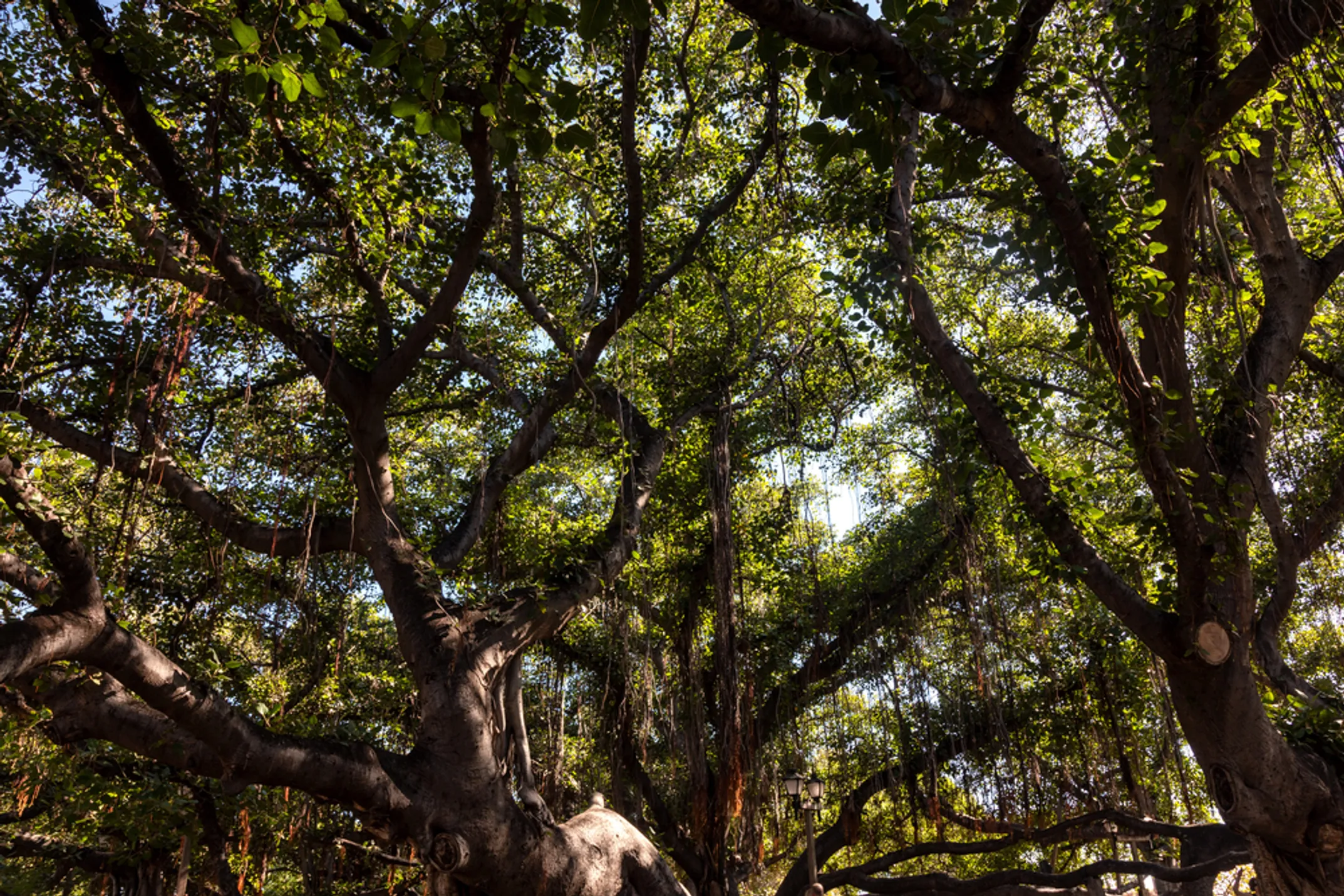
As I stand today and look towards Lahaina, I see the silhouette of our Banyan Tree against the West Maui Mountains. It is different now. Scarred, smaller, but undeniably alive. Its branches are reaching for the sun once more, covered in a canopy of brilliant green leaves that seemed impossible just a short time ago. It is a sight that fills my heart with a profound sense of hope.
The tree's journey has been extraordinary. It began as a symbol of a new and foreign influence in a rapidly changing Hawaiʻi. Over a century and a half, it was embraced and nurtured by the community. It became the cherished center of Lahaina life. It survived a catastrophic fire that took so much. In its survival, it has been reborn.
It is no longer just a tree. It is a living monument to the wiwoʻole spirit of the people of Lahaina. That word means fearless, brave, and courageous. It describes exactly what this community has shown in the face of unimaginable loss.
The Banyan Tree, with its deep roots and its determined new growth, is a promise. It is a promise that what is lost is not forgotten. That what is broken can heal. That life, in its incredible resilience, will always find a way.
It stands as a powerful assurance that Lahaina, too, will grow again. We will be nurtured by the same unwavering community spirit and boundless aloha that saved our beloved tree. It will be a long journey. But like the Banyan, our roots are deep. We will reach for the sun again.
When you visit Maui, whether you see the tree from a distance or simply hold it in your heart, remember its story. Remember that recovery takes time. Remember that community makes all the difference. Remember that even in our darkest moments, life finds a way to return.
The Lahaina Banyan Tree stands as proof that resilience is real. That hope is not naive. That love and collective care can perform miracles. As you plan your Hawaiian journey, carry that knowledge with you. Support the local businesses. Respect the boundaries. Practice aloha in its truest form.
One day, not too far from now, the park will reopen. Children will play under those branches again. Artists will display their work on the benches. Lights will twinkle during the holidays. The tree will once again be what it has always been meant to be: the living room of Lahaina, the gathering place where our community comes together.
Until that day comes, we nurture the tree and each other. We grow new leaves. We strengthen our roots. We reach for the sun. That is the way of the Banyan. That is the way of Lahaina.
A hui hou. Until we meet again under the shade of the tree.