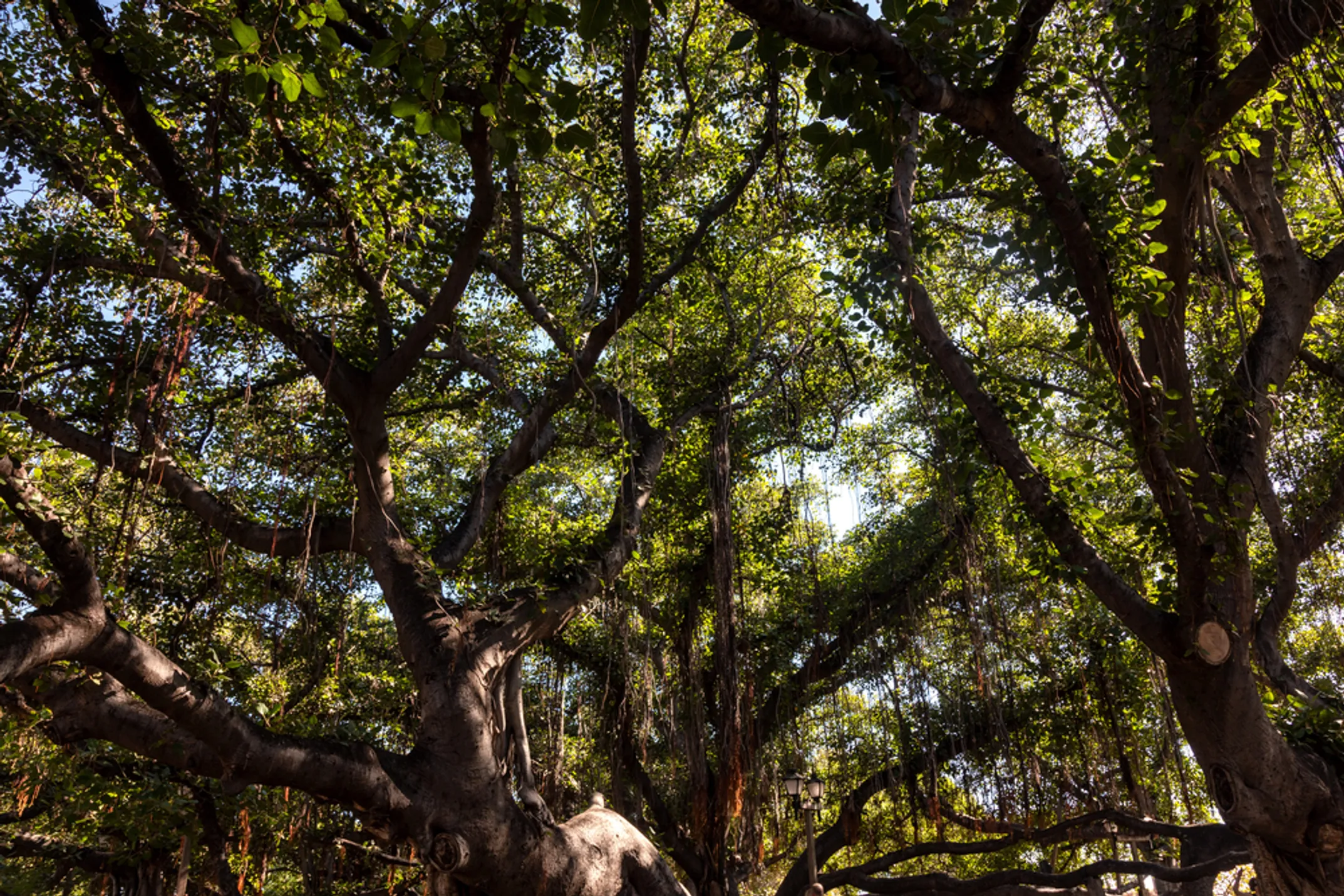

The Night of the Inferno
The night of August 8, 2023, is forever seared into the memory of Maui. As hurricane-force winds fanned the flames of a wildfire, an inferno swept through Lahaina. It consumed the historic town with terrifying speed and left unimaginable devastation in its wake. In the days that followed, as the world saw the first heartbreaking images of the destruction, a collective question hung in the smoke-filled air. What happened to the Banyan Tree?
Initial aerial photographs were grim. The once-vibrant green canopy was gone. In its place was a skeletal silhouette of blackened, leafless branches against an ashen landscape. The tree, which had stood at the heart of the community for 150 years, appeared to be another casualty of the blaze. The sight brought a fresh wave of grief to a community already reeling from the loss of life, homes, and history. It felt as though the very heart of Lahaina had stopped beating.
The tree had not been consumed by direct flames. Instead, it had been baked by the intense, superheated air from the surrounding buildings that burned like furnaces. About half of its vast network of branches was determined to have been damaged beyond recovery.
However, a closer examination by experts revealed a more nuanced situation. The tree had experienced a process called desiccation, which dried out the living tissues of the tree. The tree was severely wounded and in a state of shock. But deep within its core, there was still a chance for life. The question was whether the damage was too severe or if the tree could somehow find the strength to survive.
A Community Rallies: The Science and Spirit of Healing
What happened next was a testament to the spirit of Lahaina Strong. Even before the smoke had fully cleared, a dedicated team mobilized with a single mission: to save the tree. Arborists, landscapers, soil experts, cultural practitioners, and community volunteers came together. This effort, which became known as the "Treecovery" project, was led by experts like lead arborist Steve Nimz and Duane Sparkman, chair of the Maui County Arborist Committee.
The team treated the tree like a patient in an intensive care unit. They implemented a meticulous, science-based recovery plan. The first and most critical treatment was water. With the town's infrastructure destroyed, volunteers and local companies trucked in thousands of gallons of water each day. They doused the tree's roots and branches to rehydrate its stressed system.
To revitalize the scorched earth, soil fertility specialists brewed and applied hundreds of gallons of "compost tea." This rich, organic liquid was filled with nutrients from kelp, worm castings, and sea minerals. It was designed to reintroduce beneficial microorganisms into the soil and encourage new root growth. To help the soil breathe, crews used specialized air-excavation tools. These gently loosened the compacted ground around the tree's base, improving aeration and drainage.
To monitor the tree's internal response, the team installed more than a dozen high-tech sensors on its trunk and limbs. These devices tracked the flow of sap, or cambium. They acted as a "heart monitor" for the tree. In the early days, the readings were faint. But as the treatments continued, the tree's "heartbeat" grew steadily stronger. This provided the team with vital data and a reason for hope.
This incredible scientific effort was grounded in a deep cultural reverence. Before any work began, Kumu Kapono Kamaunu, a Hawaiian cultural practitioner who grew up in Lahaina, performed a blessing at the site. He honored the tree and the land. This act infused the recovery mission with a profound sense of aloha ʻāina—a deep love and respect for the land. It united modern science with timeless Hawaiian values.
💧 Water Treatment
Thousands of gallons trucked in daily to rehydrate the tree's stressed root system and branches.
🌱 Compost Tea
Hundreds of gallons of nutrient-rich organic liquid applied to revitalize scorched soil.
💨 Soil Aeration
Air-excavation tools loosened compacted ground to improve drainage and oxygen flow.
📊 High-Tech Monitoring
Sensors tracked sap flow as the tree's "heartbeat" grew stronger each day.
The First Green Leaves: A Symbol Reborn
For weeks, the community watched and waited. Then, in mid-September 2023, the miracle they had all been praying for appeared. Tiny, vibrant green leaves began to sprout from the blackened bark. The news spread like wildfire. A wave of collective joy and relief washed over the island. The tree was alive.
That first sign of new growth was a pivotal moment. The Banyan Tree was no longer a casualty of the fire. It was a survivor. It instantly became the most powerful and visible symbol of Lahaina's own resilience. Its ability to endure the unimaginable and begin the slow process of healing mirrored the journey of the community itself.
The tree became a living embodiment of the Lahaina Strong movement. It was a phoenix rising from the ashes that gave thousands of people hope. They could rebuild their lives and their town. The tree's survival was not just a botanical victory. It was a profound spiritual one. It demonstrated the powerful synergy that occurs when science and a community's love work in harmony to nurture life back from the brink.
As the months passed, more leaves appeared. The tree continued to show signs of recovery. Roughly half of its most severely damaged branches had to be surgically removed to promote the health of the surviving sections. The tree is visibly smaller now. But it is producing abundant new leaves and even fruit. Every new branch, every fresh leaf is a testament to life's determination to continue.
Continue the Journey
Learn how to visit this symbol of hope with respect and discover how you can support Lahaina's recovery.
📈 Recovery Stats
- Fire Date: Aug 8, 2023
- First Leaves: Sep 2023
- Damage: ~50% branches
- Current Status: Thriving
👥 Treecovery Team
- Arborists
- Soil experts
- Cultural practitioners
- Community volunteers