Snorkeling Guide
Your guide to swimming with honu and exploring the underwater world

Written by a Local Expert
Kalani MillerMeeting the Honu - A Guide to Respectful Turtle Encounters
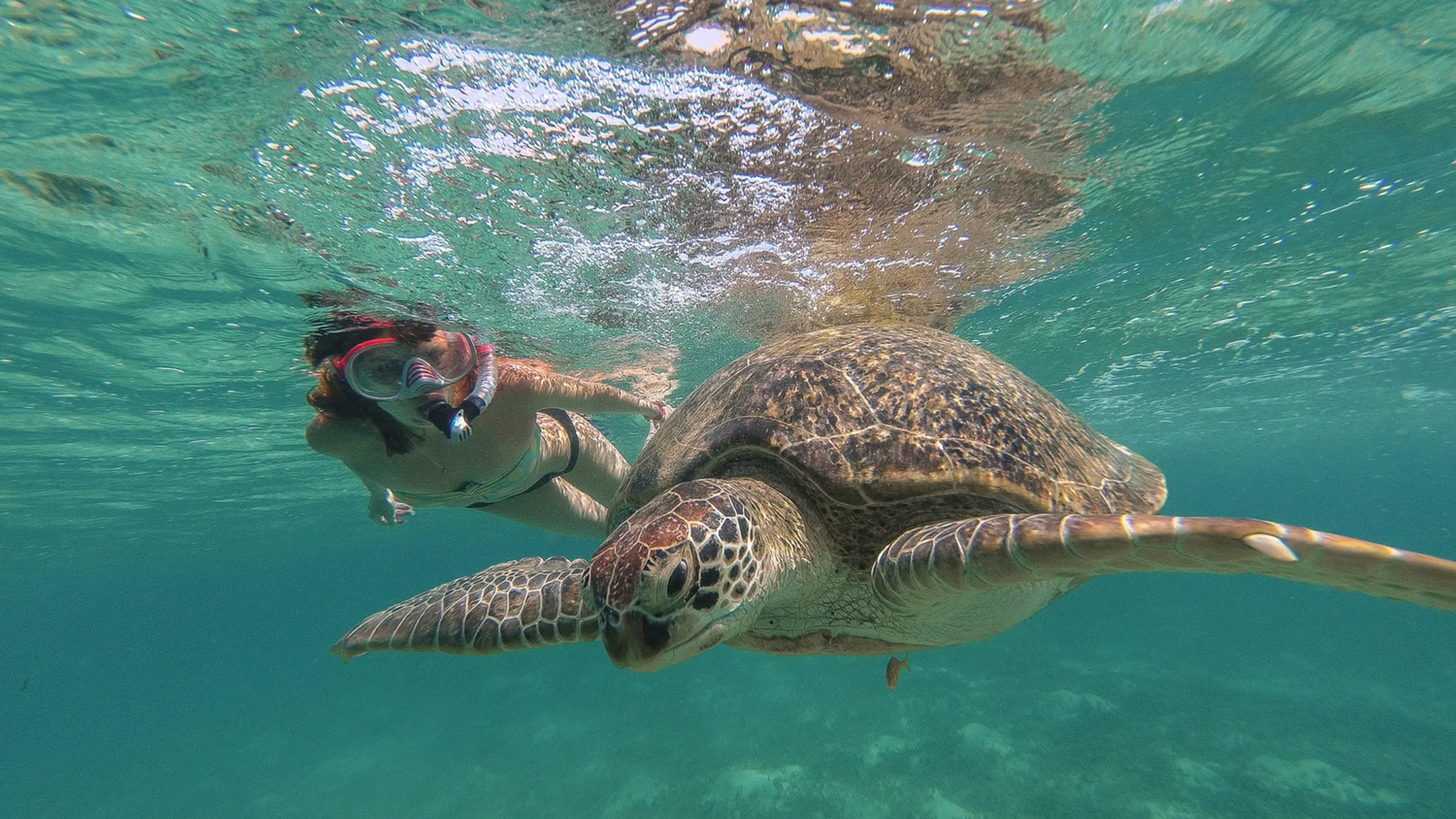
The moment you see your first honu gliding through the water at Kahaluʻu, time seems to stop. These ancient creatures move with a grace that makes you understand why Hawaiians consider them sacred. Their dark shells blend perfectly with the lava rock, and they can appear suddenly, as if materialized from the reef itself.
Hawaiian Green Sea Turtles aren't actually green—their name comes from the color of their body fat, which turns green from eating algae. The ones you'll see at Kahaluʻu can weigh up to 400 pounds and live over 80 years. Some of the larger individuals you encounter might have been swimming in these waters since before you were born.
Watching a honu feed is like witnessing a meditation. They use their powerful jaws to scrape algae from rocks with methodical precision. Sometimes they'll rest on the bottom, completely still except for the gentle movement of their flippers.
But here's what every visitor must understand: these encounters are a privilege, not a right. Honu are a threatened species protected by federal and state law. How you behave around them determines whether future generations will have the same opportunity to witness their beauty.
Understanding Honu Behavior
🍃 Feeding Behavior
Honu scrape algae from rocks with methodical precision. They often feed in the same spots, creating small depressions in the coral. Watch for the cloud of algae particles they create while feeding.
😴 Resting Position
Honu rest motionless on the bottom, often under coral ledges or in sandy patches. They can hold their breath for hours, but will surface to breathe when needed.
🫁 Breathing Pattern
When surfacing for air, their ancient eyes break the water before they disappear back down. Never block their path to the surface - they are air-breathing reptiles.
🏊 Swimming Style
Honu glide effortlessly through the water with powerful flipper strokes. They can appear suddenly and move surprisingly fast when they choose to.
The Rules of Aloha - Non-Negotiable Guidelines for Turtle Viewing
Following these rules isn't just about avoiding a fine—though violations can result in penalties up to $100,000 and jail time. It's about showing respect for creatures that have survived since the time of dinosaurs and demonstrating the kind of aloha that makes Hawaii special.
📏 Maintain 10-Foot Distance
Both on land and in the water, you must stay at least 10 feet away. This isn't a suggestion—it's their personal space and the law.
🚫 Never Touch, Chase, or Harass
Touching turtles is illegal and can transmit diseases harmful to them. Chasing or cornering causes severe stress and may prevent surfacing for air.
🍽️ Do Not Feed
Feeding marine wildlife disrupts their natural diet and creates dependency on humans. It also leads to aggressive behavior and poor health.
🌊 Provide Clear Path to Surface
As air-breathing reptiles, turtles must surface regularly. Never position yourself between a turtle and the surface.
📸 No Flash Photography
Bright artificial lights can disorient turtles and disrupt their natural behaviors, especially when they're resting.
🤲 Observe with Respect
Move slowly, breathe calmly, and let the turtle control the interaction. They may approach you out of curiosity—let them decide.
⚖️ Legal Consequences
Violations of sea turtle protection laws can result in fines up to $100,000 and potential jail time. These are federal and state protected species - the penalties are serious and enforced.
Kalani's Fish Finder - Identifying Kahaluʻu's Residents
Swimming at Kahaluʻu is like being invited to the biggest neighborhood party on the reef. Over 100 fish species call this bay home, and once you know who to look for, every snorkel becomes a treasure hunt. Let me introduce you to some of the characters you're most likely to meet.
🌟 Yellow Tang (Lauʻīpala)
You can't miss these vibrant bursts of sunshine. Yellow Tangs often travel in large, dazzling schools that are so bright they can sometimes be seen from the shore. They're the welcome committee of Kahaluʻu, usually the first fish to greet you.
🐷 Reef Triggerfish (Humuhumunukunukuāpuaʻa)
Our famous state fish! The name means "triggerfish with a snout like a pig." They have bold stripes and a determined swimming style. If one seems territorial, give it space—it's likely guarding its nest.
🎭 Raccoon Butterflyfish (Kīkākapu)
Elegant fish with their distinctive black "raccoon mask" across their eyes. They often cruise the reef in pairs, moving in perfect sync like they're dancing together. Very photogenic residents of the bay.
👑 Moorish Idol (Kihikihi)
The undisputed supermodel of the reef. With a long, flowing dorsal fin and bold black, white, and yellow stripes, they're unmistakable. They drift effortlessly with the current, their banner-like fin trailing behind.
🌈 Ornate Wrasse (Paʻawela)
Don't be surprised if one starts following you around! They seem as interested in us as we are in them. Look for the stunning rainbow body and electric green and blue lines on their head. Very social fish.
🦜 Parrotfish (Uhu)
Listen for the distinct crunching sound they make scraping algae off coral with their beak-like mouths. They're the reef's landscapers, and their constant munching creates the white sand beaches we love.
✨ Black Triggerfish (Humuhumu ʻele ʻele)
At first glance, simply black. But wait for sunlight to reveal breathtaking iridescent blue and green lines radiating from its eyes. They're proof that the reef holds hidden beauty for patient observers.
🎀 Threadfin Butterflyfish (Lau Hau)
Another beautiful butterflyfish, easily identified by the long, thin filament that trails off its dorsal fin like a banner. You'll almost always find them swimming with their lifelong partner. If you see one, look around—its mate is usually nearby.
🎣 Stocky Hawkfish (Poʻopaʻa)
Masters of patience. Look for them perched motionless on coral heads, waiting to ambush their next meal. Their bold red and white splotches make them easy to identify once you know what to look for.
🐍 Moray Eel (Puhi) - Hidden Treasures
Always take a moment to peer into the reef's crevices and under ledges. It's a thrill to spot a puhi looking back at you with its ancient eyes. Kahaluʻu is home to several species, from the smaller Dwarf Moray to the formidable Dragon Moray with incredible patterns.
Safety Note: They look scary but are generally harmless if you don't stick your hands in their homes.
Snorkeling Techniques for Kahaluʻu
Each of these fish has its own personality and role in the reef ecosystem. The more you learn to identify them, the more each snorkel becomes a reunion with old friends rather than just a swim with pretty fish.
Move Slowly
The fish here are used to people, so they won't scatter if you approach calmly. Sudden movements will send them fleeing.
Breathe Steadily
Relax and maintain steady breathing through your snorkel. If you feel rushed or panicked, surface and take a break.
Explore Crevices
Look for movement in coral crevices—that's where you'll spot eels, octopus, and smaller fish that make the reef their home.
🗺️ Kahaluʻu Guide
🐢 Honu Safety Rules
- Stay 10 feet away
- Never touch or chase
- No feeding
- Clear path to surface
- No flash photography
🐠 Fish Spotter Guide
🤿 Best Practices
- Enter at sandy patch near lifeguard
- Head south (left) for calmest water
- Snorkel at mid-to-high tide
- Move slowly and breathe steadily