The Enduring Cycle of Puna
Where Destruction Becomes Creation, and Life Always Returns

Written by a Local Expert
Leilani AkoPart IV: The Enduring Cycle of Puna
To stand in Lava Tree State Monument is to stand at the intersection of past and present, destruction and creation. The stone trees are more than just a geological curiosity. They are a profound lesson in the nature of Hawaiʻi itself. They teach us that the land is not static, but a living, breathing entity in a constant state of flux. This understanding is not new. It is an ancient wisdom, encoded in the chants and stories of Pele, that continues to provide a framework for life and resilience in Puna today.
Creation from Destruction: The Two-Sided Nature of Pele
In Hawaiian tradition, the volcano goddess Pele is a figure of immense duality. She is Ka wahine ʻai honua—the woman who devours the earth—a destructive force whose fiery lava flows consume everything in their path. Yet, she is also the ultimate creator, the mother of new land, giving birth to the very islands upon which life flourishes. This two-sided nature is the essence of the volcanic cycle.
The chants dedicated to Pele capture this duality perfectly. They speak of her journey from Kahiki, a creative act of carving the islands from the sea. They also describe her power and fury, the rumbling and muttering of an eruption that consumes the district of Puna, her beauty rising in fiery fountains over the cliffs. One chant, "Aia lā ʻo Pele," asks a poignant question amidst this turmoil: "Where will we find peace?" The cryptic answer—"On the great billows we love"—suggests that peace is found not by avoiding the chaos, but by learning to live in balance with it, to dance on the moving earth.
This philosophy is written across the landscape. The 1790 eruption destroyed a vibrant ʻōhiʻa forest, a devastating loss. But from that destruction, it created the hauntingly beautiful and unique monument we see today. The 2018 eruption destroyed over 700 homes and erased beloved landmarks, a modern tragedy. But from that destruction, it created nearly 900 acres of new ʻāina, fresh land upon which life will one day take hold. The monument and the new coastline are two sides of the same coin, physical manifestations of Pele's dual role as both destroyer and creator.
The Resilient Spirit of Puna
This ancient philosophy of adaptation and resilience is not just a relic of the past. It is a living force within the modern Puna community. You can see it, feel it, and taste it every Sunday at the Makuʻu Farmers Market. Located on the highway between Keaʻau and Pāhoa, this is far more than a place to buy produce. With over 150 vendors, live music, and thousands of visitors, it is the vibrant, beating heart of the community.
It is a place of economic self-sufficiency and, most importantly, a place where the spirit of ʻohana (family) is palpable. The market is intentionally ʻohana-based, fostering deep relationships and loyalty among its vendors and the community it serves. It is a weekly celebration of survival and continuity.
You can also see this resilience in the local art scene. At galleries like the Puna Gallery and Gift Emporium in Pāhoa, local artists display works that process and memorialize the ever-changing landscape. There are paintings that serve as a "reminder of all the good times" at places like the warm ponds, now lost forever under a sheet of black rock. This is not just art. It is a community actively creating meaning, beauty, and memory from its collective experience of loss and change.
A Monument to Impermanence and Resilience
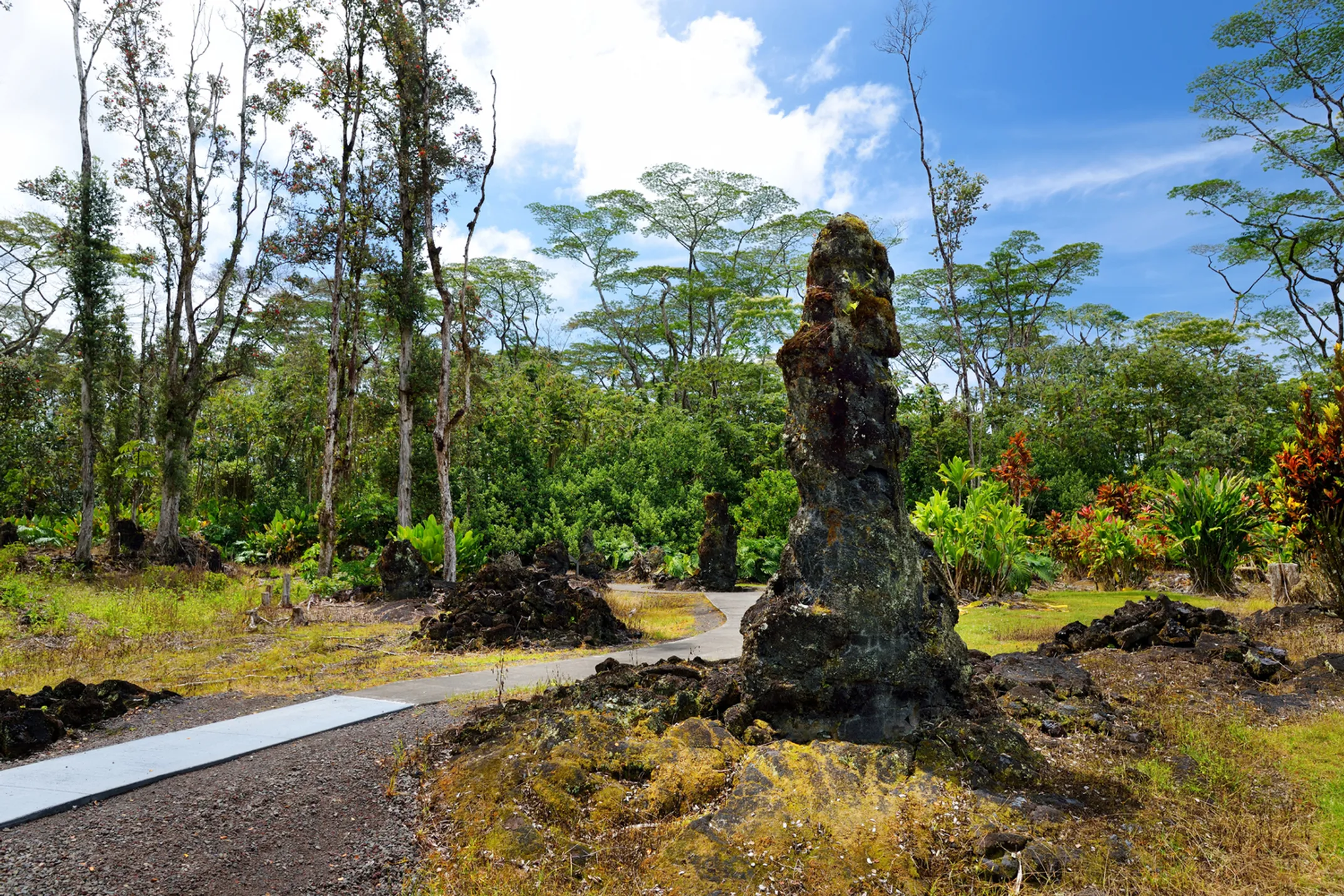
A final walk along the loop trail at Lava Tree State Monument brings the story full circle. The initial impression of a static, ghostly forest gives way to a deeper understanding. These stone trees are not dead relics. They are dynamic symbols of a powerful truth. They teach a profound lesson in impermanence—that the land we stand on is temporary, always subject to the creative and destructive whims of the volcano.
But they also teach a lesson of incredible resilience. Look closely at the porous, black rock. Life is already reclaiming it. Mosses and lichens paint the surfaces in shades of green and gold. Ferns sprout from the cracks. And, most powerfully, new ʻōhiʻa trees can be seen growing from the hollowed-out tops of the lava molds, life literally emerging from the shell of death.
This is the ultimate story of the monument, and the ultimate story of Puna. It is a testament to the idea that even in the face of overwhelming destruction, life finds a way. The forest grows back. The community gathers, rebuilds, and creates. The spirit of the land, and of its people, endures. The lava trees stand not as tombstones for a forest that was lost, but as beacons of hope for the life that will always, inevitably, return.
📖 Story Chapters
Trail guide & formations
Part II: The 1790 EruptionHistorical tragedy
Part III: The 2018 EruptionModern witness
Current chapter
🌺 Pele's Wisdom
"Ka wahine ʻai honua" - The woman who devours the earth
Pele as destroyer
"Where will we find peace? On the great billows we love"
From chant "Aia lā ʻo Pele"
🏘️ Puna Community
Makuʻu Farmers Market
Sunday community gathering, 150+ vendors
Puna Gallery & Gift Emporium
Local art processing landscape changes
ʻOhana Spirit
Family-based community bonds
🌱 Signs of Life
- Mosses and lichens on lava rock
- Ferns sprouting from cracks
- ʻŌhiʻa saplings in hollow trees
- Forest canopy regenerating
- Life emerging from destruction
Appendix: Your Hawaiian Islands Adventure Guide
Whether you're exploring the raw landscapes of the Big Island or seeking thrills on Oʻahu, Hawaiʻi offers a lifetime of adventure. Here's a practical guide to help you plan your journey.
Exploring the Big Island: Puna and Beyond
Lava Tree State Monument Logistics:
- Location: Located on Highway 132, about 2.7 miles southeast of Pāhoa town in the Puna district.
- Hours & Cost: The park is open daily during daylight hours. There is no entrance fee.
- Facilities: Restrooms and covered picnic tables are available on-site.
Safety in Puna:
The ground in this volcanically active region can be unstable. Always stay on marked trails. The large, deep fissures are a serious hazard. Be aware of your surroundings and any posted advisories regarding volcanic gases (vog).
More to See in Puna:
Pāhoa Town
Explore this quirky, historic town with its unique "Wild West" atmosphere, raised wooden sidewalks, and eclectic collection of shops and restaurants.
Isaac Hale Beach Park (Pohoiki)
Witness the power of the 2018 eruption firsthand at this park, which now features a new black sand beach created by the lava flow.
Kapoho-Kalapana Road (The "Red Road")
Take a slow, scenic drive along this famous winding road for breathtaking views of jungle, lava fields, and the rugged coastline.
Guided Hikes & Eco-Tours (Big Island)
For those seeking a deeper, expert-led experience, several companies offer outstanding tours of the island's natural wonders.
Hawaii Forest & Trail
A premier operator for over 30 years, they offer small-group volcano, waterfall, stargazing, and birdwatching tours with highly knowledgeable interpretive guides and access to private lands.
VolcanoTours.com
Specializes in volcanic hiking adventures, including full-day tours of Hawaiʻi Volcanoes National Park that combine hiking with sightseeing and educational components.
HawaiiTours.com
Offers a wide variety of curated hiking tours across the Big Island, catering to all skill levels, from rainforest waterfall hikes to treks across volcanic craters.
Adventures on Oʻahu: A Guide for the Multi-Island Traveler
Many visitors to Hawaiʻi explore more than one island. If your journey includes Oʻahu, here are two must-see destinations that offer a different kind of adventure.
For the Thrill-Seeker: Coral Crater Adventure Park
- What It Is: A 35-acre outdoor adventure park located in Kapolei, West Oʻahu, perfect for families and adrenaline junkies.
- Activities: Six ziplines (300-1,000 feet), aerial adventure tower, two 50-foot climbing walls, "King Swing," freefall experience, and off-road ATV tours.
- Good to Know: Minimum age for ziplining and aerial course is six years old, making it great for active families.
A Journey into History: Pearl Harbor
- What It Is: One of the most significant historical sites in the United States, located on Oʻahu, just west of Honolulu.
- Historical Significance: Site of the December 7, 1941 attack that propelled the US into World War II.
- Key Sites: USS Arizona Memorial and Battleship Missouri Memorial are the most visited.
- Cultural Context: Originally known as Puʻuloa or Wai Momi ("Waters of Pearl"), a vital area for Native Hawaiian fishing and oyster harvesting.
🗺️ Planning Your Visit
Best Time to Visit
Year-round, but mornings are less crowded
Combine With
Pāhoa town visit, Red Road drive
Photography Tips
Overcast days create moody atmosphere