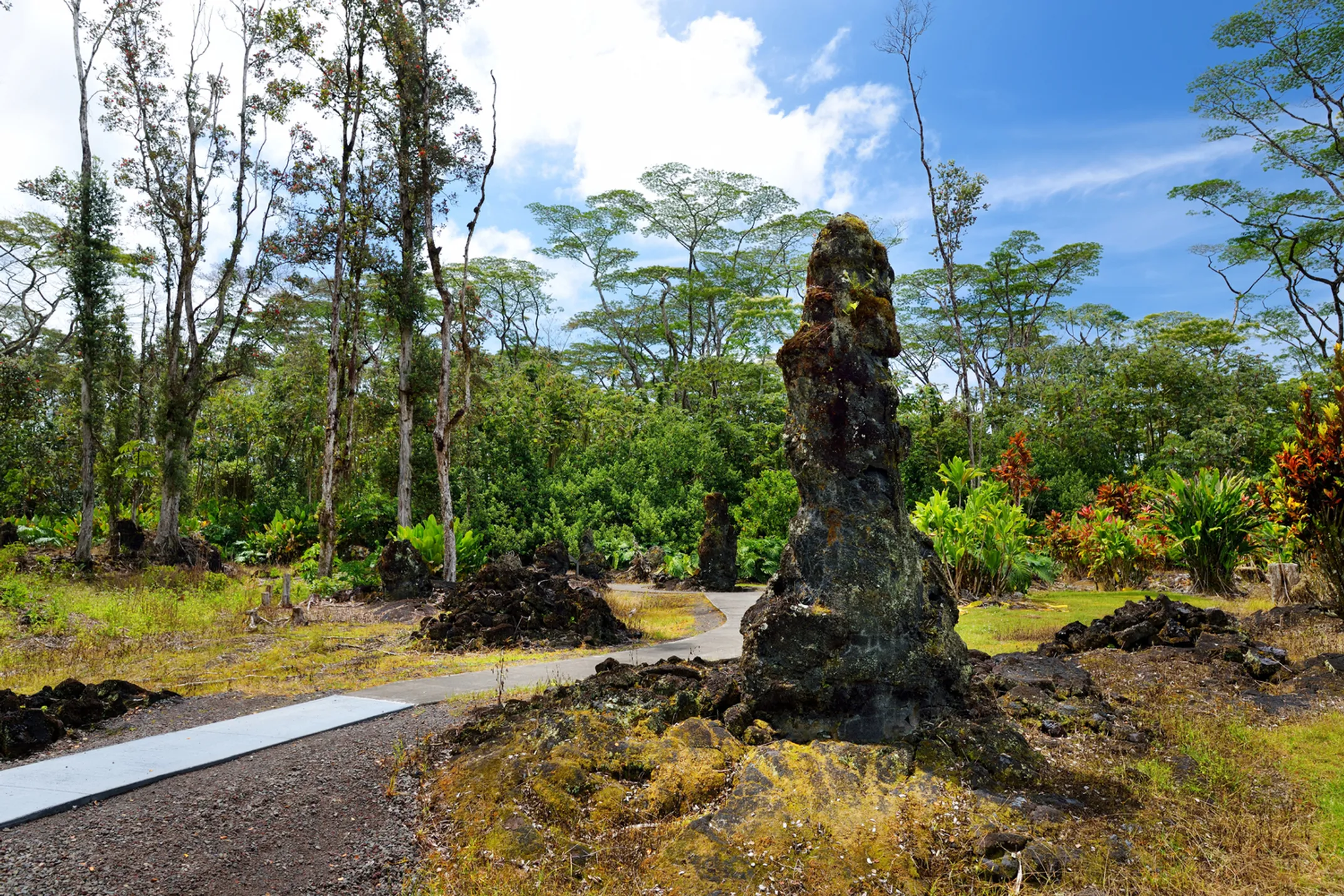

Part III: The Echo of the Past: Puna, 2018
For 228 years, the lava trees stood as silent witnesses to the slow regeneration of the Puna rainforest. They were a relic of a distant, almost mythological past. Then, in May of 2018, the ground began to shake again. The air filled with the smell of sulfur, and the deep, rumbling breath of Pele was heard once more.
The past was no longer past. The cycle of destruction and creation that defines Puna was about to begin anew, and this time, the world would watch it happen in real time.
| Feature | 1790 Keanakākoi Eruption | 2018 Lower Puna Eruption |
|---|---|---|
| Eruption Type | Primarily explosive (phreatomagmatic, pyroclastic surges) | Primarily effusive (fissure eruption, lava flows) with summit collapse |
| Primary Location | Kīlauea Summit / Kaʻū Desert | Lower East Rift Zone (Leilani Estates, Kapoho) |
| Human Impact | Est. 80-400+ fatalities (Keōua's party) | 24 injuries, 700+ homes destroyed, 2,000+ displaced |
| Geological Legacy | Keanakākoi Tephra deposits, Lava Tree State Monument | 875 acres of new land, deepened Halemaʻumaʻu crater |
| Cultural Narrative | Seen as a divine omen in a war between chiefs | A modern disaster documented globally via social media |
When the Earth Opened Again
The prelude to the 2018 eruption was a dramatic sequence of events. On April 30, the crater floor of Puʻu ʻŌʻō, the main vent of Kīlauea's 35-year-long eruption, collapsed. Magma began to drain away from the summit and move underground, down the East Rift Zone, its path tracked by a relentless swarm of earthquakes. On May 3, 2018, the pressure became too much. The ground in the Leilani Estates subdivision, a rural community just a few miles from Lava Tree State Monument, cracked open. Steam, then toxic gas, then fountains of molten rock began spewing into the air.
The 2018 eruption was happening in the same Puna district, a geologic breath away from the 1790 flow that created the monument. For weeks, residents and observers watched anxiously as the lava advanced. In a stroke of geologic luck, the main lava channel from the most vigorous vent, Fissure 8, flowed east and then north, narrowly bypassing Lava Tree State Monument. The ancient stone trees, born of one Puna cataclysm, became silent, rooted witnesses to the next. They stood untouched as a new wave of destruction and creation reshaped the land around them.
Voices from the Rift Zone
The 2018 eruption was not just a geological spectacle. It was a deeply personal and traumatic event for the thousands of people who called lower Puna home. Their stories reveal the human cost of living in Pele's workshop.
For many, the first sign of the eruption was not visual, but auditory. Elizabeth Kerekgyarto, a Leilani Estates resident, recalled a sound she had never heard before, a terrifying roar from a spouting lava fissure just down her street. "It's getting louder," she said as she frantically packed her belongings. "It sounded like the roar of the biggest North Shore waves ever, funneled through a gigantic fire hose."
Then came the loss. Amber Makuakane's three-bedroom house was one of the first to be destroyed. She received security alerts on her phone as motion sensors were triggered throughout her home by the advancing lava. Her young son, unable to comprehend the finality of the event, kept asking, "Mommy when are we going to go home?" In total, over 700 homes were consumed by the lava.
The evacuation was chaotic and filled with uncertainty. Over 2,000 people were forced to flee, many ending up in Red Cross shelters, unsure if they would ever see their homes again. Residents like Tim Sullivan and Stella Calio found themselves refugees in their own community, their lives "turned upside down" in an instant.
These stories inevitably lead to the question: why live there? The answer is a complex mix of economics and ethos. For decades, the high-risk volcanic hazard zones of Puna have offered one of the few avenues to affordable land ownership in Hawaiʻi. For a fraction of the cost of property elsewhere, people could buy a piece of paradise. This affordability attracted a unique community of artists, farmers, and those seeking an "off-the-grid" lifestyle, independent and close to the land. They lived with the risk, a daily gamble that Pele's creative energies would flow elsewhere. As one resident who lost her home lamented, "I knew it would happen someday."
In the aftermath, the resilience of this community began to shine through. Organizations like Habitat for Humanity Hawaiʻi Island stepped in to help families rebuild. Constance, who lost her rental home in Leilani Estates, began the process of building a new home through "sweat equity" and homeowner education programs, a testament to the long road of recovery and the determination to remain.
A Scar on the Land, A Birth of New ʻĀina
The 2018 eruption fundamentally and permanently altered the map of Puna. Over three months, lava flows covered 13.7 square miles of land, burying entire subdivisions, roads, and forests under dozens of feet of new rock. The eruption also gave birth to over 875 acres of new land, extending the coastline into the Pacific.
This act of creation came at the cost of erasure. Beloved local landmarks, places deeply woven into the fabric of Puna life, were wiped from existence. The Kapoho Tide Pools, a network of geothermally heated pools teeming with marine life, were filled in and buried. Ahalanui Beach Park, with its famous warm pond, was overrun. Green Lake, which had been the largest natural freshwater lake in Hawaiʻi, was boiled away in a matter of hours as lava poured into its crater.
This was the destructive side of the cycle, a painful reminder that in Puna, the land is never truly permanent. It is merely on loan from the volcano. The modern story of Puna is defined by this inherent tension. It is a place where the dream of an affordable, beautiful life in Hawaiʻi collides with the undeniable geological reality of living on one of the world's most active volcanoes. This dynamic has forged a community that is fiercely independent, deeply connected to the ʻāina, and uniquely resilient, yet also profoundly vulnerable. The 2018 eruption did not create this identity, but it brought it into sharp, global focus, revealing a community defined by its extraordinary relationship with the land it calls home.
📖 Story Chapters
Trail guide & formations
Part II: The 1790 EruptionHistorical tragedy
Current chapter
Philosophy & resilience
📅 2018 Timeline
- April 30: Puʻu ʻŌʻō crater floor collapses
- May 3: First fissure opens in Leilani Estates
- May-August: Fissure 8 creates massive lava flows
- June: Green Lake and Kapoho destroyed
- September: Eruption officially ends
📊 2018 Impact
- Homes destroyed: 700+
- People displaced: 2,000+
- Land covered: 13.7 sq mi
- New land created: 875 acres
- Duration: 3 months
💔 Lost Landmarks
Kapoho Tide Pools
Geothermal pools filled with lava
Ahalanui Beach Park
Famous warm pond destroyed
Green Lake
Largest freshwater lake boiled away
💪 Community Response
- Red Cross emergency shelters
- Habitat for Humanity rebuilding
- Community support networks
- Volunteer assistance programs
- Determination to rebuild