
Your Journey into the Ancient Fishing Village of Koaiʻe
With your trail guide in hand, your journey into the ancient fishing village of Koaiʻe begins. The path leads you gently downhill toward the brilliant blue Pacific. It traces the same routes villagers would have walked between their homes and the sea.
The numbered stops on your brochure match markers on the trail. Each one is a window into a different part of life here. But to truly understand what you're seeing, you must look beyond the stones. Imagine the people who gave them purpose.
At its height, this village was home to an estimated 70 to 100 people. A bustling and vibrant community. Close your eyes and you can almost hear the sounds of daily life. The chatter of families. The laughter of children playing. The rhythmic scrape of tools.
The Trail Begins: Entering the Kauhale
The trail first leads you through what was the heart of community living space. At Stop 9, you find the remains of a large residential complex. These low, stacked rock walls are the kahua, or foundations, of multiple homes. This is the perfect place to understand the concept of a kauhale. The traditional Hawaiian household cluster.
In ancient Hawaiʻi, a family didn't live in a single house. Due to the ʻaikapu system, a complex set of religious taboos that included separating men and women during meals, a household had several separate structures. There would have been a hale mua (men's eating house), a hale ʻaina (women's eating house), a hale noa (a common sleeping house, free from kapu), and other specialized shelters.
🏠 Stop 9: Residential Complex
Large kauhale with multiple house foundations showing traditional Hawaiian family living arrangements under the ʻaikapu system.
🏛️ Stop 5: Rebuilt House
Traditional-style structure occupied into the early 1900s, showing authentic Hawaiian architecture with pili grass thatching.
⚱️ Stops 2 & 3: Burial Sites
Sacred resting places of kūpuna (ancestors). Large rock-filled platforms, one originally a house converted for burials in the 1800s.
🛶 Stops 4 & 12: Canoe Houses
Hālau waʻa foundations - covered structures that protected the community's vital canoes from sun and salt air damage.
Life by the Sea: The Tools of Survival
As you continue toward the coast, the focus of village life shifts to the ocean. The canoe was the lifeline of the village. The tool that allowed them to harvest the ocean's bounty and connect with the wider world.
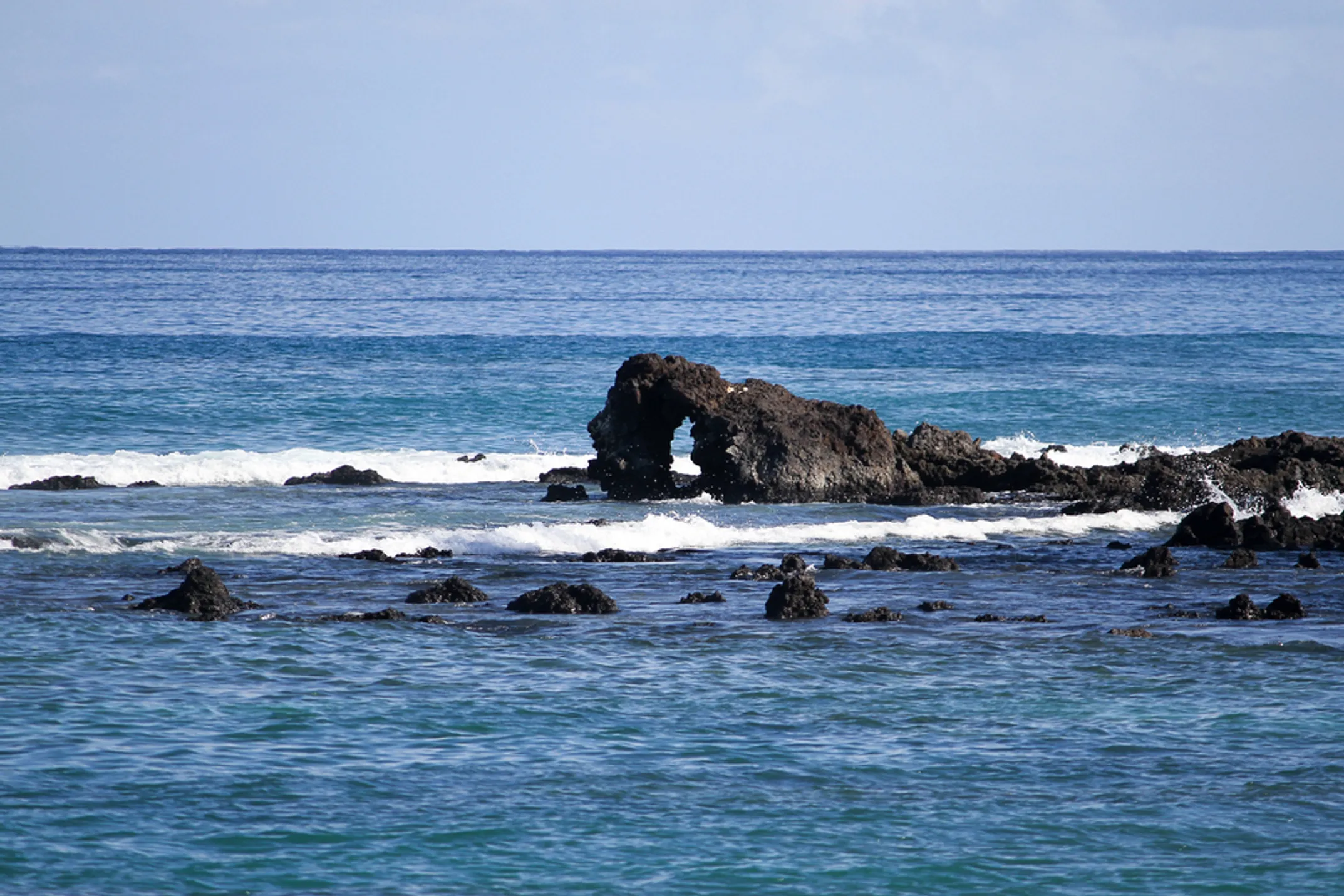
The trail ends at Koaiʻe Cove (Stop 11). The very reason this settlement exists. This small cove, sheltered from the powerful Kohala winds by the rolling landscape, is one of the few places along this rugged coast where a canoe could be safely launched and landed.
Stop 11: Koaiʻe Cove
The heart of the village's economy. Sheltered launching point for lawaiʻa (fishermen) and their nets, hooks, and lūheʻe (octopus lures).
Stop 8: Salt Pans
Paʻakai - carved and natural depressions in lava rock filled with seawater to create precious salt for preserving fish and trade.
Stop 7: Fresh Water Well
Engineering marvel - deep well dug through rock to tap the freshwater lens. Its eventual failure may have led to village abandonment.
🗺️ Trail Details
- Distance: 1.1 miles
- Type: Loop trail
- Stops: 19 numbered
- Duration: 1-2 hours
- Guide: Self-guided
📍 Must-See Stops
- Residential Complex Stop 9
- Koaiʻe Cove Stop 11
- Burial Sites Stops 2&3
- Game Board Stop 10
🗺️ Lapakahi Guide
The Spirit and Play of the People
Life in Lapakahi was not solely about work and survival. It was deeply woven with spirituality and enriched by recreation. At Stop 6, you will find a simple stone shrine dedicated to Kūʻula, a god of fishing. It was customary for a fisherman to give a portion of his first catch to the akua (god) who resided in this stone.
Stop 6: Kūʻula Shrine
Simple stone shrine to the fishing god. Fishermen offered first catch portions to maintain pono (balance) with spiritual forces.
Stop 14: Koʻa Shrine
Fishing shrine marking good offshore spots. Personal family shrines woven into daily fishing activities.
Stop 10: Papamū Game
Flat rock with carved holes for kōnane (Hawaiian checkers). Games built community and sharpened skills valuable in daily life.
This was not just an act of worship but an act of giving back. A way of maintaining balance (pono) with the spiritual forces that governed their world. It ensured future abundance.
The people of Lapakahi also made time for play. These games were more than just leisure. They were a way to build community, pass the time, and sharpen skills like aim and coordination that were valuable in daily life. The physical remains of the village paint a picture of a complex, resilient, and sophisticated society.
Nearby, you'll find a koʻa (fishing shrine, Stop 14) and a mua (family heiau, Stop 13). These were not the massive temples built by high chiefs. They were smaller, more personal shrines used by families or for specific purposes. Their presence shows that spirituality was not a separate part of life. It was woven into every daily activity.