Advanced Guide
Expert Tips for the Ultimate Whale Experience
Weather and Sea Conditions: Reading the Ocean
Understanding Nature's Patterns
Understanding ocean conditions is crucial for a successful whale watching experience. The ocean can change dramatically from day to day, and knowing how to read these conditions will help you choose the best day for your adventure.
Trade Wind Patterns
Hawaii's trade winds are a dominant weather feature that significantly affects ocean conditions. These northeast winds blow consistently for much of the year, but their strength varies.
Light Trade Winds (10-15 mph)
Perfect for whale watching. The ocean surface is relatively calm, making it easy to spot whale spouts and surface activity.
Moderate Trade Winds (15-25 mph)
Still good for whale watching, but expect a bumpier ride and more whitecaps on the water. Larger boats handle these conditions better.
Strong Trade Winds (25+ mph)
Challenging conditions. Many tours may be canceled, and if they do run, expect a rough ride with limited visibility due to spray and whitecaps.
Seasonal Weather Patterns
Winter (December-February)
Peak whale season, but also when Hawaii experiences its most variable weather. Winter storms from the north Pacific can bring large surf and rough ocean conditions. However, between storm systems, you often get perfectly calm, clear days.
Spring (March-May)
Generally the most stable weather of whale season. Trade winds are typically lighter, and there are fewer storm systems. This is often the best time for comfortable whale watching.
Reading the Forecast
When checking weather forecasts for your whale watching day, pay attention to:
- Wind Speed and Direction: Look for winds under 20 mph from any direction except north
- Wave Height: Choose departure points with the smallest predicted waves
- Rain: Light rain doesn't cancel tours, but heavy rain reduces visibility
The Art of Whale Photography: Advanced Tips
From Documentation to Art
Beyond basic camera settings, there are artistic and technical considerations that can elevate your whale photography from simple documentation to stunning art.
Composition Techniques
Rule of Thirds
Instead of centering the whale in your frame, place it along one of the imaginary lines that divide your image into thirds. This creates more dynamic, visually interesting photos.
Include the Environment
Wide shots that show whales in the context of Hawaii's beautiful coastline tell a more complete story than tight crops of just the whale.
Capture Behavior Sequences
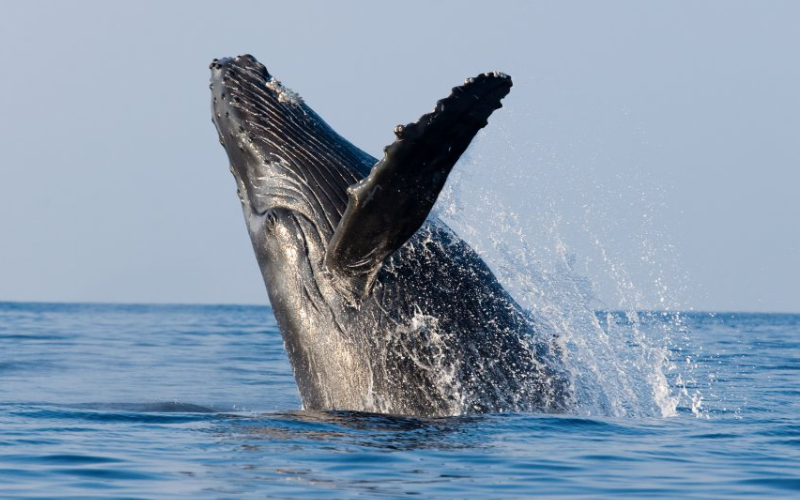
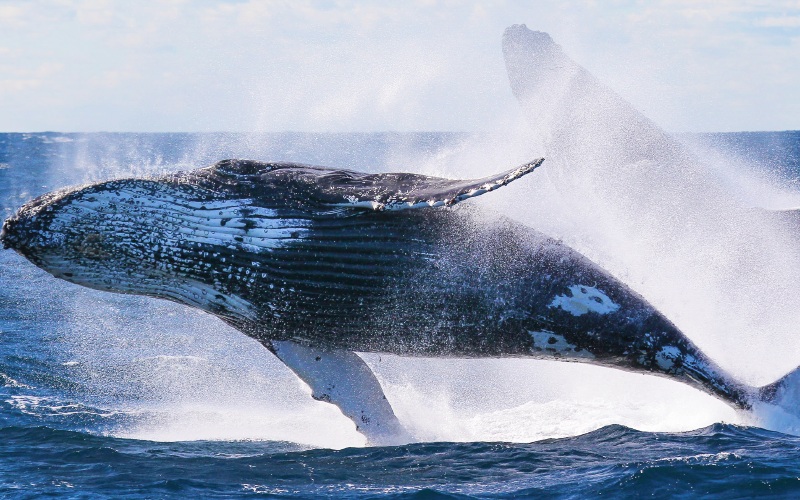
When whales breach, they often do it multiple times. Try to capture the entire sequence from emergence to splash to create a story with your images.
Focus on Details
Don't forget to photograph the smaller moments—a whale's eye during a spy-hop, the texture of their skin, or the mist from their spout catching the morning light.
Dealing with Challenging Conditions
Bright Sun
Hawaii's intense tropical sun can create harsh shadows and overexposed highlights. Use your camera's exposure compensation to slightly underexpose, which helps preserve detail in bright areas.
Spray and Salt
Protect your camera from salt spray with a UV filter and lens hood. Bring a microfiber cloth to quickly clean your lens between shots.
Moving Platform
Shooting from a moving boat requires good technique. Use a fast shutter speed and brace yourself against the boat's rail for stability.
Distance Challenges
Even with telephoto lenses, whales can appear small in the frame. Don't be afraid to crop your images later, but shoot at your camera's highest resolution to preserve detail.
Post-Processing Tips
- • Enhance Contrast: Make whales stand out against bright ocean
- • Saturate Blues: Slight increase in blue saturation enhances ocean
- • Sharpen Carefully: Enhance details without over-sharpening
The Future of Whale Watching in Hawaii
Conservation and Innovation
As climate change and human activities continue to affect our oceans, the future of whale watching in Hawaii depends on our collective commitment to conservation and sustainable tourism practices.
Climate Change Impacts
Rising ocean temperatures and changing currents could affect the distribution of krill and small fish that humpback whales depend on in their Alaskan feeding grounds. This could potentially alter migration patterns or the timing of when whales arrive in Hawaiian waters.
Ocean acidification, caused by increased CO2 absorption, affects the entire marine food web from the bottom up. While humpback whales don't eat coral or shellfish directly, changes to the ocean's chemistry could impact their food sources.
Sustainable Tourism Initiatives
Hawaii is leading the way in developing sustainable whale watching practices. New initiatives include:
- Carbon Offset Programs: Some operators offer carbon offsets
- Electric Vessels: Experimenting with electric/hybrid boats
- Capacity Limits: Discussion about limiting whale watching permits
- Enhanced Education: More focus on conservation messaging
Technology and Research
New technologies are revolutionizing whale research and potentially improving the whale watching experience:
Research Advances
- • Drone Surveys: Non-invasive population studies
- • Satellite Tracking: Track individual whales throughout migration
- • Underwater Cameras: Capture behavior below surface
- • AI Recognition: Identify individual whales from photos
Tour Improvements
- • Better whale prediction models
- • Real-time whale location sharing
- • Enhanced underwater microphones
- • Virtual reality whale experiences
Creating Lasting Memories: Beyond the Tour
Extending Your Whale Connection
A whale watching experience doesn't have to end when you step off the boat. Here are ways to extend and deepen your connection to these magnificent animals.
🎓 Educational Opportunities
- • Visit the Maui Ocean Center
- • Attend naturalist programs at hotels
- • Join Sanctuary Ocean Count volunteer program
- • Take marine biology courses
🐋 Supporting Research
- • Adopt a whale through research organizations
- • Volunteer with Pacific Whale Foundation
- • Follow whale research on social media
- • Donate to marine conservation groups
🌺 Cultural Learning
- • Learn Hawaiian language (koholā, kai)
- • Study traditional Polynesian navigation
- • Support Hawaiian cultural organizations
- • Understand traditional marine knowledge
A Final Aloha
The whales will soon begin their long journey back to the north, their powerful flukes propelling them toward the summer feeding grounds. But their songs will echo in our waters, a memory held by the sea itself until they return. To witness them is to witness the heartbeat of the ocean—ancient, powerful, and gentle all at once.
It's a privilege we are so lucky to have here in Hawaii, and one that comes with a shared kuleana—a responsibility—to protect them and the sea that sustains us all.
"I hope this article helps you find your own unforgettable moment with these gentle giants."
Whether you're feeling the spray from a raft on the Waiʻanae coast, listening to their song through a hydrophone, or simply watching a distant breach from the cliffs of Makapuʻu, you are participating in something truly special.
The koholā remind us that we are part of something much larger than ourselves. They connect us to the vast Pacific, to the ancient rhythms of migration and birth, and to our responsibility as guardians of this incredible blue planet. In their presence, we remember what it means to be truly alive, truly connected, and truly humbled by the magnificent power of nature.
Every breach is a celebration.
Every song is a prayer.
Every sighting is a gift.
Go with aloha, and let the magic of the koholā change you. The ocean is waiting, and the whales are calling. Answer that call with respect, with wonder, and with the knowledge that you are witnessing one of Earth's greatest natural spectacles.
The sea remembers everything. Make sure your time with the whales is something beautiful to remember.
Your Complete Whale Watching Journey
Thank you for exploring Oahu's whale watching with us
🐋 Whale Season Info
- Peak Season: Jan - Mar
- Best Months: Feb - Mar
- Tour Duration: 2.5-4 hours
- Price Range: $75 - $150+
- Success Rate: 95%+ in season
🎒 What to Bring
- Reef-safe sunscreen
- Polarized sunglasses
- Camera with zoom lens
- Motion sickness medication
- Binoculars (for shore viewing)
- Layers for weather
📍 Best Shore Viewing
2-mile paved hike with panoramic views
Drive-up lookout with sea cliff views
Rugged hike, fewer crowds
⚖️ Marine Protection Laws
- 100-yard rule: Vessels must stay 100+ yards away
- No swimming: Never attempt to swim with whales
- Aircraft: Minimum 1,000 feet altitude
Report violations: (888) 256-9840
📖 Complete Guide
📧 Whale Alerts
Get notified about peak whale activity and exclusive tour discounts.
Ready for Your Oahu Whale Adventure?