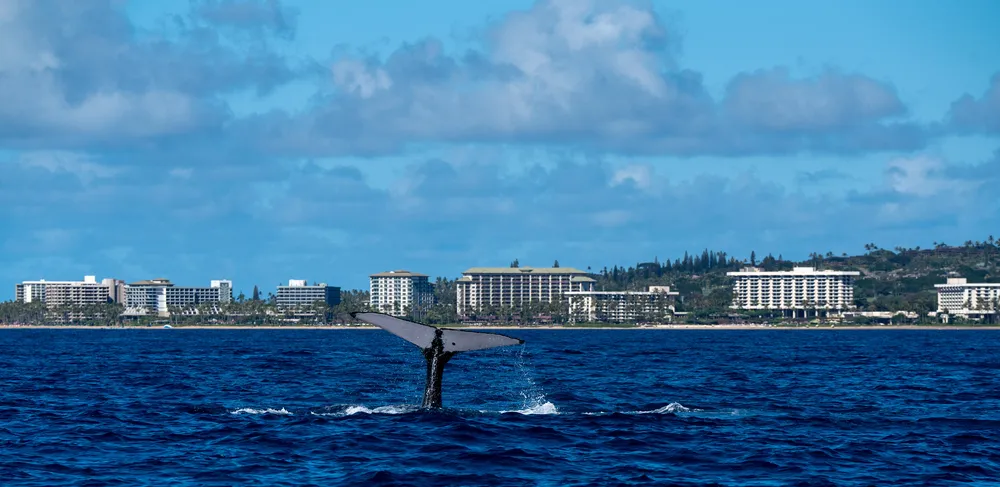
Maui Whale Watching
10,000+ Humpbacks · December–May · Sightings Virtually Guaranteed
✓ Free cancellation · ✓ Instant confirmation · ✓ Best price guarantee

Written by a Local Expert
Jade KawanuiOn This Page
As an adventure photographer, I've been lucky enough to capture some of the most stunning sights our islands have to offer. But there's one experience that stands above them all — my first encounter with a humpback whale. I was on an early morning tour out of Lahaina, and then, without warning, the water in front of us swelled and a 40-ton behemoth launched its entire body into the air.
Time seemed to slow. I saw the barnacles on its skin, the pleats on its throat, the sheer unbelievable power of it all. In that moment I was completely humbled. This is more than a list of tours. It's my personal playbook for witnessing the magic of Maui's gentle giants.
Top-Rated Whale Watch Tours · Maui
Sightings Virtually Guaranteed
🐋 The Gentle Giants of the ʻAuʻau Channel
🗺️ A 3,000-Mile Journey
Humpback whales travel over 3,000 miles from their feeding grounds in Alaska and the Bering Sea. For the entire duration of their journey south and months-long stay in Hawaiian waters, they are fasting — relying solely on immense fat stores built up over the summer.
Scientists estimate that as many as two-thirds of the entire North Pacific humpback population — over 10,000 whales — make this annual pilgrimage to Hawaiʻi, making it the most important breeding ground in the region.
🌊 Why Maui?
The waters between Maui, Molokaʻi, and Lānaʻi form a vast, shallow basin called the ʻAuʻau Channel — rarely deeper than 600 feet, sheltered from strong winds and deep ocean swells. This creates the perfect nursery:
- ✓Warm, calm, shallow water
- ✓Safe for newborn calves to learn to swim
- ✓Protected as the Hawaiian Islands Humpback Whale National Marine Sanctuary
📖 Decoding Whale Behavior: A Photographer's Field Guide
💨 Blow (Spout)
The most common sight — a powerful exhalation creating a water vapor plume 10–20 feet high. Adults surface every 10–15 minutes. Your first clue a whale is near.
🌊 Breach
The showstopper — a whale launches its massive body out of the water. Possible reasons: communication, dislodging parasites, displaying fitness, or simply joy.
🏳️ Tail Slap (Lobtailing)
The whale raises its enormous fluke and slams it down with incredible force. Loud, repeated. Thought to be a communication signal — possibly a warning to other males.
🏄 Pectoral Fin Slap
Humpbacks have the longest pectoral fins in the animal kingdom — up to 15 feet. Rolling and slapping them is believed to be another communication signal.
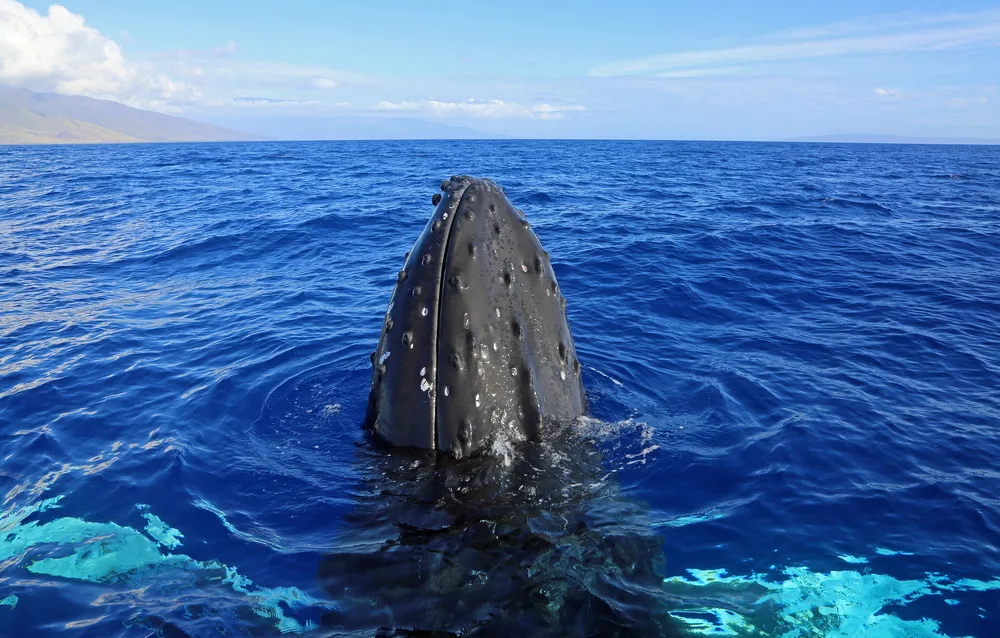
👁️ Spy Hop
The whale rises vertically, head out, sometimes revealing its eye. Believed they do this to view their surroundings above the surface — including boats full of curious humans.
🎵 Song
Only males sing — complex, haunting melodies lasting 20+ minutes that evolve over the season. Tours with hydrophones let you hear this underwater symphony.
🎵 Hear the Whale Song
The best tours deploy underwater hydrophones so you can listen to humpback songs in real time. An experience you'll never forget.
📅 Month-by-Month: When to Go
| Month | Whale Density | What to Expect | Crowd Level |
|---|---|---|---|
| December | Moderate, increasing | First arrivals, relaxed behaviors, some breaching | Moderate |
| January | High | High activity, breaching, beginning of competition pods | High |
| February 🏆 | PEAK | Peak activity, frequent breaches, large competition pods, calves | Peak |
| March | High | Continued high activity, playful calf behavior | High |
| April | Moderate, decreasing | Last mothers & calves, late-season competition pods | Moderate |
📸 Jade's Insider Tip: Don't Overlook April
I've had some of my most memorable whale encounters in late April when fewer boats were on the water and the whales seemed more relaxed. The competition for attention among males can be intense — leading to some amazing displays. And the light before sunset is absolutely stunning for photography.
⛵ Choosing Your Vessel: A Photographer's Guide
⛵ Large Catamaran
Dual-hull stability is excellent for anyone prone to seasickness. Upper decks provide fantastic vantage points for spotting breaches.
🚤 Zodiac Raft
Low profile puts you eye-level with the water. Not recommended for young children, pregnant women, or those with back/neck issues.
⛵ Classic Sailboat
When the captain cuts the engine and raises sails, profound silence allows you to hear the whales' blows. Smaller groups = more personal.
🛶 Kayak Tour
Being at water level in a human-powered craft is an incredibly humbling experience. Must go with an experienced guide who strictly follows the 100-yard rule.

2 HOUR Whale Watch Photography Expedition
Offered by Maui Pacific Divers — A top-rated whale watch experience in Wailuku. Free cancellation available. Book your spot today.
*Estimated starting price. Prices subject to change. Check availability for current rates.
🌺 Ethical & Responsible Whale Watching
In Hawaiʻi, we practice Aloha ʻĀina — a deep love and respect for the land and sea. For Native Hawaiians, the annual return of the koholā (humpback whale) is a homecoming. These animals are kamaʻāina (native-born), and for some families, considered ʻaumakua — sacred ancestral guardians.
📏 The 100-Yard Rule — Federal Law
It is illegal to approach a humpback whale within 100 yards (the length of a football field) by any means — motorboats, sailboats, kayaks, paddleboards, swimmers, and drones. Aircraft must stay at least 1,000 feet above. This law is strictly enforced.
✅ What Responsible Operators Do
- • Slow down significantly when whales are near
- • Put engines in neutral — let whales approach
- • Never chase or cut across a whale's path
- • Never position between mother and calf
- • Certified Marine Naturalists on board
- • Hydrophones for listening to whale songs
🌿 How to Choose an Eco-Friendly Tour
- • Look for certified Marine Naturalists on board
- • Choose operators who contribute to research
- • Pacific Whale Foundation funds conservation from tours
- • Ask about their 100-yard rule protocol
- • "Go Slow, Whales Below" policy adherence
🏔️ Shore Viewing: Watch From Land for Free
You don't need to be on a boat to experience whale watching in Maui. The deep nearshore waters mean whales frequently pass close to shore. Bring binoculars, be patient, and scan for the telltale spout.
Papawai Scenic Lookout
Arguably the #1 shore-based spot. Cliffside on Honoapiʻilani Hwy between Māʻalaea and Lahaina. Panoramic vista over the busiest part of the sanctuary. Pacific Whale Foundation researchers often stationed here with spotting scopes.
Kaʻanapali & Kīhei Beaches
Long beaches with wide, unobstructed views. If staying in an oceanfront resort, you may be treated to a show from your own lānai (balcony). Set up a chair and scan the horizon.
Mākena Beach State Park
Pristine sand with excellent, unobstructed views for whale watching in the distance. Known for clear water that makes spouts easier to spot against the dark ocean.
📍 Departure Points
Lahaina Harbor (West Maui)
Ideal for Kaʻanapali, Kapalua, Nāpili visitors. Immediate access to the heart of the ʻAuʻau Channel.
Māʻalaea Harbor (Central/South)
Best for Kīhei, Wailea, Mākena visitors. Sits on Māʻalaea Bay — one of the windiest harbors, can cause choppier rides.
📸 Jade's Pro Tips for Whale Photography
📷 Gear Recommendations
Lens: 100–400mm zoom
Never use a prime — you need flexibility to go from wide environmental shots to tight close-ups in seconds.
Camera: Fast continuous AF
Modern mirrorless or DSLR with high burst rate. You need to fire 10–20 frames per second during a breach.
Filter: Circular polarizer
Cuts glare, saturates the ocean's blue, and can reveal whales just below the surface before they emerge.
No tripod — use your body
Plant feet wide, bend knees to absorb boat motion, brace arms against a railing. Tripods are impractical on a moving vessel.
⚙️ Camera Settings
Shutter Speed: 1/1000–1/2000s
Non-negotiable. Freeze the explosive power of a breach plus counteract boat motion.
Aperture: f/8
Gives depth of field as a safety net. A huge animal is still sharp even if focus is slightly off.
ISO: Auto
No time to manually adjust. Let the camera compensate instantly for changing light conditions.
Drive: Continuous High Burst
Hold down the shutter and fire off 10–20 frames. You need the best single moment in the sequence.
🎯 Anticipating the Shot
If a whale surfaces and arches its back high out of the water — that's the signal for a deep dive. Get focused on that spot. The magnificent tail fluke is coming up next. Stay ready for 3–5 minutes after a deep dive, as they may resurface and breach.
📸 Get the Shot of a Lifetime
Morning tours offer the softest, most beautiful light for photography. Zodiac rafts give you the best eye-level perspective.
❓ Frequently Asked Questions
What is the absolute best month for whale watching in Maui?
February and March are the peak months with the highest density of whales and the most surface activity. However, the entire period from mid-January through March offers an incredible experience.
Are morning or afternoon tours better?
Whales are active around the clock — you can have amazing sightings at any time. Mornings often have calmer seas (better for seasickness-prone guests and spotting spouts). The light before sunset is absolutely stunning for photography, but afternoon can be windier, especially from Māʻalaea.
Is a whale sighting guaranteed?
During peak season (January–March), sightings are so frequent they are virtually guaranteed. Many tour operators offer a free return trip on a standby basis if you're on one of the very rare tours where no whales are seen — but this is seldom necessary.
Don't miss the season
Book Your Maui Whale Watch Tour
Hydrophones · Expert naturalists · Free cancellation
How close can boats get to the whales?
By law, all vessels must stay at least 100 yards away from humpback whales. However, humpbacks are naturally curious and are known to approach stationary boats on their own — and these encounters, where the whale chooses to come to you, are perfectly legal and absolutely magical.
Should I book my tour in advance?
Absolutely — especially if visiting during peak season. The best and most popular tours sell out weeks, sometimes months, in advance. Book early to get the tour, time, and vessel type you want.
Witness Maui's Gentle Giants
There are moments that transcend photography. Watching a mother humpback gently nudge her calf to the surface. Hearing the chorus of male songs through a hydrophone. Feeling the spray from a breach on your face. Book your whale watching tour before spots are gone.
Instant confirmation · Secure booking · Best price guarantee
Keep Exploring
More Maui Water Activity Guides
Overview
All Maui Water Activities
Complete guide to every ocean adventure on Maui.
Read Guide →Boating
Boat Tours & Sailing
Molokini snorkel, Lānaʻi day trips & sunset cruises.
Read Guide →Underwater
Snorkeling & Scuba Diving
Molokini, Turtle Town, Lānaʻi Cathedrals & more.
Read Guide →Paddling
Stand-Up Paddleboarding (SUP)
12 best spots, technique tips, rentals & the Maliko Run.
Read Guide →Surfing
Maui Surfing Guide
Best seasons, surf schools & legendary breaks.
Read Guide →Wildlife
Whale Watching Tours
When to go, best tours & ethical viewing tips.
Read Guide →