
August 2023: When the Fires Came
The Lahaina wildfires of August 2023 were a catastrophic tragedy that forever changed Maui's historic town. The flames moved with terrifying speed, fueled by drought conditions and hurricane-force winds. Thousands of residents fled for their lives. Historic buildings that had stood for over a century were reduced to ash in minutes.
The Lahaina Jodo Mission sat directly in the path of the flames. As fire swept through the area, the mission's structures faced the same fury that destroyed so much of the surrounding community.
The Loss
The destruction was devastating. The main temple, which had stood since the early 1970s, was consumed by flames. The beautiful bell tower that had housed the Great Temple Bell for over fifty years was destroyed. Most heartbreaking of all, the iconic three-tiered pagoda with its hand-crafted copper roof collapsed, its wooden upper floors no match for the intensity of the fire.
The loss went beyond buildings. Four members of the congregation died in the fires, a reminder that the tragedy was fundamentally human. These were people who had worshiped at the mission, who had celebrated festivals there, who had been part of the community that made the mission a living place rather than just a collection of buildings.
The wound cut deep. For congregation members, the mission had been a spiritual home for decades. For many, it was a place where they had been married, where they had celebrated their children's milestones, where they had said goodbye to their parents and grandparents. To see it destroyed was to see a piece of their own history go up in flames.
The Miracle
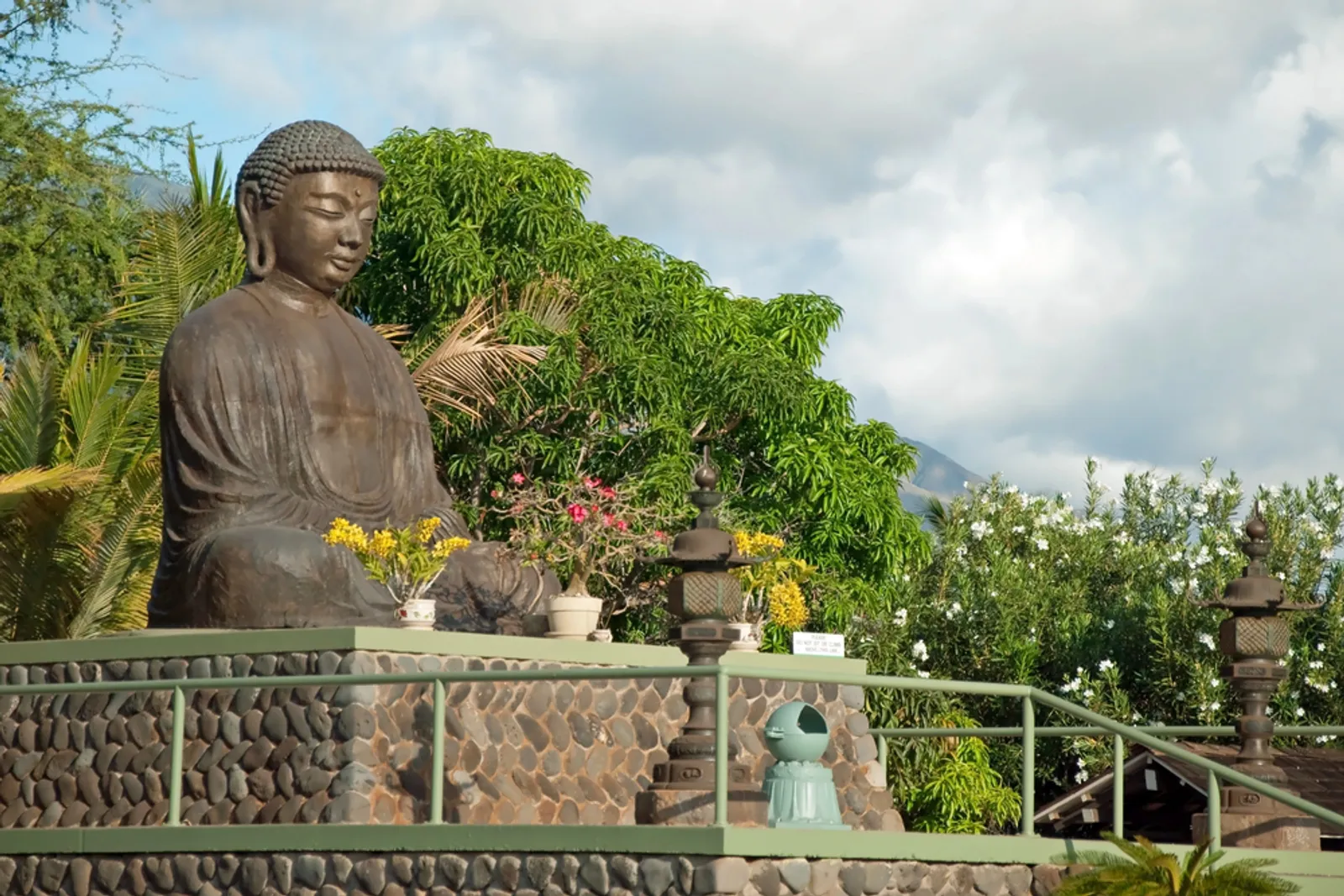
Yet amid all that destruction, something remarkable happened. When the smoke finally cleared and people could return to survey the damage, they found the Great Amida Buddha still standing. The twelve-foot statue sat in its same serene, meditative pose. The flames had come right up to it, had destroyed everything around it, but had left the Buddha untouched.
Images of the surviving Buddha spread quickly across social media and news outlets. People around the world saw the photograph: the Buddha sitting peacefully amid the charred ruins of the mission, the mountains still rising behind it, the ocean still stretching before it. The statue had witnessed the destruction of everything around it with the same calm it had maintained for over fifty years.
For the congregation, for Lahaina, for all of Hawaii, that image became a powerful symbol. It spoke of resilience, of survival, of faith that endures beyond any disaster. The Buddha had survived the flames just as the community would survive this tragedy.
In another small miracle, the wooden Amida Buddha statue that had been rescued from the 1968 fire also survived. This small statue, which had already been saved from flames once, emerged from the 2023 fires damaged but intact. A Japanese conservation team later traveled to Maui to restore it, carefully repairing the damage and ensuring that this remarkable piece of history would continue its journey.
The Mission Today: Clearing the Ground for Tomorrow
In the months since the fires, the grounds of the Lahaina Jodo Mission have been a site of tremendous effort and determination. While the grand buildings are gone, the work of recovery and remembrance continues every day.
Volunteers and Community
Teams of volunteers have spent countless hours clearing debris, cleaning the grounds, and preparing the site for whatever comes next. This work has been physical, exhausting, and emotionally challenging. Every piece of debris removed represents something that was lost, a reminder of what the mission once was.
Yet the volunteers keep coming. They work in the heat, often with no shade from the structures that once stood on the property. They do this work because the mission matters, because it represents something larger than any individual building, because they believe in what it stands for.
The Great Buddha watches over this work, its presence a constant reminder of why the effort matters. Walking the grounds now is a different experience than before the fire, but it is no less powerful. The sense of sacredness remains. The connection to history and faith persists.
A Festival Returns Home
One of the most meaningful moments in the mission's post-fire journey came with the return of the Obon Festival to the mission grounds. In the immediate aftermath of the fires, when the grounds were still being cleared and assessed, the festival was held at a nearby mall. It was important to continue the tradition, to show that the community's spirit was unbroken, but holding it away from the mission felt incomplete.
Bringing the festival home was a powerful statement. Families gathered on the grounds where so much had been lost, where the structures that had framed decades of festivals were now just memories. They danced, they remembered their ancestors, they celebrated together. The festival was different, more emotional, but it was also a declaration: we are still here, we will continue, this place still matters.
"This is more than a festival. It's a homecoming." Maya Hara, the mission director, captured the significance perfectly. "We're not just rebuilding structures. We're rebuilding our sense of place, our spiritual connection, and our community."
The Path Forward: Rebuilding with Care and Vision
The mission's congregation is committed to rebuilding, but the path forward is complex. This is not simply a matter of clearing debris and starting construction. The reality of rebuilding in Lahaina involves navigating numerous challenges, both practical and regulatory.
An Architect's Offer
Shigeru Ban, a world-renowned Japanese architect known for his innovative disaster-relief structures, has offered to help design a new temple. Ban has proposed using innovative waterproof and fireproof materials, creating a structure that could withstand future disasters while maintaining the spiritual and aesthetic qualities that made the original complex so special.
This offer represents an extraordinary opportunity. Ban's expertise and vision could result in a temple complex that honors tradition while incorporating modern understanding of climate resilience and disaster preparedness. His involvement would ensure that the rebuilt mission maintains its connection to Japanese architectural tradition while being built for Hawaii's future, not just its past.
Current Challenges
However, these ambitious plans are currently on hold. The reality of rebuilding on the mission's location involves navigating a host of complex issues. The site sits near the shoreline, which means strict setback requirements must be met. Flood zone regulations add another layer of complexity. Environmental assessments need to be conducted. Debris removal across all of Lahaina is an ongoing process that will take years to complete.
The congregation is currently working to secure a master plan architecture firm that can conduct a thorough feasibility study. This study will assess what is actually possible given the site's constraints, provide cost estimates, and chart a realistic course forward through all the technical and regulatory challenges.
This careful, deliberate approach reflects wisdom earned through experience. The congregation understands that rushing into rebuilding without proper planning could create problems down the road. They are committed to doing this right, even if doing it right takes time.
Continue Exploring
Plan your visit and discover the unshakeable spirit of the mission
📊 2023 Fire Impact
- Main TempleDestroyed
- Bell TowerDestroyed
- PagodaDestroyed
- Great BuddhaSurvived
- 1968 Wooden BuddhaSurvived
📖 Complete Guide
💚 Signs of Hope
- • Buddha survived untouched
- • Obon Festival returned home
- • Volunteers clearing grounds
- • Architect offering expertise
- • Community spirit unbroken