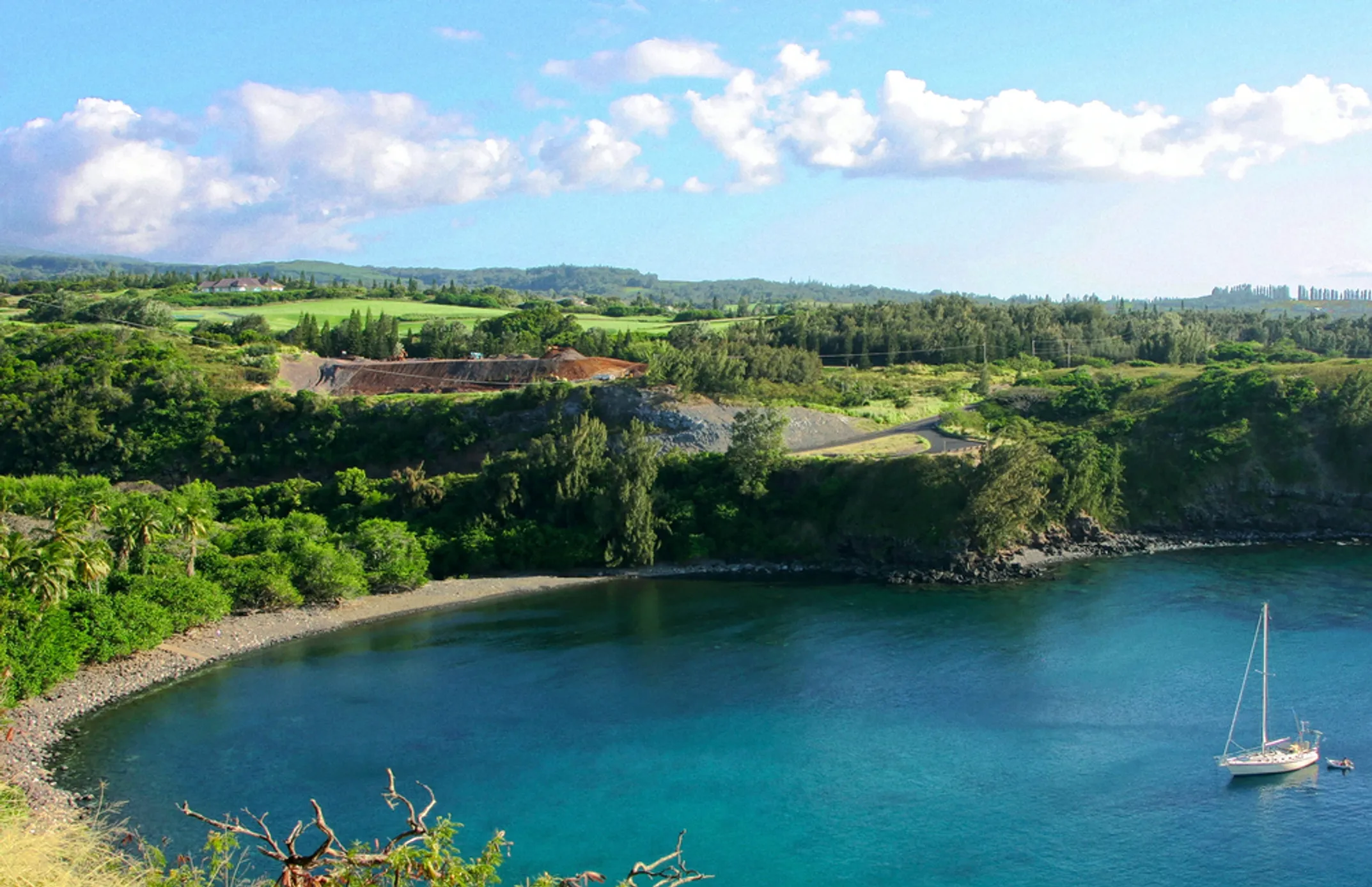
Honolua Bay Snorkeling: Maui's Sacred Marine Sanctuary
Where crystal-clear summer snorkeling meets legendary winter surf in West Maui's most protected bay

Written by a Local Expert
Jade KawanuiAloha! I'm Jade Kawanui, and some places grab your soul the first time you see them. Honolua Bay did that to me. I still remember standing on that dusty red-dirt lookout as a kid, staring down at water so blue it looked fake. The emerald cliffs wrapped around that impossible turquoise like protective arms. I felt something powerful there, something my tūtū called mana. That moment changed how I see Maui forever.
This bay isn't just another Instagram spot. It's a place with two completely different personalities that shift with the seasons. Summer brings calm, crystal-clear water perfect for snorkeling. Winter unleashes legendary waves that draw the world's best surfers. Both sides deserve your respect.
I want to share more than parking tips and fish names. I want you to understand Honolua's story, meet both its powerful souls, and learn how to visit with mālama and kuleana. That's Hawaiian for care and responsibility. My promise is simple: after reading this, you'll experience Honolua not as a tourist, but as a respectful guest.
He Wahi Pana: Where Legends Live
To really get Honolua, you need its backstory. This place tells Hawaii's whole story in one small bay. First came centuries of sacred Hawaiian life. Then foreign settlers and big agriculture changed everything. Now we're in an era of conservation and cultural rebirth.
The Name Tells the Story
Honolua means "two bays" in Hawaiian. But it doesn't mean two parts of one bay. It refers to Honolua paired with nearby Mokulēʻia Bay. Together they form the 45-acre Honolua-Mokulēʻia Marine Life Conservation District. For centuries, Native Hawaiians saw this as one unified, resource-rich landscape, not separate places.
Nā Hono A Piʻilani: The Chief's Sacred Waters
Around the 1400s, the great Chief Piʻilani unified Maui. His kingdom included six sacred bays of West Maui called Nā Hono A Piʻilani. He built a footpath hugging the coast so his court could easily reach these vital areas for fishing, relaxation, and surfing. That ancient path became the modern highway you drive today.
The surfing connection runs deep here. Legends say Piʻilani's son, Kihaʻaʻpiʻilani, rode the same waves that still break in the bay. That's a centuries-old link to he'e nalu, the sport of kings.
Life in the Ahupuaʻa
For generations, Honolua anchored a thriving ahupuaʻa. That's the brilliant Hawaiian land system running from mountains to sea. Communities got everything they needed. Uplands provided wood and tool materials. Valleys offered fertile ground for taro and other crops. The bay delivered rich marine life.
This system worked because Hawaiians understood the connection between land and sea. Healthy forests and clean mountain streams meant healthy, abundant reefs. This ancient wisdom is why conservation efforts protect Honolua today.
The Agricultural Revolution
The 1800s brought massive change. In 1836, American missionary Dr. Dwight Baldwin settled on Maui. Soon the land shifted from traditional use to commercial farming. Honolua Ranch was born, used for cattle and crops like coffee.
By the early 1900s, pineapple became king of West Maui. Horticulturist David T. Fleming planted the first 20 acres. Honolua Ranch transformed into Honolua Plantation, eventually becoming part of Baldwin Packers, then Maui Land & Pineapple Company. They were one of America's biggest pineapple producers.
For decades, sweet pineapple scent filled the air. Trucks rumbled down winding roads to the bay, which served as a shipping point to the mainland. That old concrete boat ramp you see today? It's left from those agricultural days.
The Hōkūleʻa's Sacred Journey
In 1976, something magical happened at Honolua Bay that changed Hawaiian culture forever. On May 1st, the Hōkūleʻa set sail from these protected waters. This full-scale replica of an ancient Polynesian voyaging canoe was heading to Tahiti, over 2,500 miles away, using only traditional navigation.
No modern instruments. No GPS. Just stars, swells, and winds guiding the way. This voyage proved that Hawaiian ancestors' incredible navigation skills were real, not myth. The successful arrival in Tahiti 31 days later sparked the Hawaiian Renaissance, a cultural revival that continues today.
Choosing Honolua as the departure point was perfect. Its protected waters and deep significance made it ideal for launching this sacred journey. That moment cemented Honolua's status as a place of cultural power and rebirth.
Summer Paradise: When the Bay Becomes Glass
From May to September, Honolua transforms into one of Hawaii's most incredible snorkeling spots. The same cliffs that create perfect winter waves shelter the bay from summer winds, creating an aquatic sanctuary.
Why the Fish Life is Amazing
Honolua's underwater world thrives because it's protected. In 1978, the area became a Marine Life Conservation District. That means zero fishing or taking anything from the water. Period. This decades-long protection created something rare: a glimpse of what Hawaii's reefs looked like generations ago.
Fish populations are dense. Individual fish grow larger. The whole reef system flourishes in ways you rarely see elsewhere. It's like stepping back in time to pristine Hawaii.
Your Rocky Challenge
Before you witness this underwater cathedral, you need to get in the water. Here's the truth: Honolua isn't a sandy beach. The shore is entirely smooth, rounded boulders and slippery rocks. After guiding friends and family here for years, my top advice is simple. Wear sturdy water shoes or reef walkers. Those rocks are slick with algae and super uneven. Going barefoot is asking for trouble.
You have two main entry points. The old boat ramp in the bay's center is often easiest. You can sit down, put on fins, and slide into the water. Many experienced snorkelers prefer the rocky shore on the right side. This gets you closer to the best reef and avoids murky water near the stream mouth on the left.
Mapping Your Underwater Adventure
The bay is big. Knowing where to go makes all the difference. Head right as you face the ocean. That's where you'll find the most abundant coral and highest fish concentration. The reef sits in 10 to 40 feet of water, offering incredible surface views. Look for snorkel tour catamarans. They know where the good stuff is.
The bay's middle is a featureless sand channel sloping to about 60 feet at the mouth. You might see larger creatures passing through, but it's less interesting for snorkeling. Think of it as a highway to cross from one reef to the other.
The left side has beautiful reef too, but deeper water and geological features like small caves and archways. This area suits confident swimmers, free divers, or scuba divers better.
Marine Life You'll Meet
The reward for your rocky entry is incredible. In crystal-clear water, you'll encounter marine life that will blow your mind.
Hawaiian green sea turtles (honu) are common sights. These graceful, ancient reptiles often rest on the reef or glide through the water like underwater dancers. Schools of tropical fish surround you. Yellow tang (lauʻīpala) create golden clouds. Convict tang (manini) flash their black and white stripes.
Colorful parrotfish (uhu) munch coral with loud crunching sounds. Elegant Moorish idols (kihikihi) drift by like living artwork. Keep an eye out for our state fish, the reef triggerfish. Its Hawaiian name is a mouthful: humuhumunukunukuāpuaʻa.
If you're lucky, you might spot an octopus hiding in the reef. Moray eels sometimes peek from crevices. In deeper parts, manta rays occasionally glide through like underwater angels.
Safety Warnings You Need to Know
Honolua Stream flows into the bay's left side. After heavy rains, mountain runoff carries silt that makes water near shore extremely murky. Visibility can drop to near zero. Always check recent weather. If it's been raining hard in West Maui, choose another snorkel spot.
There are no lifeguards at Honolua Bay. Ever. This is raw, untamed nature. Never snorkel alone. Stay aware of your surroundings. Know your limits. The ocean doesn't care about your vacation schedule.
Winter Thunder: When Giants Come to Play
When Pacific winter swells arrive from October to April, Honolua undergoes a dramatic transformation. Calm summer waters give way to raw oceanic power. The bay becomes hallowed ground for surfing.
A Critical Message for Visitors
Let me be absolutely clear here. The winter wave at Honolua is for expert surfers only. This is a hollow, powerful, incredibly fast wave breaking over shallow, sharp coral reef. It's not for beginners or even intermediate surfers.
Your magic as a visitor is being a spectator. Find a spot on the cliffs. Watch in awe. Witness some of the world's best surfers performing on nature's most perfect canvas.
Anatomy of a World-Class Wave
Honolua isn't one wave. It's a long, perfect right-hand point break with several distinct sections. A surfer on a great wave can connect all sections for the ride of a lifetime.
Coconuts is the outermost takeoff zone on the far northern point. This is where the wave first feels the reef and stands up. It's the biggest, most exposed section, but sets up everything else.
As the wave wraps into the bay, it hits The Point. Here the wave becomes organized. You'll see the main crowd of surfers fighting for position.
The Cave is Honolua's crown jewel. The most famous, most photographed, most perfect section. The wave bends and accelerates here, pitching over shallow reef to create a flawless, almond-shaped barrel. It's named for an actual hole in the reef below that's been known to swallow surfboards.
If a surfer successfully navigates The Cave barrel, the wave continues into Keiki Bowl. This inside section is smaller, faster, and shallower. It's often ridden by talented local youth (keiki).
Best Viewing Spots
The safest place to watch is from bluffs high above the bay. Several dirt pullouts along Honoapiʻilani Highway on the northern side offer incredible views. From here you can see the entire lineup and watch surfers ride from Coconuts all the way through.
Bring binoculars for an even better show. The energy during big swells is intense and focused. Be a quiet observer. Appreciate the incredible display of skill and natural power.
Parking Chaos During Swells
When a major swell hits, word travels fast in the surf community. The already impossible parking situation becomes absolutely insane. Cars line up along the highway for over a mile.
If you come to watch, be extremely mindful and respectful. Park completely off pavement. Don't block dirt road access for local residents. Be patient. The local connection to this wave runs deep. The annual "Legends of the Bay" surf contest brings together everyone from young groms to seasoned veterans who've surfed here for decades.
The Enchanted Forest Walk
Your Honolua experience starts long before you touch water. The journey from road to shore is a vital transition. A short pilgrimage preparing you for the sacred space ahead. The Honolua Bay Access Trail gets called the "enchanted forest" for good reason.
Stepping from the sun-baked highway into the trailhead is like entering another world. Temperature drops. Air grows thick with damp earth smell. Traffic sounds fade, replaced by rustling leaves and bird calls.
The trail winds beneath a dense, cathedral-like canopy of towering monkeypod and Java plum trees. Thick, hanging vines drape the branches. Sunlight struggles to pierce the gloom, casting magical shadows on the path. It feels like a movie scene, a primeval jungle gateway to the sea.
This short 0.6-mile walk is an experience itself. You'll see signs of the area's agricultural past. Wild mango, papaya, and avocado trees grow among native and non-native plants. Wild chickens will probably greet you, their cheerful clucking adding quirky local charm.
The trail is psychological preparation. It forces you to slow down and quiet your mind. This brief nature immersion strips away outside world stress, preparing you to experience the bay with proper reverence.
As you walk, remember this land is sacred. Stay on the marked path. There's private property nearby and unmarked graves in the forest. This path isn't just transportation. It's the proper, respectful way to approach Honolua's heart.
Explore More About Honolua Bay
From conservation practices to practical planning tips, discover everything you need for a respectful and unforgettable visit to this sacred marine sanctuary.
ℹ️ Quick Info
- Best Season: May-Sep
- Activity: Snorkeling/Surf
- Entrance Fee: Free
- Lifeguards: None
- Parking: Very Limited
🎒 What to Bring
- Water shoes (essential)
- Reef-safe sunscreen
- Snorkel gear
- Drinking water
- Towels & dry clothes
- Waterproof camera