The Ultimate Molokini Tour Selection Strategy
Choose the perfect tour for your adventure

Written by a Local Expert
Jade KawanuiChoosing a Molokini tour can feel overwhelming. With dozens of boats, departure times, and price points, how do you find the right one? After countless trips, I can tell you that the single most important factor is matching the tour to your personality and priorities. This breakdown will guide you through the key decisions step-by-step, empowering you to choose with confidence.
Your Launch Point: Maʻalaea Harbor vs. Kihei Boat Ramp
Before you even think about the boat, you need to decide where you're leaving from. This choice is the first and most critical filter, as it largely determines your travel time and the type of vessel you'll be on.
Maʻalaea Harbor
Located centrally on Maui, Maʻalaea is the island's main harbor and the departure point for most of the large, stable catamarans.
Pros:
- Plenty of amenities (restaurants, shops, Maui Ocean Center)
- Large, stable boats ideal for families
- Good for those concerned about seasickness
Cons:
- ~1 hour boat ride to Molokini
- Return trip often faces strong trade winds
- Can be bumpy in afternoon
Kihei Boat Ramp
Situated in South Maui, this simple boat launch is much closer to the crater.
Pros:
- Only 15-30 minutes to Molokini
- More time in the water
- Better for seasickness-prone visitors
- Convenient for Kihei/Wailea guests
Cons:
- Minimal amenities (just ramp and parking)
- Parking can get crowded
- Mostly high-speed rafts
My advice? First, decide what's more important: a shorter, more direct boat ride or more onboard amenities and a leisurely cruise. If you want to get there fast, choose a tour from the Kihei Boat Ramp. If you value stability and comfort above all, look for a large catamaran out of Maʻalaea Harbor.
Choosing Your Vessel: The Great Boat Debate
Once you've settled on a departure point, it's time to pick your ride. The type of boat you choose defines the entire atmosphere of your day, from the crowd size to the level of adventure.
Large Double-Decker Catamarans
Think of these as the floating resorts of Molokini. They are incredibly stable, spacious, and packed with amenities. You'll find restrooms, freshwater showers, full meal and bar service, and often fun extras like waterslides. Their stability makes them the absolute best choice for families with young children, non-swimmers who might be nervous, or anyone who prioritizes comfort and a smooth ride.
Best For: Families, First-Timers, Comfort-Seekers
Typical Group Size: 60-100+ passengers
Trade-off: The crowd. These boats can mean lines for food, the slide, and getting into and out of the water.
High-Speed Rafts
These are the adventure option, built for speed and excitement. You'll be seated close to the water on an inflatable pontoon-style raft, zipping across the waves for an exhilarating, and often bumpy, ride. They are perfect for thrill-seekers and confident swimmers who want a more intimate experience. The small group size (typically 16-36 passengers) means more personal attention from the crew.
Best For: Thrill-Seekers, Experienced Snorkelers
Typical Group Size: 16-36 passengers
Trade-off: Near-total lack of amenities (many have no restroom), full exposure to sun and spray, and the bumpy ride is not suitable for young children, pregnant women, or anyone with back issues.
Single-Hull Sailboats
For those who dream of a more classic and romantic ocean experience, a single-hull sailboat is a fantastic choice. There's nothing quite like the moment the captain cuts the engines and you move with the quiet power of the wind. These tours offer a middle ground, with smaller group sizes than the giant catamarans and more comfort than the rafts.
Best For: Couples, Purists, Small Groups
Typical Group Size: 20-40 passengers
Trade-off: Monohulls "heel," or tilt, as they sail, which is part of the authentic experience but can be unsettling for first-timers. They also offer less deck space compared to a catamaran of the same length.
The Early Bird Gets the Calm: Why Morning Tours Are Essential
If there is one piece of advice I give to everyone asking about Molokini, it's this: book a morning tour. This isn't just a preference. It's based on the predictable daily weather patterns of Hawaii.
The Hawaiian trade winds typically start to pick up around 11 a.m. and grow progressively stronger throughout the afternoon. This has two major consequences for a Molokini trip. First, it creates surface chop on the open channel, making the boat ride bumpier and increasing the likelihood of seasickness. Second, and more importantly, the wave action stirs up sand and sediment from the seafloor. This churning effect clouds the water, drastically reducing the world-famous visibility that you came to see.
Morning Advantages
- ✓ Stunning visibility with sunlight penetrating deep
- ✓ Calmer conditions for comfortable snorkeling
- ✓ More active marine life during feeding times
- ✓ Fewer crowds - first to arrive at crater
Afternoon Challenges
- ✗ Strong trade winds create surface chop
- ✗ Reduced visibility from stirred sediment
- ✗ Bumpier boat ride increases seasickness
- ✗ Tours may divert to alternate locations
Understanding Your Underwater Options
Most tours offer a few different ways to experience Molokini's underwater world. Here's a quick breakdown to help you choose:
Snorkeling
This is the classic Molokini experience, accessible to everyone, with no prior training needed. You'll be given a mask, snorkel, and fins. All reputable tours also provide flotation devices like vests or belts, so even if you're not a strong swimmer, you can float comfortably on the surface and enjoy the view below. The water is so clear that you can see everything perfectly from the top.
SNUBA
If you're an adventurous snorkeler curious about going deeper, SNUBA is the perfect upgrade. It's a unique hybrid system where you breathe through a regulator connected by a long hose to an air tank that floats on a raft at the surface. This allows you to dive down 10-20 feet and swim alongside the fish without needing a scuba certification or wearing heavy gear on your back. It's a fantastic way to get a diver's-eye view of the reef.
Scuba Diving
For certified divers, Molokini offers a chance to explore the deeper parts of the inner reef, which slopes from the shore down to over 100 feet. But the true prize for experienced divers lies on the other side of the crater—the legendary Back Wall, a world-class dive that most visitors never see.
A Diver's Dream: Conquering Molokini's Legendary Back Wall
For certified scuba divers, the inside of the crater is just the opening act. The main event, and one of the most breathtaking dives in the world, is the legendary "Back Wall." This is a dedicated adventure for experienced divers, and it's an experience that truly sets Molokini apart.
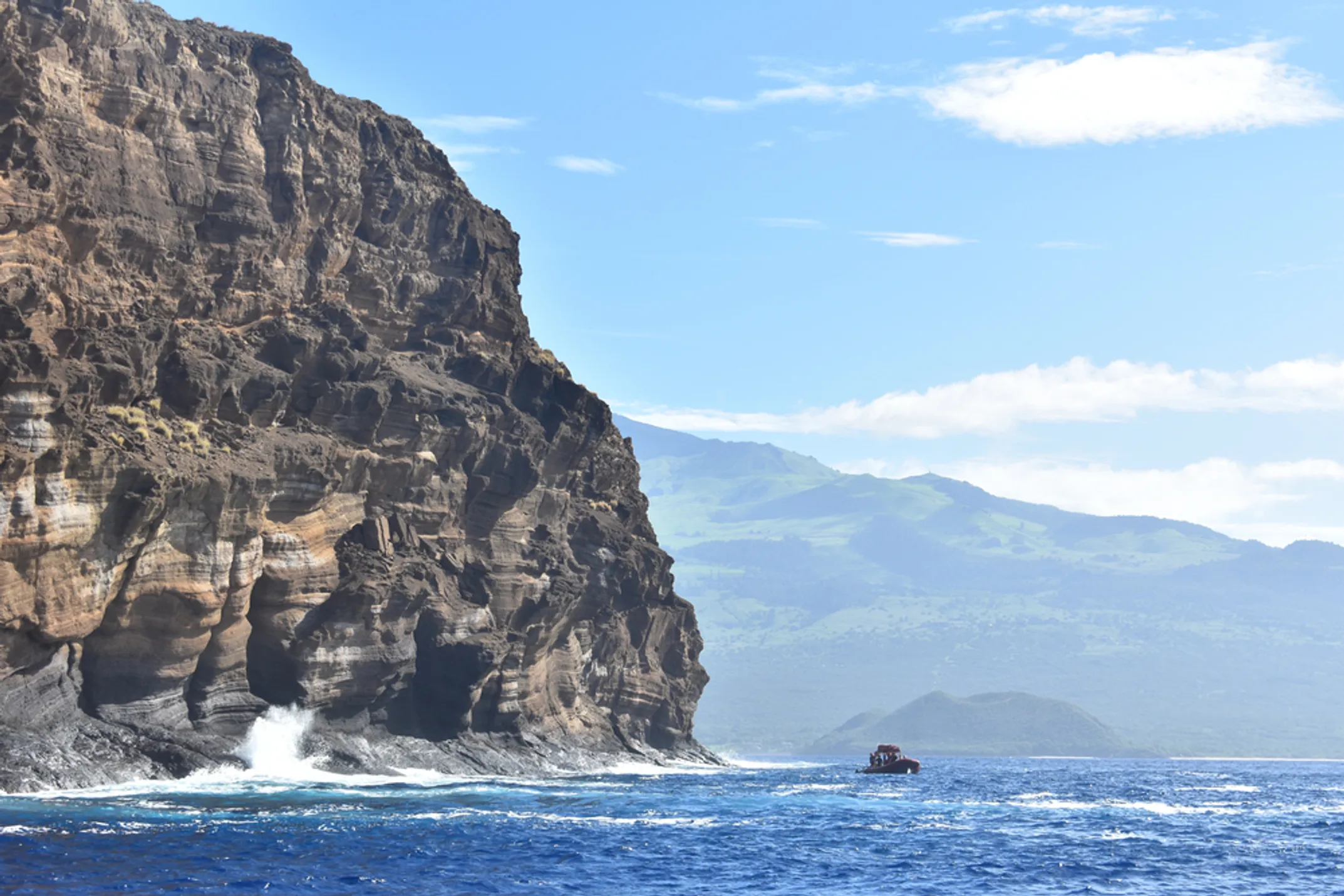
The Back Wall is the outer edge of the crater, a sheer vertical cliff that plummets from just below the surface to depths of over 300 feet into the vast, blue expanse of the ʻAlalākeiki Channel. This is not a reef dive. There is little coral on the wall itself. The experience is about the immense scale of the underwater topography, the feeling of floating in the deep blue, and the thrilling possibility of encountering large pelagic animals that cruise the open ocean.
Back Wall Requirements (Non-Negotiable)
- • Hold at least an Advanced Open Water certification
- • Have a minimum of 25 logged dives
- • Have been on a boat dive within the last 6 months
- • Possess excellent buoyancy control to manage your depth along the wall and perform a safety stop in mid-water without a line
The reward for meeting these requirements is the chance to witness something truly special. With visibility often exceeding 150 feet, you'll want to keep one eye on the wall for unique critters like nudibranchs and the other looking out into the blue. This is where you might see manta rays, pods of dolphins, and, during the winter months, even humpback whales. It's also one of the best places in Maui to spot sharks, including Galapagos, grey reef, and whitetip reef sharks cruising in the deep. It is an unforgettable, world-class dive for those who are qualified.
⚖️ Quick Comparison
Catamaran
Stable, amenities, 60-100 people
Raft
Fast, thrilling, 16-36 people
Sailboat
Romantic, quiet, 20-40 people
📖 Guide Sections
📧 Maui Updates
Get the latest Molokini conditions and Maui adventure tips delivered to your inbox.