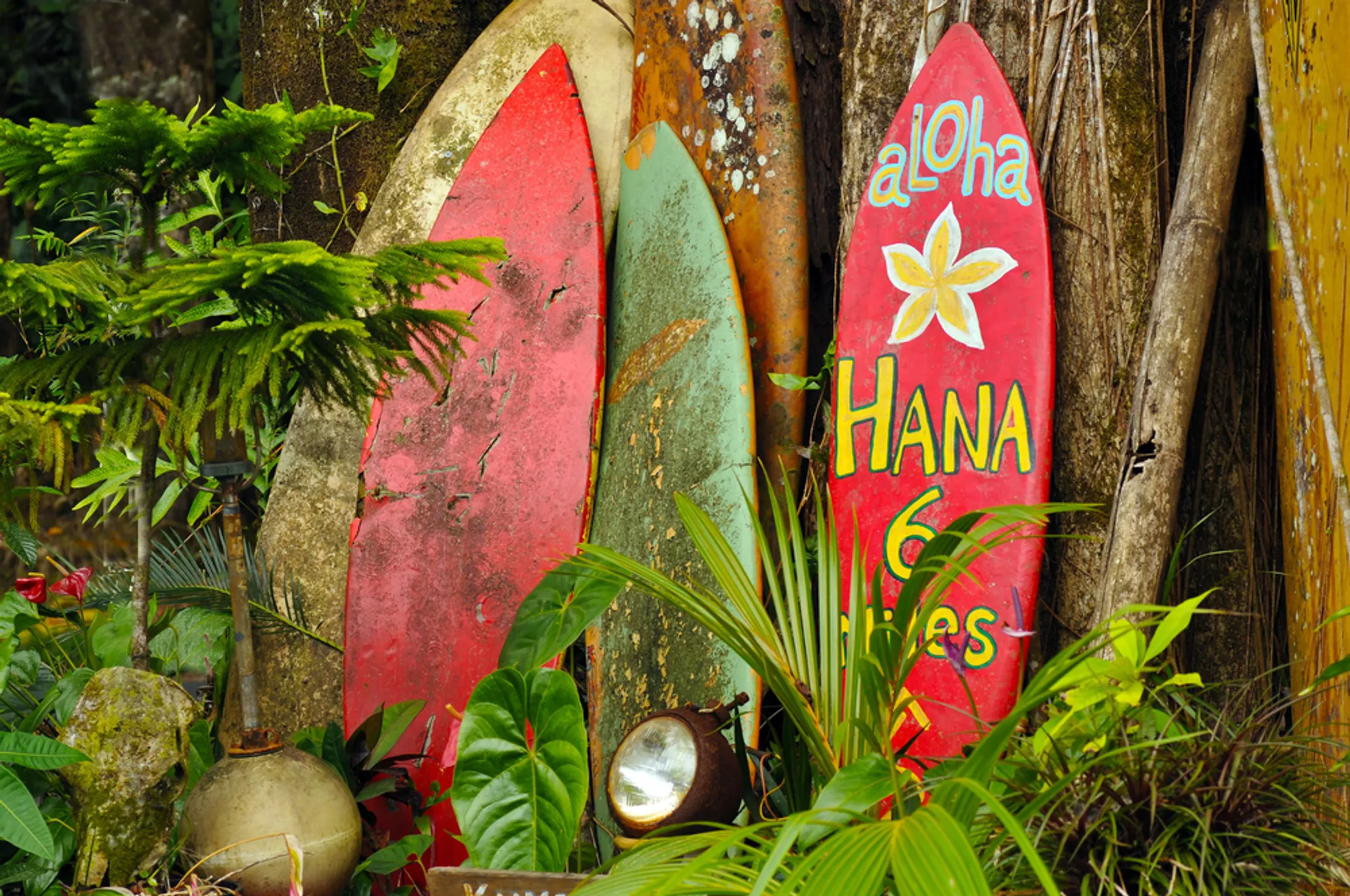
East Maui: The Journey to Old Hawaiʻi
Where the Road to Hāna leads to waterfalls, black sand beaches, and timeless aloha

Written by a Local Expert
Jade KawanuiEast Maui: The Journey to Old Hawaiʻi
There's a saying here: "Hāna is not a destination, it's a state of mind." It's where the clock seems to disappear entirely. The famous Hāna Highway, with its 620 curves and 59 one-lane bridges, isn't an obstacle; it's a transition.
It's a journey that forces you to slow down, to breathe in the scent of rain-soaked ginger, and to arrive not just in a place, but in a different way of being. This is East Maui, a remote and timeless world of raw, untamed beauty, where aloha is truly a way of life.
The Vibe
The atmosphere of East Maui is one of profound peace and isolation. It feels like stepping back in time to an older, simpler Hawaiʻi. This is the windward side of the island, a lush rainforest world of cascading waterfalls, dramatic sea cliffs, and stunning black sand beaches.
The experience is defined by the journey itself—the legendary Road to Hāna is an integral part of the adventure, preparing you for the tranquility that awaits. Life here is unhurried, deeply connected to the land (ʻāina), and far removed from the modern world of resorts and shopping malls.
Key Towns & Areas
The Hāna Highway (HI-360)
More than just a road, the 52-mile Hāna Highway is the main feature of East Maui. The drive is an attraction in itself, winding through dense bamboo forests, past countless waterfalls, and around hairpin turns that reveal breathtaking ocean vistas.
The philosophy of the drive is to savor the journey, making frequent stops to explore the natural wonders along the way.
Hāna Town
After navigating the winding road, you arrive in Hāna, a peaceful and quiet town that is considered one of the last unspoiled Hawaiian frontiers. The town is refreshingly simple, with no traffic lights or high-rises. You'll find a general store, a few local eateries, historic churches, and a deep sense of community rooted in Hawaiian tradition.
The heart of the town is Hāna Bay, a calm cove where local families gather and outrigger canoes rest on the shore.
Kīpahulu
Located about 10 miles south of Hāna Town, Kīpahulu is the remote coastal district of Haleakalā National Park. This is a place of incredible natural beauty and cultural significance, home to the famous Pools of ʻOheʻo and the start of the Pīpīwai Trail.
Top 5 Things to Do in East Maui
Explore Waiʻānapanapa State Park
This is a place of stunning contrasts, home to the famous Paʻiloa Beach, where jet-black sand meets turquoise water. Explore sea caves, a natural stone arch, a blowhole, and ancient coastal trails. Crucially, advanced online reservations are now required for all vehicles and walk-in visitors. You must book your time slot well in advance, as entry is not possible without a reservation.
Hike the Pīpīwai Trail
Located in the Kīpahulu district of Haleakalā National Park, this is arguably one of the best hikes in all of Hawaiʻi. The incredible 4-mile round-trip trail takes you through a mystical, dense bamboo forest and past a giant banyan tree, culminating at the base of the spectacular 400-foot Waimoku Falls.
Swim at Hamoa Beach
Just south of Hāna town lies this picture-perfect crescent of salt-and-pepper sand, framed by lush hala trees. Author James Michener once called it the most beautiful beach in the Pacific. The waves are often gentle enough for swimming and body surfing, making it a perfect spot to relax and soak in the beauty of East Maui.
See the Pools of ʻOheʻo
Often called the "Seven Sacred Pools," this series of cascading waterfalls and plunge pools flows through ʻOheʻo Gulch and into the ocean. It's a breathtaking sight within the national park. Note that swimming in the pools is often prohibited due to safety concerns like flash flooding and rockfalls. Always check current conditions and obey all signs from the National Park Service.
Support Local Roadside Stands
The journey to Hāna is dotted with small, family-run stands that are a vital part of the local economy. Be sure to stop for some warm, fresh-baked banana bread (Aunty Sandy's on the Keʻanae Peninsula is legendary), tropical fruit, fresh-squeezed juices, or handmade crafts. It's the most delicious way to experience local culture.
Best For
- • Adventurous travelers and nature lovers who want to immerse themselves in raw, untamed natural beauty and don't mind a challenging drive
- • Hikers seeking some of the most unique and rewarding trails on the island, like the Pīpīwai Trail
- • Travelers looking to completely unplug from the modern world and experience a slower, more intentional pace of life
- • Those who can stay overnight in Hāna to truly appreciate the peaceful atmosphere after the day-trippers have made the long drive back
💡 Jade's Insider Tip
The biggest mistake visitors make is trying to "conquer" the Road to Hāna in a single day trip. You can't. You have to let it guide you. Start your journey with a full tank of gas from Pāʻia, download an offline map as cell service is unreliable, and pack plenty of snacks and water. But most importantly, practice aloha on the road. If a local driver is behind you, find a safe place to pull over and let them pass. It's the number one rule of the road and a sign of respect for the community that calls this sacred place home.
The Big Decision: West Maui vs. South Maui
For most first-time visitors, the first major decision in planning a trip is choosing between Maui's two main resort areas: West Maui and South Maui. Both offer beautiful beaches, stunning sunsets, and a wide range of accommodations and activities. However, they have distinctly different personalities. This side-by-side comparison is designed to help you find the region that best fits your personal travel style.
West Maui vs. South Maui at a Glance
The Vibe
West Maui (Kaʻanapali, Kapalua): Lively & Active - A concentrated hub of resorts, shops, and restaurants creates a bustling, "classic resort" atmosphere with a high-energy feel.
South Maui (Kihei, Wailea): Relaxed & Spread Out - A spectrum from the casual and budget-friendly vibe of Kihei to the quiet, upscale luxury of Wailea. Generally more laid-back and spacious.
Weather
West Maui: Sunny & Drier - Lahaina is historically very hot ("cruel sun"). Kaʻanapali is reliably sunny. The northernmost area, Kapalua, is a bit cooler and receives more passing showers.
South Maui: Sunniest & Driest - This region boasts the most reliable sunshine on the island. It can become breezy in the afternoons, especially in Kihei, as the trade winds pick up.
Beaches
West Maui: Iconic Resort Beaches - Features the world-famous, long, golden stretch of Kaʻanapali Beach, as well as stunning, sheltered coves like Napili Bay and Kapalua Bay that are perfect for snorkeling.
South Maui: Miles of Sandy Beaches - Known for having the highest number of accessible white-sand beaches, including the three Kamaʻole parks in Kihei and the five perfect crescents of Wailea.
Price
West Maui: Moderate to Luxury - While home to luxury resorts, hotels here are, on average, slightly less expensive than in Wailea. Offers a good range of high-end condos and mid-range options.
South Maui: Budget to Ultra-Luxury - Kihei is the hub for affordable and mid-range condo rentals. Wailea is home to the island's most expensive and luxurious five-star resorts.
Nightlife
West Maui: More Concentrated - Historically the island's nightlife center, particularly in Lahaina. The cluster of resorts in Kaʻanapali offers many options for bar-hopping and evening lūʻau shows.
South Maui: Split Personality - Kihei's "Triangle" area has a lively cluster of sports bars, karaoke spots, and clubs. Wailea offers more sedate, upscale hotel lounges with live music and craft cocktails.
Making Your Choice
Consider West Maui if you:
- • Want everything within walking distance
- • Prefer a more traditional resort vacation experience
- • Enjoy a bustling, energetic atmosphere
- • Value convenience over space
- • Are traveling with teenagers or young adults who want nightlife options
Consider South Maui if you:
- • Prioritize guaranteed sunshine above all else
- • Want access to the most beaches
- • Prefer a more spread-out, relaxed environment
- • Are budget-conscious but still want beautiful beaches
- • Love water sports and marine activities
The Reality: You Don't Have to Choose
Here's what many visitors don't realize: you can easily experience both regions during your stay. A drive from Kihei to Kaʻanapali takes only 45 minutes in light traffic. Many of my friends who live here regularly beach-hop between the regions depending on their mood and the weather.
Consider splitting your stay if you're here for a week or more. Spend a few days in the action of West Maui, then transition to the laid-back luxury of South Maui. This gives you the best of both worlds and a more complete Maui experience.
Find Your Maui, Then Explore Another
As you can see, there is no single "best" region of Maui—only the one that is best for you, for this particular trip, for the memories you hope to create. My hope is that this exploration serves as a compass, helping you navigate the incredible diversity of our island and find the corner that speaks to your spirit.
But my final piece of advice is this: once you find your home base, don't stay there. Embrace your chosen region, but promise yourself you'll dedicate at least one day to exploring a completely different world.
Drive from the sun-drenched shores of Wailea up into the cool, fragrant mists of Kula. Travel from the lively beach paths of Kaʻanapali to the quiet, sacred grounds of ʻĪao Valley. Trade a day of resort relaxation for the winding, waterfall-lined journey to Hāna.
To truly experience Maui is to appreciate its contrasts. It is in that journey between worlds that you will feel the island's true magic. The moment you round a curve and suddenly see a completely different landscape, or when you step from a sunny beach into a misty forest, you understand why we call this place special.
Each region offers not just different activities or accommodations, but different rhythms of life. The bustling energy of a West Maui resort teaches you one way to relax. The contemplative quiet of an Upcountry morning shows you another. The profound peace of East Maui's waterfalls offers yet a third path to restoration.
The geological forces that created these distinct regions also created distinct opportunities for renewal and discovery. Honor that diversity by sampling widely. Let yourself be surprised by a hidden waterfall, an unexpected view, or a chance encounter with local culture.
This is the essence of the Valley Isle experience—not just the valleys between our two great mountains, but the valleys and peaks of different experiences, all connected by the common thread of aloha.
Travel with an open heart, practice mālama ʻāina—care for the land that cares for us all—and leave this special place even more beautiful than you found it.
Whether you find yourself watching the sunrise paint Haleakalā's crater in gold, floating above a coral reef in Molokini's crystal waters, or listening to the ancient stories told by the wind in Hāna's bamboo forests, you'll understand that Maui isn't just an island you visit. It's a collection of experiences that visit you, changing how you see the world and your place in it.
A hui hou (until we meet again).
📍 Maui's 5 Regions
🌴 East Maui Highlights
- Weather: Lush & tropical
- Best For: Adventurers
- Top Activity: Road to Hāna
- Character: Remote & timeless
💎 Must-See Wonders
Black Sand Beach
Waiʻānapanapa Park
Pīpīwai Trail
Bamboo forest hike
Pools of ʻOheʻo
Sacred waterfalls
📧 Stay Updated
Get the latest Maui travel tips and regional guides delivered to your inbox.