The Pīpīwai Trail Experience
A Journey to Waimoku Falls Through Maui's Most Magical Landscapes

Written by a Local Expert
Jade KawanuiThe Ultimate Pīpīwai Trail Experience: A Journey to Waimoku Falls
While the pools themselves are off-limits, the crown jewel of a visit to Kīpahulu is the Pīpīwai Trail. This is, without question, one of the greatest hikes in all of Hawaiʻi. It's a journey through multiple ecosystems that tells the story of the land, culminating in a truly awe-inspiring sight.
Trail Overview and Preparation
Before you set foot on the trail, preparation is key. This is a moderate hike, covering 4 miles round trip with an elevation gain of about 800 feet. You should plan to spend at least 2.5 to 4 hours to truly enjoy it without rushing.
The trail surface is a mix of packed earth, stone steps, and boardwalks, but it is almost always wet and muddy in places. Locals have a fond name for this slick mud: "Hawaiian ice." For this reason, sturdy, closed-toe hiking shoes with good grip are essential. I've seen too many visitors attempt this in flip-flops and end up slipping or covered in mud.
Also, be sure to carry at least one liter of water per person, along with insect repellent, sunscreen, and a rain poncho, as passing showers are common.
The Pīpīwai Trail is a journey through the ecological and economic history of Kīpahulu. It begins in a regenerating native forest, passes through remnants of the agricultural plantation era, and ends at a display of raw, timeless nature. Each section tells a different chapter of Kīpahulu's story, a narrative that comes alive when interpreted by a knowledgeable guide who can explain the transition from ancient nature to human development and back again.
Part 1: The Ascent to Makahiku Falls (Mile 0.5)
Your hike begins just across the Hāna Highway from the Kīpahulu Visitor Center parking lot. The trail starts climbing almost immediately, and this first half-mile is one of the steepest sections of the entire hike, winding along a ridge with exposed tree roots underfoot.
After a short but invigorating climb, you'll reach the Makahiku Falls overlook. From here, you are rewarded with a stunning view of the 184-foot waterfall plunging into a lush gorge below. Look closely and you may spot the concrete remains of an old sugarcane flume system, a tangible link to the days when this valley was a bustling sugar plantation.
Part 2: The Guardian Banyan Tree (Mile 1.0)
Just past the Makahiku overlook, you will encounter one of the trail's most iconic landmarks: a colossal banyan tree. It is a true giant, a sprawling organism with a complex web of aerial roots that have grown down to form new trunks.
Walking beneath its massive canopy feels like stepping into another world. It's a favorite spot for photos and a perfect place to pause, catch your breath, and appreciate the sheer scale of life in this rainforest.
Part 3: Entering the Bamboo Forest (Miles 1.0 - 1.5)
As you cross a bridge over the Pīpīwai Stream, the landscape changes dramatically. You are about to enter the bamboo forest, the most magical and memorable part of the hike for many people.
The trail transforms into a path through a dense, towering forest of bamboo that forms a surreal green tunnel, filtering the sunlight from above. The experience is immersive and sensory. On a windy day, the air is filled with a unique, hollow, clacking sound as the giant stalks knock against each other, like a natural set of wind chimes.
The National Park Service has installed sections of boardwalk to help you navigate the muddiest parts of this shaded wonderland. It's important to remember that this bamboo, while beautiful, is not native to Hawaiʻi. It was introduced and planted by Chinese and Japanese laborers who worked on the sugar plantations, a living legacy of the people who shaped this land in a different era.
Part 4: The Grand Finale – Waimoku Falls (Mile 2.0)
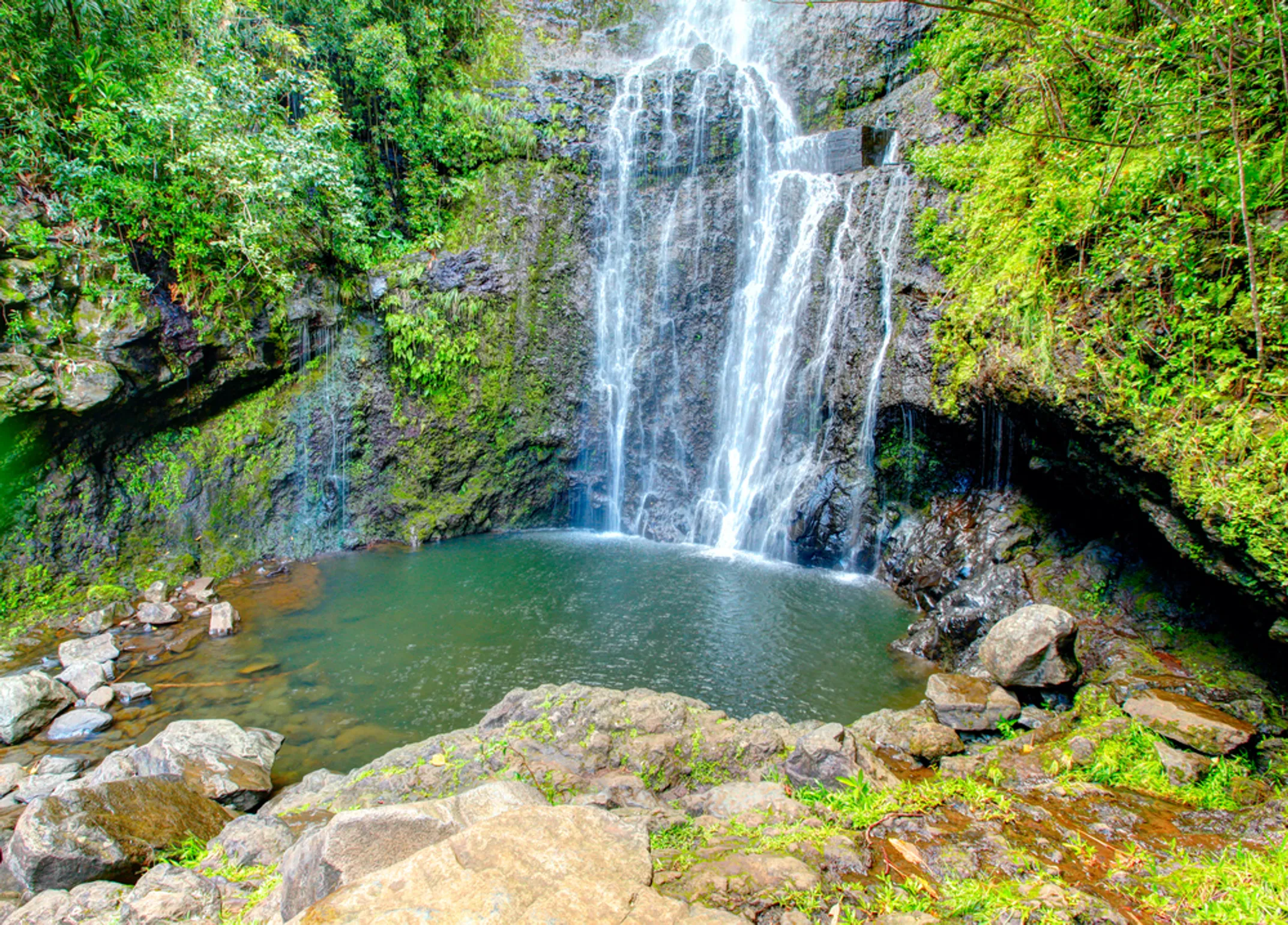
After emerging from the bamboo forest, the trail continues for another half-mile to its spectacular conclusion. The sound of rushing water grows louder, and then you see it: Waimoku Falls.
This is the payoff for your efforts. A magnificent 400-foot waterfall cascades down a sheer, vegetation-draped lava rock cliff face. The air is cool and filled with a fine mist, and the scale of the falls is humbling.
⚠️ Critical Safety Warning
The National Park Service has posted clear signs warning visitors not to proceed past a certain point. The area at the base of the falls is a high-risk zone for rockfalls, and getting too close is extremely dangerous. Respect these closures. The view from the designated area is breathtaking and safe.
This is where a tour is again invaluable, as a guide will ensure the group adheres to these critical safety boundaries while still getting the best possible experience of this incredible natural wonder.
🥾 Footwear
Sturdy hiking shoes with excellent grip are non-negotiable. The trail is muddy and slippery. No flip-flops!
💧 Hydration
Bring at least 1 liter of water per person. The humidity is intense and you'll need to stay hydrated.
⏰ Timing
Start early morning for best conditions and fewer crowds. Allow 2.5-4 hours for the full experience.
Continue Your Journey
Learn about the geology, cultural history, and planning tips for your visit to Kīpahulu.
📊 Trail Stats
- Total Distance: 4 miles RT
- Elevation Gain: 800 feet
- Time Needed: 2.5-4 hours
- Difficulty: Moderate
- Trail Type: Out & back
⭐ Trail Highlights
Makahiku Falls
184-foot waterfall at 0.5 miles
Giant Banyan Tree
Iconic photo spot at 1.0 mile
Bamboo Forest
Magical tunnel at 1.0-1.5 miles
Waimoku Falls
400-foot finale at 2.0 miles
🎒 Essential Gear
- Hiking shoes (NOT flip-flops)
- 1+ liter water per person
- Insect repellent
- Rain poncho/jacket
- Reef-safe sunscreen
- Camera
- Snacks
📖 Complete Guide
Getting started
Current page
Geology & safety
Cultural HistoryAhupuaʻa & heritage
Planning Your VisitWeather & tips