An Expert's Itinerary
What your guided journey will unveil from Pāʻia to Kīpahulu

Written by a Local Expert
Jade KawanuiAn Expert's Itinerary: What Your Journey Will Unveil
Every guided tour tells a story, and the Road to Hāna narrative unfolds like chapters in an epic tale. Here's what you'll discover when an expert takes the wheel.
The Gateway: Pāʻia Town and Hoʻokipa Lookout
Your adventure begins in Pāʻia, the last outpost of civilization before the wild coast takes over. This bohemian surf town buzzes with energy, its colorful storefronts housing everything from organic cafes to vintage clothing shops.
From there, it's a quick drive to Hoʻokipa Beach Park, where world-class windsurfers dance across the waves. Your guide knows the best viewing spots, away from the crowds, where you can often spot Hawaiian green sea turtles hauling themselves onto the warm sand for afternoon naps. The energy here sets the tone—this is where Maui shows off her power and grace.
First Waterfalls: Twin Falls
Your first taste of the rainforest comes at Twin Falls, where easily accessible cascades tumble into refreshing pools. But this stop offers more than just a pretty swimming hole.
Your guide shares the story of Wailele Farm, how local families transformed working cattle pastures into the lush botanical preserve you see today. The valley's Hawaiian name, Hoʻolawa, means "to provide, to share in abundance"—fitting for a place that's nourished both body and spirit for generations.
While Twin Falls attracts crowds and parking nightmares for self-drivers, tour vans navigate these challenges with ease, allowing for a perfect introduction to the wonders ahead.
Lush Vistas and Taro Fields: Keʻanae Peninsula
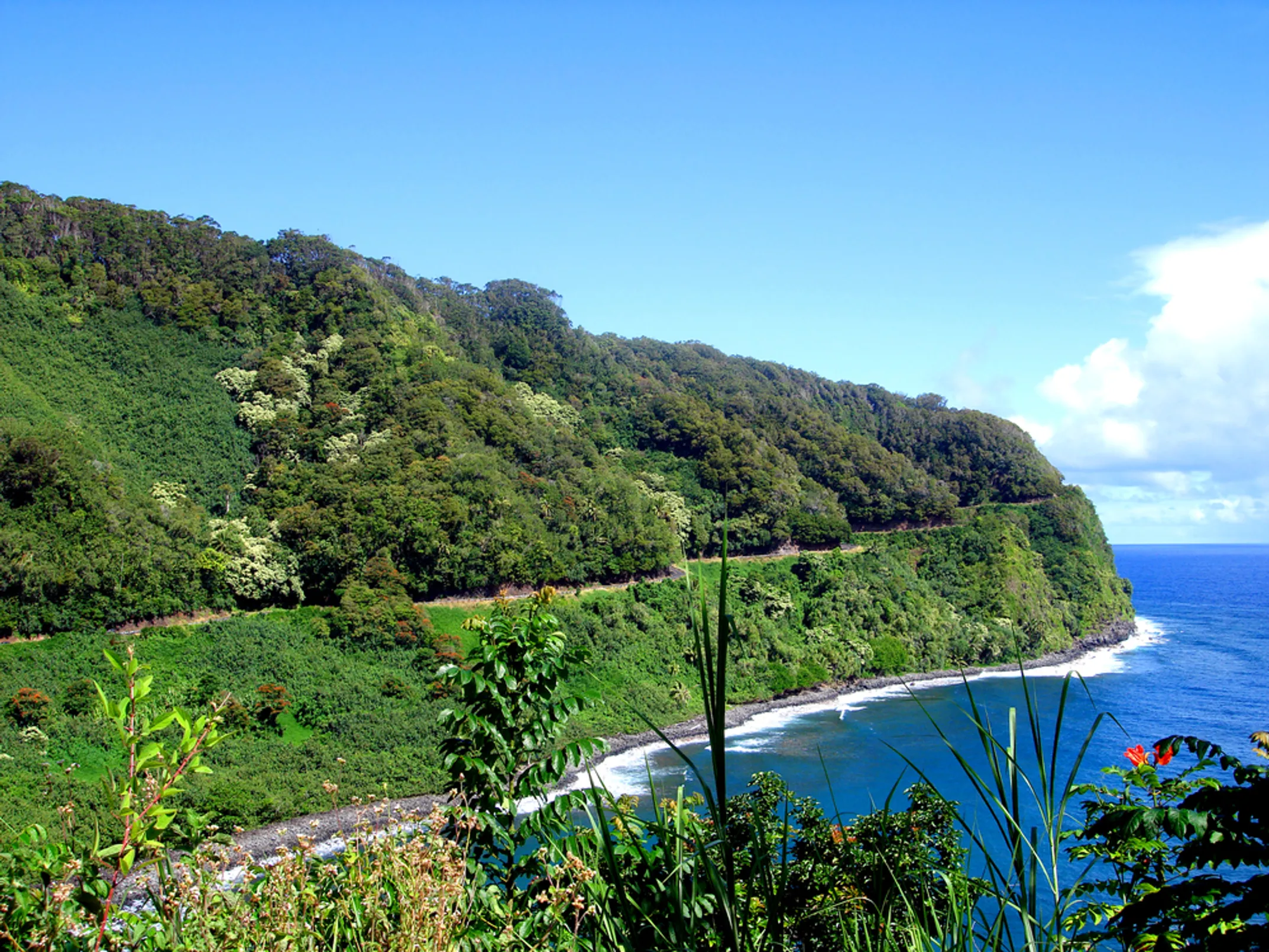
The turnoff to Keʻanae Peninsula reveals one of the most culturally significant landscapes on the entire coast. This jagged finger of black lava rock, formed by ancient flows from Haleakalā, juts boldly into the Pacific's blue expanse.
The peninsula unfolds as a patchwork of brilliant green loʻi (irrigated terraces) where Hawaiian families have cultivated sacred kalo (taro) for generations. Your guide explains the incredible labor required—ancient Hawaiians hand-carried soil down from mountain valleys to cover this barren lava rock, creating fertile farmland where none should exist.
The small stone church, built in 1856 from lava rock and coral mortar, tells an even more powerful story. It's the sole survivor of the devastating 1946 tsunami that wiped out the entire village. Standing in its shadow while waves crash nearby, you feel the resilience of the Hawaiian people in your bones.
Of course, no Keʻanae stop is complete without Aunty Sandy's banana bread—widely considered the best on Maui and a delicious reminder that the best experiences blend culture with simple pleasures.
Iconic Stops: Upper Waikani Falls and Puaʻa Kaʻa State Park
As the journey continues, you encounter some of the route's most photographed sights. Upper Waikani Falls, known as "Three Bears Falls," sends three parallel cascades tumbling into turquoise pools right beside the highway.
For self-drivers, this creates a dangerous situation—limited parking in a no-parking zone with cars jutting into traffic. Your guide knows exactly where to stop safely for that perfect photo, something nearly impossible for independent travelers.
A few miles further, Puaʻa Kaʻa State Park offers welcome relief with its public restrooms, covered picnic tables, and lovely waterfall with a perfect swimming pool. The park's name means "rolling pig," referencing the wild boars that once roamed these forests. Today it's a peaceful haven where you can refresh yourself in cool mountain water without a strenuous hike.
The Crown Jewel: Wai'anapanapa State Park
Wai'anapanapa represents the journey's emotional and visual climax. This 120-acre park showcases nature at her most dramatic—deep blue Pacific crashing against sculpted black lava cliffs, creating a symphony of power and beauty.
Paʻilaʻa Beach, the main attraction, spreads its crescent of jet-black sand like a masterpiece painting. The sand consists of tiny, water-worn lava pebbles that create stunning contrast against turquoise water and emerald hala trees.
But Wai'anapanapa's true power lies in its sacred stories. The park contains over 34 archaeological sites, including ancient temples and burial grounds. The freshwater caves hold the tragic moʻolelo of Princess Popoalaea, murdered by her jealous husband after hiding in these very chambers.
Legend says that every spring, tiny red shrimp swarm the cave waters, turning them blood red to commemorate the princess's death. Hearing this powerful story while standing at the cave entrance transforms geological wonder into spiritual experience.
And remember—your guide has already secured those mandatory, always-sold-out reservations that stress out independent travelers for months in advance.
Destination Hāna: Town, Hamoa, and Koki Beaches
After Wai'anapanapa's drama, arriving in Hāna town feels like a gentle exhale. Time moves differently here, where cattle graze right up to the main street and the aloha spirit isn't performed—it's lived.
Your tour allows you to enjoy a prepared lunch without standing in long food truck lines, giving you time to absorb this peaceful atmosphere and chat with locals who've chosen this remote paradise as home.
Beyond town lie two of Maui's most legendary beaches. Hamoa Beach, with its perfect crescent of salt-and-pepper sand, earned praise from author James Michener as "the most beautiful beach in the Pacific." Hawaiian royalty once surfed these reliable breaks, and the beach retains that regal feeling today.
Koki Beach tells a more dramatic story with its dark red sand born from the adjacent cinder cone, Ka Iwi O Pele—"the bones of Pele." According to legend, this is where the volcano goddess fought her final battle with her ocean sister. Defeated, Pele's bones formed the hill while her spirit fled to her new home at Kilauea on the Big Island.
The Grand Finale: Kīpahulu District of Haleakalā National Park
The journey doesn't end in Hāna town. Ten miles south lies the Kīpahulu District, a remote section of Haleakalā National Park that feels like a world apart.
ʻOheʻo Gulch showcases water's sculptural power, where Pipiwai Stream cascades through tiered pools on its journey to the ocean. While marketing once called these the "Seven Sacred Pools," the proper name is ʻOheʻo, and there are far more than seven pools carved into the lava rock.
The real treasure here is the Pipiwai Trail, widely considered one of Hawaii's best hikes. This 4-mile round-trip journey leads through a mystical bamboo forest where towering stalks clack together in the wind like nature's wind chimes. Walking the elevated boardwalk through this green cathedral feels otherworldly, especially when you emerge at Waimoku Falls—400 feet of water plunging down a sheer, vegetation-draped cliff. After a long day on the road, having enough energy for this incredible hike is nearly impossible for self-drivers, but it's a guaranteed highlight on a well-paced tour.
ℹ️ Quick Info
- Distance: 52 miles
- Curves: 620+
- Bridges: 59 one-lane
- Drive Time: 2.5-4 hours
- Best Option: Guided tour