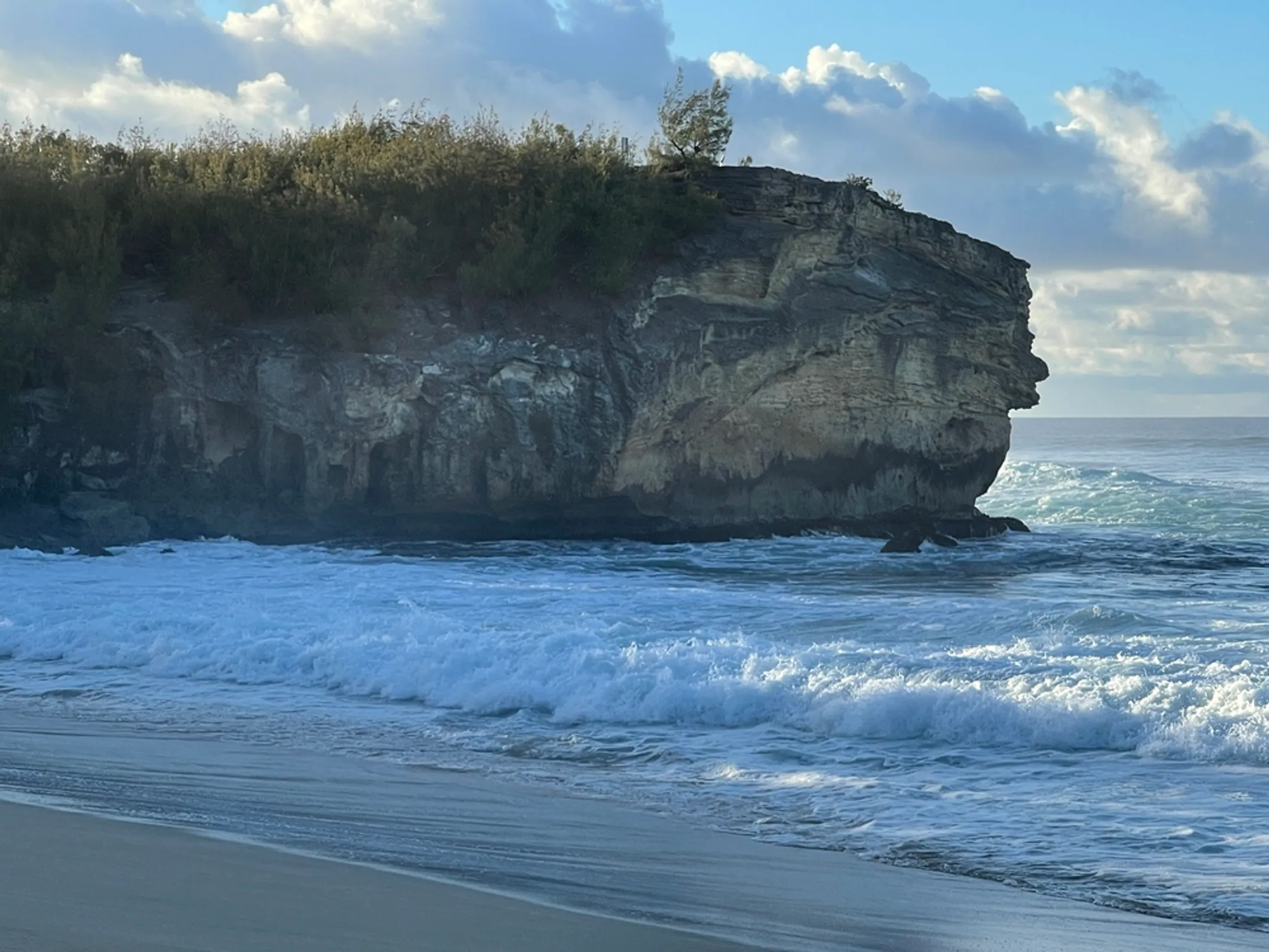
A Historian's Look at the Wrecks of Kaiolohia
The True Story of YOGN-42 and Lānaʻi's Underwater Graveyard
Written by a Local Historian
Kalani MillerStories Written in Rust and Reef
The rusting hulk that dominates the view at Kaiolohia is an icon of Lānaʻi, but its story is often misunderstood. It represents only one chapter in the long, dramatic history of this maritime graveyard. To truly appreciate this place, we must look beyond the rust and delve into the stories of the ships and the sea that brought them here.
Growing up hearing my papa's stories about the old days, I learned that every wreck has a story. Every twisted piece of metal once carried dreams, cargo, and crew members with their own hopes and fears. The ships that rest here aren't just obstacles that met an unfortunate end. They're monuments to human ambition, technological innovation, and the eternal struggle between man and nature.
The Ghost in the Surf: The True Story of the YOGN-42
As a historian, I feel a kuleana (responsibility) to tell the true story. Many sources will call the great wreck a "Liberty Ship." While Liberty Ships were the famous, mass-produced workhorses of the Allied effort in World War II, this vessel is something different. In many ways, it's more unique and represents an even more remarkable story of wartime innovation.
The massive hulk that dominates Kaiolohia is the USS YOGN-42, a non-self-propelled gasoline barge built not of precious steel, but of concrete. During the height of World War II, steel was a critically scarce resource. Every ton was needed for warships, tanks, and armaments that would determine the outcome of the global conflict. In a brilliant feat of wartime engineering and resourcefulness, the U.S. Maritime Commission authorized the construction of a fleet of concrete vessels.
Wartime Innovation: The YOGN-42 was a Type B7-A2 barge, its hull formed from a frame of steel rebar over which layers of concrete were applied. This innovative construction method solved the steel shortage while creating vessels that could serve crucial support roles in the Pacific Theater.
The barge was laid down on December 6, 1942, at the Concrete Ship Constructors yard in National City, California. Just a few months later, on March 23, 1943, it was launched into service.
Though it had no engine of its own and required towing, the YOGN-42 saw active service in the Pacific Theater. Its story includes a moment of high drama that connects it directly to the dangers of the war. On September 12, 1943, while being towed near Espiritu Santo in the South Pacific, its escort tug, the USS Navajo (AT-64), was torpedoed and sunk by the Japanese submarine I-39. The concrete barge, however, survived the attack undamaged. It was recovered by another tug, the USS Sioux (AT-75), to continue its mission of supplying fuel to the fleet.
The Essential Role of Concrete Barges
This moment illustrates the crucial but often overlooked role these concrete barges played in the war effort. While they may not have been glamorous, they were essential. They carried the fuel that kept the fleet moving across the vast Pacific. They supported the island-hopping campaign that ultimately led to victory. The YOGN-42 and its sister ships were floating lifelines that made the impossible possible.
After the war ended, with steel once again plentiful, the slow and cumbersome concrete fleet was deemed obsolete. The YOGN-42 was struck from the Naval Register on August 15, 1949. Faced with the challenge of disposing of a 375-foot-long, 5,410-ton concrete hulk, the Navy opted for the most economical solution. Sometime between 1950 and 1954, it was towed from Pearl Harbor to the north shore of Lānaʻi. There, it was intentionally run aground on the reef where it sits today. A permanent, slowly crumbling monument to wartime ingenuity and the resourcefulness of a nation at war.
Beyond the Barge: Lānaʻi's Underwater Graveyard
The YOGN-42 is the most visible wreck, but it is far from the only vessel to meet its end on this coast. This eight-mile stretch of shoreline is a true ship graveyard. It stands as a testament to the formidable power of the Kalohi Channel. The channel, separating Lānaʻi and Molokaʻi, is just over 9 miles wide and acts as a natural wind tunnel.
The prevailing northeasterly trade winds accelerate as they are squeezed between the two islands. This creates consistently strong currents, large swells, and choppy seas that have been the bane of mariners for centuries. The shallow reef that runs along this coast provides no safe harbor. Instead, it acts as a trap, holding vessels that run aground until the relentless waves break them apart.
This coastline's history is not just one of accidents. It was also a site of intentional disposal. The same treacherous conditions that made the channel dangerous also made it an ideal location for 19th and 20th-century ship owners to dispose of their old, obsolete inter-island steamers. Rather than scuttling them in deep water where they could become navigational hazards, owners would strip the vessels of anything valuable. Then they would simply cast them adrift upwind of Lānaʻi. The channel's powerful winds and currents would do the rest. They would push the hulks onto the reef and pin them there permanently. Kaiolohia is thus a complex historical site, shaped by both the unforgiving power of nature and the pragmatic decisions of humans.
A Maritime Timeline: Centuries of Wrecks
A walk along this coast is a walk through maritime history. Each wreck represents a different era of Pacific navigation and the evolving relationship between humans and the sea.
The Age of Sail (1820s)
In 1824, the British vessel Alderman Wood sank in the channel, marking the beginning of recorded maritime disasters in these waters. It was followed in 1826 by the American ship London. This vessel was rumored to be carrying a cargo of gold and silver bullion, treasure that has never been officially recovered. The mystery of the London's cargo adds a layer of intrigue to the coast that persists to this day.
The Steamship Era (Late 1800s - Early 1900s)
As inter-island commerce grew in the late 19th and early 20th centuries, more vessels plied these dangerous waters. Many of the wrecks from this period were intentionally grounded here when they reached the end of their useful lives. The channel became a convenient disposal site for the growing fleet of inter-island steamers that connected the Hawaiian Islands.
The Pearl Harbor Connection (1940s-1950s)
Six miles west of the YOGN-42, near Awalua Bay, lie the remains of another historically significant vessel: the YO-21. This 160-foot Navy yard oiler is one of the few remaining ships still in Hawaiian waters that was present at Pearl Harbor during the attack on December 7, 1941. Like the YOGN-42, it was deemed surplus after the war and intentionally grounded here in the 1950s. Together, these two vessels create a profound historical bookend to this stretch of coast.
Modern Wrecks (Recent Decades)
Along the shore, one can find the remains of more recent sailing vessels, like the Romar III. These newer wrecks serve as stark reminders that even with modern technology, satellite navigation, and weather forecasting, the sea remains the ultimate master. The forces that claimed wooden sailing ships in the 1800s continue to challenge modern vessels today.
A Living Museum: Kaiolohia is more than just a collection of wrecks. It's a living museum that tells the story of human interaction with one of the Pacific's most challenging coastlines. From wooden sailing ships to concrete wartime barges, each vessel adds another layer to this remarkable maritime narrative.
Continue Your Journey Through Kaiolohia
Explore what to do at Shipwreck Beach, discover ancient petroglyphs, and plan your complete Hawaiian adventure.
🚢 YOGN-42 Facts
- Type: Concrete Barge
- Built: Dec 6, 1942
- Launched: Mar 23, 1943
- Length: 375 feet
- Weight: 5,410 tons
- Grounded: 1950-1954
⚓ Notable Wrecks
WWII concrete barge (1943)
Pearl Harbor survivor (1941)
Treasure ship (1826)
British vessel (1824)
🔗 Explore Kaiolohia
✍️ About the Author
Historian & Storyteller
A Kauaʻi-based historian and storyteller drawn to places where nature still holds sway and ancient rhythms endure.