Speaking Whale: Understanding Koholā Behavior
Decode the language of humpback whales

Written by an Ocean Expert
Kalani MillerSpeaking Whale: Understanding Koholā Behavior
When you're out on the water, you'll witness a stunning array of surface behaviors. Each one is a form of communication or has a specific purpose, and knowing what to look for can turn your trip into a fascinating interpretive experience.
Breach: The Ultimate Showstopper
This is the showstopper. A 40-ton whale propels as much as 40% of its body out of the water, often twisting as it falls back with an enormous splash. Why do they do it? It could be a powerful form of long-distance communication, an aggressive display between males in a competition pod, a way to dislodge barnacles and parasites, or perhaps, simply an expression of pure joy.
The physics of breaching are mind-boggling. To launch that much mass into the air requires tremendous energy—equivalent to a car accelerating from zero to 60 mph in just a few seconds. Some scientists theorize that breaching helps whales communicate across vast distances, as the splash creates underwater sound waves that can travel for miles.
Tail Slap (Lobtailing)
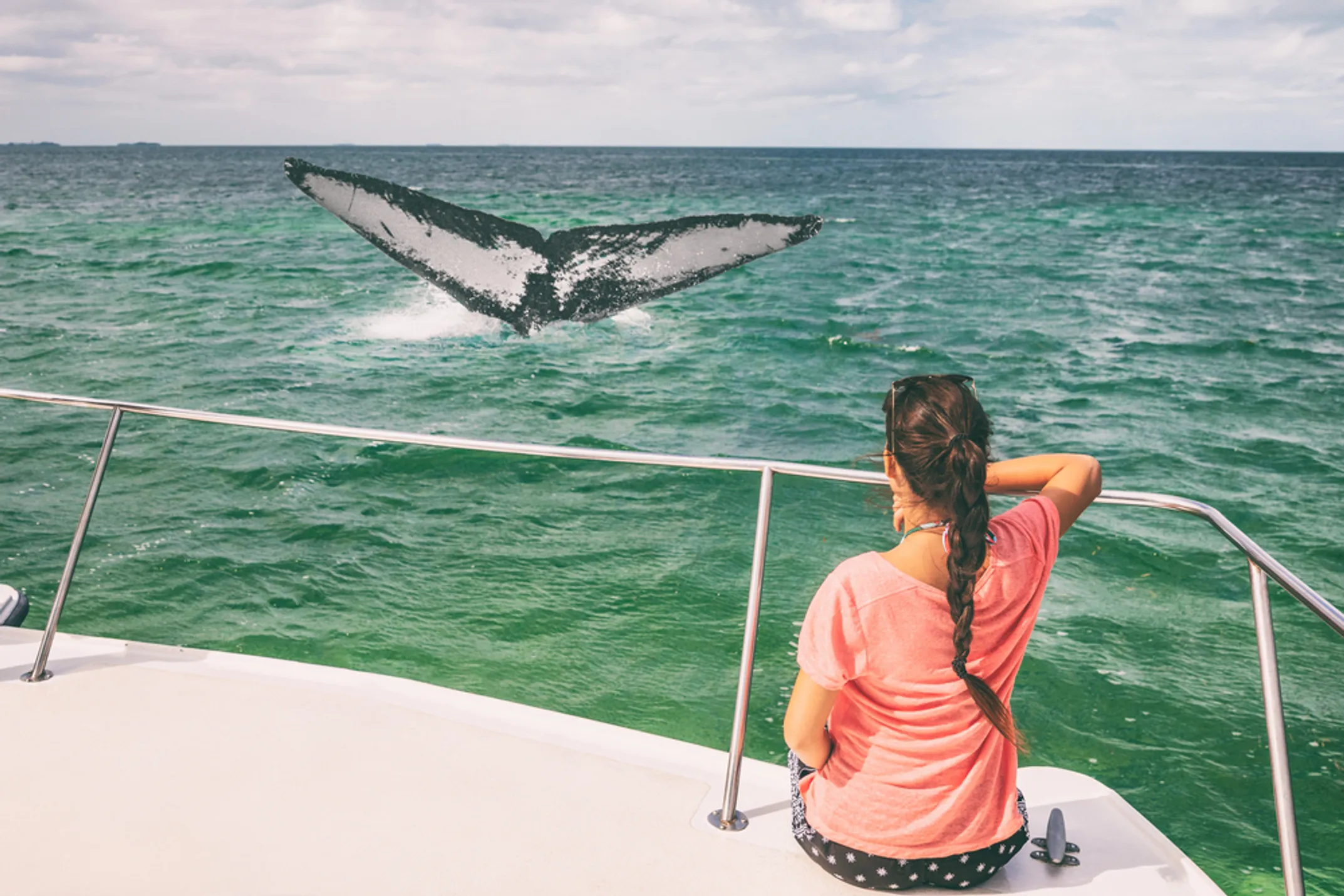
You'll see a whale raise its massive fluke (tail) out of the water and slap it forcefully against the surface. The sound can travel for long distances underwater, making it an effective way to communicate with other whales. It can be a warning, a sign of agitation, or part of a courtship display.
The power behind a tail slap is extraordinary. A humpback's tail can measure up to 18 feet across and weigh several tons. When it hits the water, the sound resembles a thunderclap and can be heard both above and below the surface for miles.
Pectoral Fin Slap
Humpbacks have the longest pectoral fins of any whale, reaching up to 15 feet. They will often lie on their side and repeatedly slap a fin against the water. Like tail slapping, this creates a loud sound and is another tool in their acoustic communication toolkit.
These extraordinarily long fins give humpbacks their scientific name, Megaptera novaeangliae, which means "big wing of New England." The fins are not just for show—they provide incredible maneuverability, allowing these massive creatures to perform surprisingly agile movements in the water.
Spyhop: Curious Giants
With incredible body control, a whale will orient itself vertically in the water, poking its head straight up to get a look at its surroundings above the surface. It's a sign of pure curiosity, and if it happens near your boat, it's a moment you'll never forget.
During a spyhop, whales can hold this position for up to 30 seconds, slowly rotating to get a 360-degree view of their surroundings. Their eyes are positioned to see both above and below water simultaneously, making them perfectly adapted for this behavior.
💨 Blow
The first sign of presence - spout reaches 10-15 feet high at speeds over 300 mph. Each species has a distinctive blow pattern.
🌊 Peduncle Throw
Dramatic arching of the back throwing rear body clear of water - often seen during male competition.
⚡ Head Lunge
Forward surge at surface creating waves - associated with social interactions or play behavior.
🎵 Singing
Complex 20+ minute songs repeated for hours - used for courtship and establishing dominance.

Whale Watch and Sunset Cruise
Experience breaching, tail slaps, and spy hops firsthand. Book your whale watching tour and witness these incredible behaviors in their natural habitat.
*Estimated starting price. Prices subject to change. Check availability for current rates.
The Song of the Sea
One of the most enchanting aspects of the humpback whale is its song. The males produce complex, hauntingly beautiful songs that can last for over 20 minutes and are repeated for hours. These songs are a critical part of their courtship rituals, used to attract females and establish dominance among other males. The songs evolve from year to year, yet all the males in a population will sing the same version.
Many tour boats are equipped with hydrophones, special underwater microphones that they can lower into the water. Listening live to these intricate melodies echoing through the ocean is a truly magical and humbling experience, connecting you to the unseen world beneath the waves.
The complexity of whale songs rivals that of human music. They contain recurring themes, phrases that are repeated and modified, and even what appears to be rhyming patterns. Scientists have discovered that whale songs can travel incredible distances underwater—sometimes hundreds of miles—making the ocean a vast concert hall where whales can communicate across entire ocean basins.
What's particularly fascinating is how these songs change over time. Each season, the songs evolve, with new phrases added and others dropped. It's as if the whales have their own version of Billboard's top hits, with new songs becoming popular and spreading throughout the population.
Recent research has revealed that whale songs may serve multiple purposes beyond attracting mates. They might help males establish territories, coordinate group movements, or even navigate across the vast ocean. The low-frequency components of their songs can travel for thousands of miles, potentially allowing whales to stay in contact with distant family members or pods.
Book Whale Watching Tours
Reserve your Kauai whale watching charter. Private and intimate experiences!
*Estimated. Prices subject to change.
📋 Behavior Guide
- Breach Body out of water
- Tail Slap Communication
- Spyhop Vertical look around
- Pec Fin Slap Side-lying display
Ready for Your Kauai Whale Adventure?


Witness These Behaviors Firsthand
Understanding whale behavior makes your tour even more rewarding. Book now and experience breaching, tail slaps, and whale songs live.