North Shore: The Summer Spectacle
Legendary underwater landscapes and pristine reefs (May - September only)

Written by a Local Expert
Leilani Ako⚠️ CRITICAL WARNING
The North Shore is a summer-only destination for snorkeling. From roughly October through April, this coastline is battered by massive winter swells that create extremely dangerous high surf and powerful currents. During these months, snorkeling here is not just difficult; it is life-threatening. Please, heed all warnings and save these incredible spots for the calm summer season.
Tunnels Beach (Makua): An Advanced Snorkeler's Dream
Tunnels is legendary, and for good reason. Its name comes from the incredible underwater landscape of lava tubes, arches, and caverns that were formed by ancient volcanic activity. The beach features a large, crescent-shaped reef with two distinct zones: a protected inner reef that is fantastic for intermediate snorkelers, and a deep, dramatic outer reef that is a playground for advanced snorkelers and scuba divers.
The underwater topography at Tunnels is unlike anywhere else on Kauai. Ancient lava flows created a maze of swim-through tunnels, hence the name. These formations provide shelter for marine life and create an underwater adventure park for experienced snorkelers willing to explore responsibly.
Marine Life
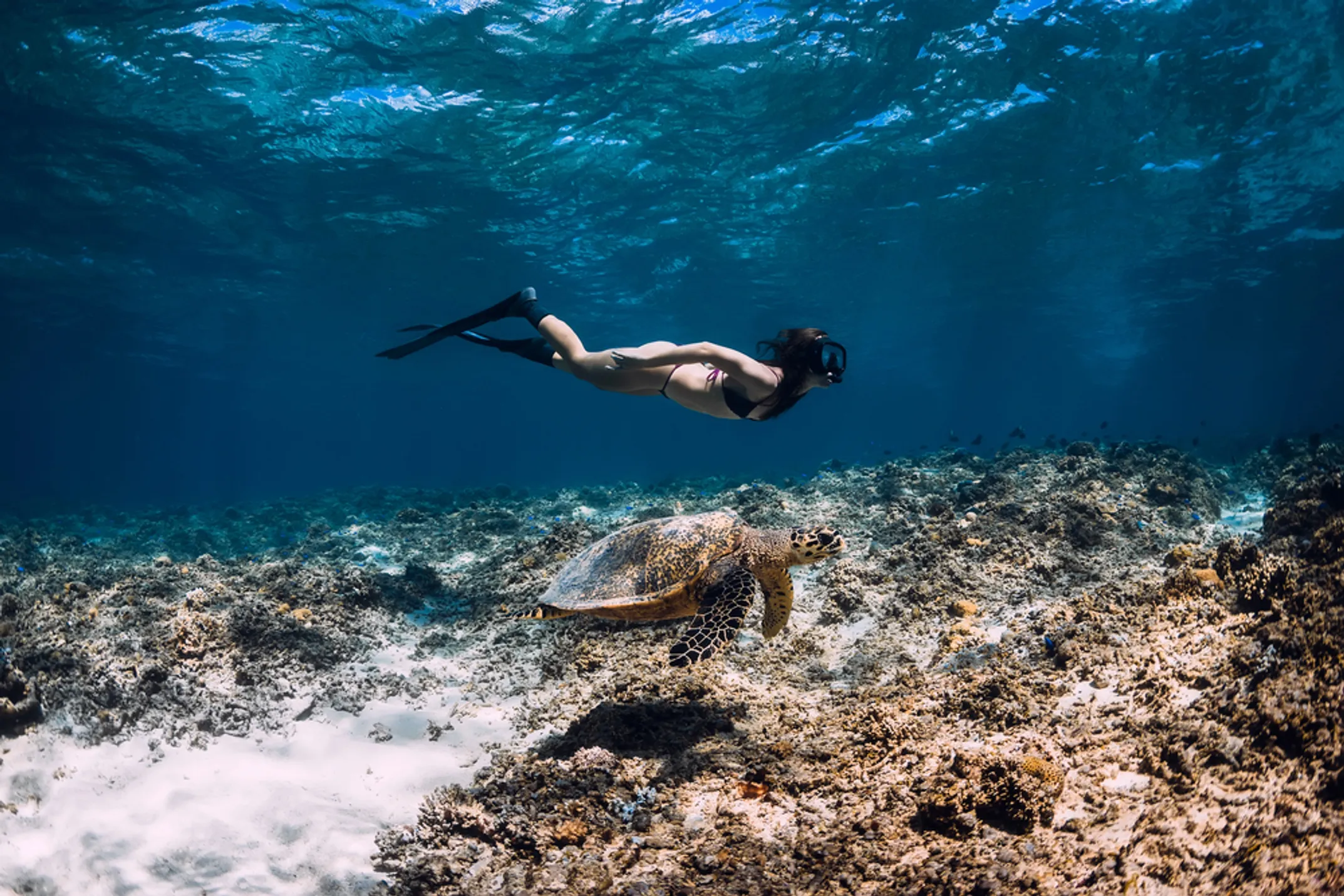
The biodiversity here is staggering. The inner reef is full of vibrant corals and schools of tropical fish like parrotfish, butterflyfish, and wrasse. As you venture further out, the marine life gets bigger and more diverse. It's a fantastic place to spot large turtles, moray eels, and octopus hiding in the lava tubes. While rare, white-tip reef sharks are sometimes seen patrolling the outer reef drop-off.
The fish life at Tunnels reads like a Hawaii field guide. Schools of convict tangs create moving curtains of silver and black. Bright yellow longnose butterflyfish work the coral heads in pairs, their extended snouts perfect for picking small prey from tight spaces. In the sandy channels between coral heads, garden eels pop up like periscopes before disappearing at the first sign of movement.
For the truly observant, Tunnels offers opportunities to spot some of Hawaii's more elusive species. Leaf scorpionfish blend perfectly with coral rubble, their elaborate fins looking like seaweed. Spanish dancers, large nudibranchs with flowing red and white bodies, glide through the water column during evening dives.
Conditions & Safety
During the summer, the water here can be crystal clear and perfectly calm, especially in the morning. However, you must be aware of the channels that cut through the reef, as water rushing back out to sea can create strong currents. There are no lifeguards at Tunnels, so you are responsible for your own safety. Never snorkel alone.
Understanding the reef structure at Tunnels is crucial for safety. The inner reef forms a natural lagoon protected from ocean swells, but several channels allow water exchange with the open ocean. These channels can create strong currents, especially during large surf or changing tides. Always enter and exit through the same channel you used initially.
Logistics
Parking is the biggest challenge at Tunnels. There are only a few unmarked dirt paths off the highway with very limited space. My advice is to arrive before 8 AM to secure a spot. If you're later than that, your best bet is to park at the larger lot at Ha'ena Beach Park and enjoy the beautiful 10-minute walk along the sand to Tunnels.
The walk from Ha'ena to Tunnels is part of the experience. You'll pass dramatic sea cliffs, small streams flowing across the beach, and often encounter monk seals resting on the sand. The contrast between the rugged Na Pali coastline and the pristine reef creates one of Hawaii's most stunning natural settings.
My Insider Tip: The real magic of Tunnels is in the outer reef, but don't even think about venturing there unless you are a very strong, experienced ocean swimmer and the conditions are perfectly flat. For most people, the inner reef, about 150-200 feet offshore, offers more than enough beauty and is much safer. The best fish action happens along the reef edge where the sandy bottom meets the coral formations.
Ke'e Beach: The Postcard-Perfect Lagoon
Located at the very end of the road on the North Shore, Ke'e Beach is the stunning gateway to the famed Nā Pali Coast. A protective barrier reef creates a calm, shallow lagoon that is one of the most beautiful and safe places to snorkel on the island during the summer months. It's an ideal spot for beginners and families who want a true North Shore experience.
The setting at Ke'e is simply magical. Ancient Hawaiian hula hālau (schools) performed here, and the spiritual energy of this place is palpable. The lagoon sits at the foot of towering fluted cliffs draped in emerald vegetation, creating a natural amphitheater that feels sacred and protected.
Marine Life
The shallow lagoon is like a natural aquarium, teeming with a variety of colorful reef fish. You'll easily spot schools of convict tangs, saddle wrasse, and butterflyfish darting around the coral heads, making it an incredibly rewarding experience for new snorkelers.
The coral formations in Ke'e lagoon are particularly healthy, showing the vibrant colors that thrive in protected environments. Brain coral, finger coral, and cauliflower coral create underwater gardens. Small damselfish defend their territories aggressively, creating entertainment for snorkelers as these tiny fish fearlessly chase away much larger intruders.
Rock formations around the lagoon provide habitat for invertebrates rarely seen in more exposed locations. Christmas tree worms extend their colorful feeding crowns from coral heads, quickly retracting when shadows pass overhead. Small crabs scuttle between rocks, and occasionally you might spot an ornate ghost pipefish hovering motionless near coral formations.
Conditions & Safety
Again, this is a summer-only spot. The most critical safety factor at Ke'e is the channel on the far left (west) side of the beach, where the lagoon opens to the ocean. This area has a powerful and persistent rip current that pulls directly out to sea. It is vital to stay well away from this channel. Thankfully, Ke'e Beach is staffed by lifeguards who can advise you on the day's conditions.
The lagoon depth varies from 2-8 feet, perfect for snorkelers of all abilities. The coral heads provide natural boundaries, making it easy to navigate and stay oriented. Water temperature in the protected lagoon often runs a few degrees warmer than the open ocean, making for comfortable extended snorkel sessions.
Logistics
Access to Ke'e Beach is managed by the Hāʻena State Park system, and advance reservations are mandatory. You must book a parking pass or a shuttle spot online. These reservations become available 30 days in advance and often sell out within minutes. Planning ahead is absolutely essential.
The reservation system exists to protect this fragile ecosystem from overcrowding. Daily visitor numbers are strictly limited, ensuring that your experience remains peaceful and that the reef can recover from human impact. The system also helps preserve the cultural significance of this sacred site.
My Insider Tip: The reservation system can be frustrating, but it's in place to protect this fragile area and is absolutely worth the effort. Set an alarm and be ready to book your slot exactly 30 days in advance at midnight, Hawaii time. Once you arrive, stay toward the right side of the bay for the calmest water and best fish viewing, far from the dangerous channel. Bring a picnic lunch because you'll want to spend the entire day soaking in this magical place.
Anini Beach: The Calm Alternative
When Tunnels is too rough or Ke'e reservations are full, Anini Beach on the North Shore provides a reliable backup option. Protected by one of Kauai's longest fringing reefs, Anini offers calm conditions even when other North Shore spots are unsurfable.
The reef at Anini extends nearly a mile offshore, creating a huge protected lagoon perfect for families and beginner snorkelers. The trade-off is that marine life diversity isn't as rich as Tunnels, but the safety factor makes it worthwhile for those seeking a gentler North Shore experience.
Camping is allowed at Anini Beach Park with proper permits, making it a favorite base camp for those wanting to explore multiple North Shore snorkel sites. The long, sandy beach provides plenty of space even when camping areas are occupied.
Continue Your Underwater Journey
Explore more of Kauai's incredible snorkeling and diving destinations
🏖️ North Shore Spots
- Tunnels Beach
Legendary lava tubes, advanced
- Ke'e Beach
Postcard lagoon, reservations required
- Anini Beach
Calm alternative, family-friendly
⏰ Critical Timing
- Season:
SUMMER ONLY (May-September)
- Best Time:
Early morning (before 9 AM)
- Visibility:
60-100+ feet when calm
- Parking:
Arrive before 8 AM at Tunnels
⚠️ Important Reminders
- Book Ke'e reservations 30 days ahead
- No lifeguards at Tunnels
- Avoid channels at Tunnels
- Stay right side at Ke'e
- Never snorkel alone
📖 Guide Navigation
⛔ Winter Warning
North Shore snorkeling is DANGEROUS October-April. Massive swells create life-threatening conditions.
Visit only during summer months (May-September).