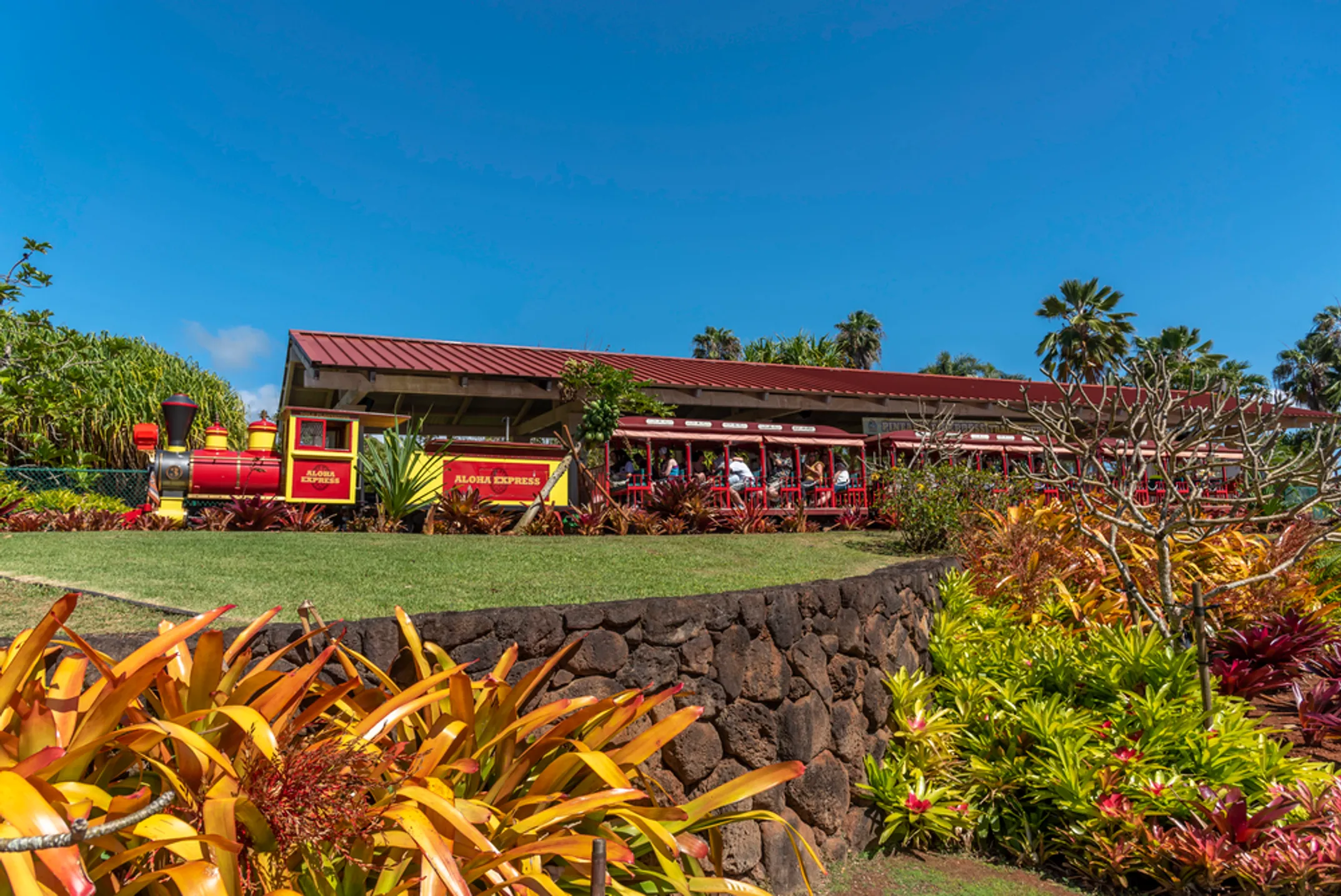
The Kōloa Heritage Trail: A Journey Through Time
14 sites weaving together ancient culture, sugar history, and island soul
Written by a Local Expert
Kalani MillerThe Kōloa Heritage Trail: A Journey Through Time
On Kauai's sunny South Shore, there is a path that weaves together nearly every layer of the island's history. The Ka Ala Hele Waiwai Hoʻoilina o Kōloa, or Kōloa Heritage Trail, is a 10-mile journey through 14 significant sites in the Kōloa and Poʻipū areas. You can explore it by car, bike, or on foot, with each stop marked by a plaque explaining its story. This trail is a microcosm of Kauai itself, telling a cohesive story of geology, ancient settlement, the transformative sugar industry, and the multicultural fabric of the island today.
1. Spouting Horn Park: Nature's Power Display
Our journey begins with the raw power of nature. Spouting Horn is a blowhole, or puhi, formed as powerful ocean waves carved a lava tube under the shoreline, eventually breaking through the top layer of rock. With each incoming wave, water is forced through the narrow opening, shooting a spectacular geyser up to 50 feet in the air, accompanied by a deep hiss and roar.
Legend tells of a giant moʻo (lizard) named Kaikapu who guarded this coast. A clever boy named Liko lured the lizard into the lava tube, where it became trapped. The roar you hear today is said to be the trapped moʻo's cry. Whether you believe in the legend or prefer the geological explanation, Spouting Horn is a dramatic reminder of the forces that shaped these islands and continue to shape them today.
The power of the ocean here is mesmerizing. On big surf days, the geyser can reach truly spectacular heights, and the thunderous roar can be heard from quite a distance. It's a humbling reminder of nature's strength and a perfect introduction to the trail's theme of how natural forces and human history intertwine.
2. Prince Kūhiō Birthplace & Park: The People's Prince
This park honors Prince Jonah Kūhiō Kalanianaʻole, born in a grass hut near this spot on March 26, 1871. After the overthrow of the Hawaiian monarchy, Prince Kūhiō served as Hawaii's delegate to the U.S. Congress for 19 years. Known as the "People's Prince," his greatest achievement was the passage of the Hawaiian Homes Commission Act of 1921, which set aside over 200,000 acres of land for homesteading by Native Hawaiians. His birthday is still celebrated as a state holiday.
Prince Kūhiō's legacy is particularly meaningful because he represents the transition period when Hawaiians had to find new ways to serve their people within the American political system. His work in Congress was groundbreaking, and the Hawaiian Homes program he championed continues to provide opportunities for Native Hawaiian families to return to the land.
3. Kōloa Landing at Hanakaʻape Bay: Gateway to the World
This quiet cove was once a bustling hub of global commerce. In the mid-1800s, Kōloa Landing was the third-largest whaling port in all of Hawaiʻi, behind only Honolulu and Lāhainā. It was the island's primary port of entry for foreign goods and the thousands of immigrant laborers who came to work on the sugar plantations. Ships would anchor here to stock up on fresh water, firewood, and agricultural goods from the fertile Kōloa area.
Today, Kōloa Landing is a popular snorkeling spot, its calm waters protecting colorful reef fish and the occasional monk seal or turtle. But if you look carefully, you can still see remnants of the old pier and imagine the scene 150 years ago: tall-masted ships anchored in the bay, smaller boats ferrying cargo and passengers to shore, and the shoreline bustling with activity as goods were loaded and unloaded.
4. Pāʻū A Laka (Moir Gardens): Botanical Beauty
What began in the 1930s as a private hobby for Alexandra Moir, wife of the Kōloa Plantation's manager, blossomed into a world-renowned botanical garden. Mrs. Moir cultivated a stunning collection of rare cacti, succulents, orchids, and bromeliads that thrived in the arid, rocky soil of the South Shore. The gardens, named in honor of Laka, the goddess of hula, are a beautiful testament to her passion.
Walking through Moir Gardens today, you're struck by the incredible diversity of plants that have found a home in this corner of Kauai. The garden demonstrates how people from different cultures brought pieces of their homelands with them, creating something entirely new and beautiful.
5. Kihahouna Heiau: Echoes of the Sacred
This stop marks the site of a sacred, ancient walled temple. The heiau was once an impressive structure, measuring 130 by 90 feet. It was dedicated to four powerful deities: Kāne, the god of creation and fresh water; Hulukoki, a bird god; and Kū-hai-moana and Ka-moho-aliʻi, two revered shark gods. The site serves as a quiet reminder of the deep spiritual life that flourished here long before the arrival of ships and sugar mills.
Though little remains visible of the original structure today, the mana of the place is still tangible. The dedication to shark gods is particularly interesting, reflecting the close relationship between the ancient Hawaiians and the ocean that surrounded and sustained them.
6. Poʻipū Beach Park: Ancient Settlement, Modern Paradise
One of Kauai's most famous beaches, Poʻipū was also part of the ancient Hawaiian settlement of Kāneiolauma. For centuries, Hawaiians fished these waters and harvested salt from nearby evaporating pans. Today, it remains a vital sanctuary, not just for people, but for wildlife. It is a favored resting spot for the endangered Hawaiian Monk Seal and the beloved honu (green sea turtle).
The continuity of life at Poʻipū is remarkable. Ancient Hawaiians chose this spot for the same reasons modern visitors do: the protected waters, abundant marine life, and beautiful setting. The presence of monk seals and sea turtles adds a magical element to any beach day.
7. Keoneloa Bay (Shipwreck Beach): The Island's Earliest Visitors
Meaning "long sand," Keoneloa Bay holds some of the oldest evidence of human activity on Kauai. Archaeological findings show that early Polynesian voyagers, likely from the Marquesas Islands, used this area as a temporary fishing camp between 200 and 600 A.D. They left behind stone-age tools, such as coral abraders, and the remnants of small altars where they would have prayed to fishing gods like Kaneʻaukai.
Standing on this beach, you're literally walking where the first people to set foot on Kauai once camped. These early Polynesian voyagers were master navigators who crossed thousands of miles of open ocean using only the stars, ocean swells, and bird flight patterns to guide them.
8. Makawehi & Paʻa Dunes: Geological Time Capsule
This dramatic coastal bluff is made of lithified sand dunes—sand that turned to stone over 125,000 years ago. Carved by wind and waves, this limestone ridge is a treasure trove for geologists, containing fossilized plant roots, ancient crab claws, and bird bones. It is also a haven for seabirds, who nest and roost in the dunes.
Walking along these ancient dunes is like traveling through time. The fossils embedded in the rock tell the story of what this area was like tens of thousands of years ago. The ongoing erosion by wind and waves continues to reveal new fossils, making each visit potentially a moment of discovery.
9. Puʻuwanawana Volcanic Cone: Birth of an Island
This hill is a window into Kauai's fiery birth. As the oldest of the main Hawaiian islands, Kauai was formed by a volcano over 5 million years ago. Puʻuwanawana is one of the island's younger volcanic features, a cinder cone formed by an explosive eruption of igneous rock. It is the simplest and smallest type of volcano, a reminder of the powerful geological forces that shaped this land.
10. Hapa Road: Ancient Highway
This historic path tells a story of connection and transition. Lava rock walls along the road signify Hawaiian habitation dating back to around 1200 A.D. The path once connected the communities of Kōloa and Weliweli, a highway for culture and commerce. In the plantation era, tracks for cane-hauling trains ran alongside it, and during World War II, it served as a critical supply and evacuation route.
11. Kōloa Jodo Mission: Buddhist Sanctuary
This serene Buddhist temple is a powerful symbol of the multicultural society that emerged from the plantation era. It was founded in 1910 by Reverend Jitsujo Muroyama to serve the growing community of Japanese immigrants who came to Kauai to work in the sugar fields. The temple belongs to the Jodo Shu (Pure Land) school of Buddhism and remains an active place of worship today.
The mission represents the story of thousands of Japanese immigrants who came to Hawaii between 1885 and 1924, bringing their culture, religion, and work ethic with them. Many planned to return to Japan after earning money in the cane fields, but instead made Hawaii their permanent home.
12. The Sugar Monument: Industry That Changed Everything
This monument marks the site of a revolution. In 1835, Ladd & Company established Hawaii's first commercially successful sugarcane plantation right here in Kōloa. The venture was chosen for its fertile soil and proximity to a good port and water power. This single enterprise launched what would become Hawaii's largest industry for over a century, forever changing the islands' economy, landscape, and population. The ruins of the 1841 mill's stone chimney can still be seen nearby.
The establishment of the Kōloa Plantation was a turning point not just for Kauai, but for all of Hawaii. Sugar would bring wealth to some and fundamentally alter the islands' demographics as thousands of workers were brought from Asia, Portugal, and other places to work in the fields.
13. Yamamoto Store & Kōloa Hotel: Plantation Town Life
These buildings offer a tangible glimpse into the daily life of Kōloa's plantation era. The Yamamoto Store, first built in 1898, was a general store run by the Yamamoto family from the 1920s. The large monkeypod tree shading the property was planted by Howard Yamamoto and the store became a beloved gathering place for locals. Today, the historic buildings have been restored and house modern shops.
14. Kōloa Missionary Church: Faith and Transformation
The final stop brings us to the spiritual heart of the missionary movement on the South Shore. This was the site of Kauai's second mission station, established in 1834 by Reverend Peter Gulick. After the original thatched chapel was destroyed in a storm in 1858, the current church was built. Standing on high ground, it was so prominent that it served as a landmark for ships approaching the port.
The church represents the profound religious and cultural changes that swept through Hawaii in the 19th century. The arrival of Christian missionaries coincided with the collapse of the traditional Hawaiian kapu system, creating a spiritual vacuum that Christianity helped fill.
Continue Your Journey Through Kauai's History
From heritage trails to encounters with the West—explore the complete story
📖 Complete Guide
Currently reading
ℹ️ Trail Info
- Total Sites: 14
- Distance: 10 miles
- Time: 4-6 hours
- Cost: Free
💡 Trail Tips
- Drive, bike, or walk
- Pick up map in Kōloa
- Start early for parking
- Lunch in Kōloa Town