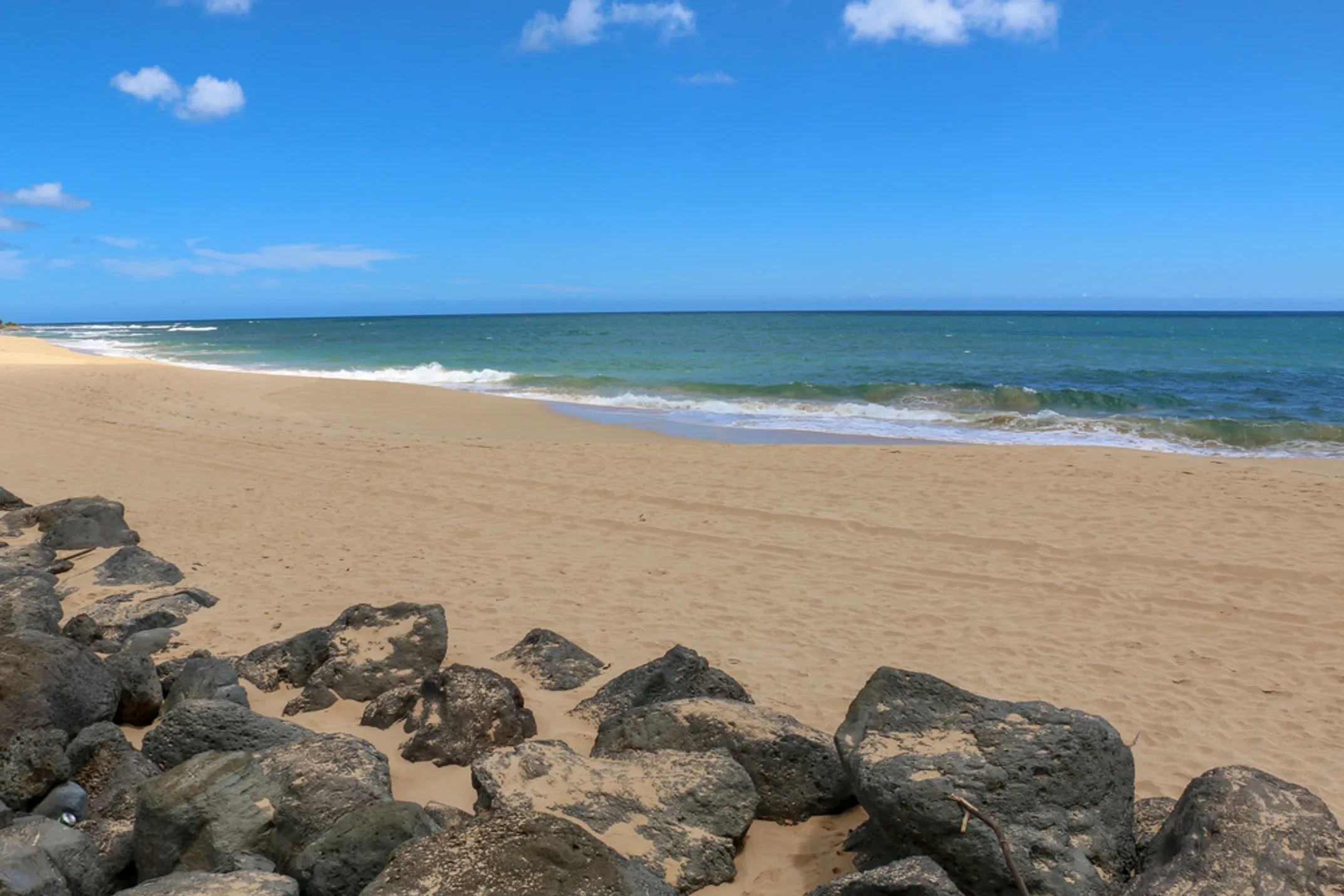
Kekaha Beach Visitor Guide
Everything You Need to Know for Your Visit
Written by a Kauai Local Expert
Leilani AkoVisitor Logistics: Know Before You Go
Little practical knowledge will make your Kekaha visit smooth and enjoyable.
Location & Directions
Kekaha Beach Park stretches along Kaumualiʻi Highway (Hwy 50) on southwestern shore of Kauai. Main park area, officially named MacArthur Park, is located between mile markers 24 and 25, with lifeguard tower near mile marker 28.
Parking
There's large, paved parking lot at MacArthur Park. Additionally, there are numerous dirt pull-offs along highway shoulder as you drive west, which are perfect for sunset viewing.
Facilities at MacArthur Park
- Public restrooms (mix of permanent comfort stations and portable toilets)
- Outdoor showers to rinse off sand
- Covered picnic pavilions with tables
- BBQ grills
Supplies & Food
Town of Kekaha itself has very limited services. No gas station and only few small shops. It's highly advisable to stock up on everything you need—gas, food, water, and other supplies—in nearby town of Waimea, located just 3.5 miles east. Waimea has full-service grocery store (Big Save Market), gas stations, and several local eateries.
This limited infrastructure is part of Kekaha's charm. It remains relatively undeveloped compared to other parts of Kauai. But it also means you need to plan ahead. Don't expect to find conveniences you might take for granted elsewhere.
Weather and Best Times to Visit
Kekaha's location on Kauai's dry side means it enjoys some of the island's most consistent sunshine. While the North Shore might be getting daily rain showers, Kekaha often stays clear and bright. This makes it reliable choice for sunset viewing, though it also means less dramatic cloud formations that can make sunsets even more spectacular.
Seasons
Summer months (May through September) bring calmer trade winds and smaller surf. This is when families with young children might feel more comfortable on the beach, though the same safety precautions apply.
Winter months (October through April) bring larger surf and stronger trade winds. This is when the surfing is at its most powerful and dangerous, but also when the sunsets can be most dramatic due to increased atmospheric activity.
Daily Patterns
Trade winds typically pick up in the afternoon, making morning hours calmer for beach activities. However, this also means afternoon and evening can be quite windy, which actually adds to the drama of sunset viewing as palm fronds rustle and waves crash with more force.
The dry conditions mean less chance of rain ruining your sunset plans, but it also means bringing plenty of water and sun protection is essential. The reflected light off sand and water can be intense.
☀️ Summer (May-Sep)
Calmer trade winds, smaller surf, very sunny. Better for families but still dangerous for swimming.
🌊 Winter (Oct-Apr)
Larger surf, stronger winds, more dramatic sunsets. Peak surfing season for experts only.
Photography Tips for Kekaha
The photographic opportunities at Kekaha are endless, but the conditions present unique challenges and opportunities.
Golden Hour Magic
The hour before sunset, known as golden hour, is when Kekaha truly shines. The warm, angled light creates incredible contrast between the golden sand, deep blue ocean, and dramatic sky. This is when silhouettes of palm trees and people become most striking.
Sunset Composition
Don't just focus on the sun itself. Include foreground elements like driftwood, beach grass, or even other sunset watchers to add depth to your shots. The silhouette of Niʻihau provides natural framing for the setting sun.
Long Exposures
The consistent wave action makes Kekaha perfect for long exposure photography. Using neutral density filter, you can create smooth, misty water effects that contrast beautifully with sharp, detailed sand and rock formations.
Safety While Shooting
Never turn your back on the ocean while photographing, especially if you're close to water's edge. Waves can surge much higher than expected, and many photographers have lost equipment (or worse) by not respecting the ocean's power.
Weather protection for your gear is essential. Salt spray and sand can damage cameras quickly. Consider underwater housing even if you're not planning to go in water, as protection against elements.
Marine Life and Conservation
The waters off Kekaha are rich with marine life, though the rough conditions make viewing difficult from shore. This area serves as important habitat for various species of seabirds, marine mammals, and fish.
Hawaiian monk seals occasionally haul out on Kekaha's beaches to rest. These are critically endangered animals, and seeing one is special privilege. If you encounter monk seal on beach, maintain at least 150 feet distance and never disturb or approach the animal.
Sea turtles (honu) are also occasionally seen in calmer areas, though the rough surf makes sightings less common than at more protected beaches.
The coastal area behind the beach includes important wetland habitat that supports native waterbirds, including the endangered Hawaiian stilt (aeʻo). These areas are crucial for bird nesting and feeding.
Conservation efforts in the area focus on protecting these sensitive habitats while allowing public access. Visitors can help by staying on designated paths, not disturbing wildlife, and packing out all trash.
🦭 Hawaiian Monk Seals
Critically endangered. Keep 150 feet distance. Never disturb or approach. Report sightings to authorities.
🐢 Sea Turtles (Honu)
Occasionally seen in calmer areas. Protected by law. Observe from distance, never touch or chase.
🦩 Hawaiian Stilt (ʻAeʻo)
Endangered waterbird in wetlands behind beach. Do not disturb nesting areas. Stay on paths.
🐦 Native Seabirds
Various species frequent the area. Important habitat for feeding and nesting. Pack out all trash.
Cultural Significance and Respect
Kekaha, like all places in Hawaii, holds deep cultural significance for Native Hawaiians. The name itself has meaning in Hawaiian language, and the area has been inhabited and used by Hawaiian people for centuries.
The fishing traditions you witness here aren't just recreational activities—they're cultural practices that connect people to their ancestors and the land. The respect shown for the ocean and its resources comes from generations of knowledge about living sustainably with the environment.
When visiting Kekaha, remember you're not just in a scenic location. You're in someone's home, a place where families have lived, worked, and maintained cultural traditions for generations. Approach the area with respect, curiosity, and willingness to learn.
Simple gestures like picking up trash, even if it's not yours, or offering a friendly "aloha" to locals can go long way toward showing respect for the place and its people.
Planning Your Perfect West Side Day
To truly make the most of your time, little planning goes long way. Here's sample itinerary that combines grandeur of Waimea Canyon with serene beauty of Kekaha sunset.
9:00 AM - Drive up Waimea Canyon Rd (Hwy 550)
Start your ascent from Waimea town. Morning light inside canyon is magical and creates incredible shadows. Make Waimea Canyon Lookout at mile marker 10 your first stop for most expansive view.
10 AM - 2 PM - Explore Waimea Canyon & Kōkeʻe
Hike family-friendly trail like Cliff Trail for stunning views without huge commitment. It can be significantly cooler at this elevation (around 3,500 feet), so bring layers and jacket. You can pack lunch or grab bite at historic Kōkeʻe Lodge.
2:30 PM - Drive down Kōkeʻe Rd (Hwy 552) to Kekaha
Taking alternate route down from canyon offers completely different perspective. On your way, stop at Big Save Market in Waimea to stock up on gas, drinks, and snacks for sunset viewing.
3:00 PM - 5:00 PM - Relax at Kekaha Beach Park
This is your time to decompress. Find spot near lifeguard tower at MacArthur Park, walk long stretch of golden sand, and simply soak in laid-back, authentic West Side atmosphere.
5:30 PM~ - Find Your Sunset Spot
This is grand finale. Drive west from main park along highway. Find quiet dirt pull-off that calls to you, set up chairs, and settle in. You're about to witness main event.
The Polihale Question
Many visitors wonder if they can combine trip to Waimea Canyon and Polihale State Park same day. While technically possible, it makes for very long and rushed day.
It's crucial to understand that journey to Polihale is adventure itself. Paved road ends just past Kekaha. From there, it's rough, 5-mile dirt and sand road to reach park. This road is often filled with large potholes and can become impassable after heavy rain. It can take 30-45 minutes just to navigate these five miles.
Four-wheel-drive (4WD) vehicle is highly recommended. Most rental car agreements prohibit taking standard car on this road. It's best to dedicate separate day to fully appreciate remote and wild beauty of Polihale.
Beyond Kekaha: Expanding Your Hawaiian Adventure
The spirit of Kauai's West Side is one of raw, natural adventure. But Hawaii's story is vast, with each island offering different kind of power and different story. If your journey through our beautiful state takes you to sister island Oʻahu, there are experiences that, in their own ways, are just as profound and unforgettable as Kekaha sunset.
For the Adrenaline Seeker: Coral Crater Adventure Park
If raw power of Kekaha's surf leaves you craving different kind of thrill—one that's guaranteed, controlled, and fun for whole family—then Coral Crater Adventure Park is your destination. Located in West Oʻahu, this 35-acre park is adrenaline playground. You can soar through jungle on 6-zipline course, kick up serious dirt while driving off-road ATV, or challenge your courage on Adventure Tower, which features massive climbing wall, 18 aerial challenge elements, and heart-stopping 50-foot freefall plunge. It's fantastic way to experience outdoors with guaranteed rush.
For the Student of History: Pearl Harbor
Just as Kekaha connects you to raw, natural power of Hawaii, visit to Pearl Harbor connects you to moment of human history that changed world forever. It's powerful, humbling, and deeply moving experience essential for any Hawaii visitor. To walk these grounds is to honor memory of those lost and reflect on resilience of human spirit.
Pearl Harbor National Memorial comprises four unique historic sites: iconic USS Arizona Memorial, which rests above sunken battleship; mighty Battleship Missouri Memorial, where World War II officially ended; fascinating Pacific Fleet Submarine Museum; and impressive Pearl Harbor Aviation Museum. Plan to spend at least half-day, if not full day, to truly absorb weight and importance of this sacred place.
Emergency Information and Final Safety Reminders
Emergency Contacts
- Emergency services: 911
- Kauai Ocean Safety Bureau (non-emergency): (808) 241-4984
- Kauai Police Department (non-emergency): (808) 241-1711
Beach Safety Websites
- Hawaii Beach Safety: hioceansafety.com
- Safe Beach Day: safebeachday.com/county/kauai/
- National Weather Service Marine Forecast: marine.weather.gov
What to Do in Water Emergency
- Call 911 immediately
- If someone is in distress in water, throw them something that floats rather than entering water yourself
- Signal for lifeguard help if within guarded area
- Provide clear location information to emergency responders
Rip Current Escape Reminder
- Don't panic
- Don't fight current directly toward shore
- Swim parallel to shore until free of current
- Then swim at angle back toward beach
- Wave and call for help if unable to escape
My Final Word: Respect the Mana
Kekaha is not passive beach. It's active, living, breathing entity with spirit all its own. It doesn't ask for your admiration. It commands your respect. The raw beauty you see is tied forever to raw power you must avoid. They're two sides of same coin, yin and yang of this special place.
Come to Kekaha. Come for endless stretch of golden sand that feels like edge of world. Come for fishing culture that tells story of resilience and community. Come for sunset that will paint itself onto your memory and stay there forever. Come for beauty that will take your breath away, but come prepared and be humbled by power that could do the same.
That is true Kekaha experience.
The waves that crash here have traveled thousands of miles across Pacific Ocean. The sand beneath your feet has been shaped by countless storms and gentle trade winds alike. The people who call this place home have learned to live in harmony with forces much larger than themselves.
When you stand on Kekaha Beach, you're standing at intersection of power and beauty, danger and peace, ancient wisdom and eternal nature. The sunset you watch has been watched by generations before you and will be watched by generations after. You're part of something bigger than yourself.
Take photos, but don't hide behind camera. Feel sand between your toes. Listen to wave rhythm. Smell salt air. Let beauty wash over you, but never forget power that creates it.
Respect ocean. Respect land. Respect people who call this place home.
And always remember: in Hawaii, we don't just visit places. We become part of their story, and they become part of ours.
Mālama pono. Take good care.
Start Your Kekaha Journey
Now that you know what to expect, explore the complete Kekaha Beach experience from ocean safety to legendary sunsets.
ℹ️ Practical Info
- Location: Hwy 50, MM 24-25
- Parking: Free at park
- Restrooms: Yes
- Showers: Yes
- Nearest Gas: Waimea (3.5 mi)
📅 Best Times
- Summer: calmer winds
- Winter: dramatic sunsets
- Morning: calm for walks
- Evening: best sunsets
🔗 Explore Kekaha
🚨 Emergency
- Emergency: 911
- Ocean Safety: (808) 241-4984
- Police: (808) 241-1711