Island Flavors You Need to Know
Essential Hawaiian dishes and local fruits that define Kauai's food scene

Written by a Local Food Expert
Leilani AkoThe Art of Poke
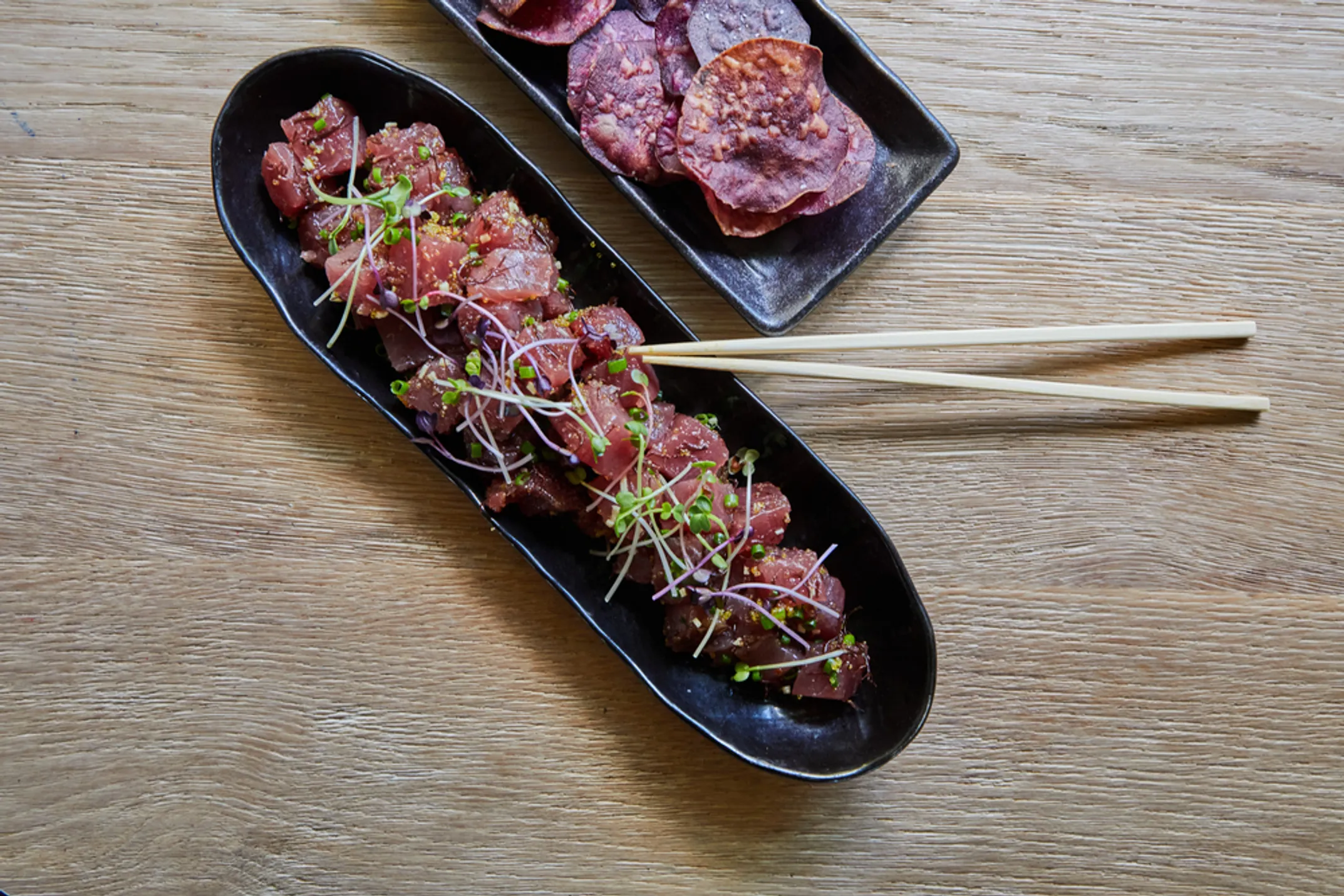
Long before it became a mainland trend, poke (pronounced POH-kay) was a way of life here. At its heart, it's a simple dish: fresh, raw, cubed fish, traditionally ahi tuna, seasoned with Hawaiian sea salt, shoyu (soy sauce), sesame oil, and sweet Maui onions. But from that simple base comes endless variation.
At institutions like Koloa Fish Market or Pono Market, you'll find a rainbow of choices in the deli case: classic Shoyu Ahi, creamy and fiery Spicy Ahi, savory Korean-style with sesame and gochujang, or even Tako Poke made with tender cooked octopus. Even our grocery stores, like Foodland, are famous for their incredible poke bars, a testament to how integral this dish is to daily life.
The secret to the best poke is asking what's fresh that day. Don't be afraid to ask for a sample! Grab a poke bowl and head straight to the nearest beach. There's no better dining room in the world.
The Story of Huli Huli Chicken
That smoky, sweet smell wafting from a roadside grill is likely huli huli chicken. Its story begins in 1955 with a Honolulu businessman named Ernest Morgado, who grilled chicken marinated in his mother's teriyaki-style sauce for a group of farmers. The chicken was cooked between two grills that had to be flipped, and as they cooked, people would shout "huli!"—the Hawaiian word for "turn". The name stuck, and a legend was born.
The flavor is unmistakable: a savory-sweet glaze, often featuring soy sauce, pineapple juice, ginger, and garlic, caramelized over a smoky mesquite (kiawe) wood fire. For decades, it's been the go-to for fundraisers, and the taste is pure nostalgia for anyone who grew up here.
Saimin, Not Ramen
Please, don't call it ramen. Saimin is Hawaii's own unique noodle soup, a comfort food born from the melting pot of the plantation era. While it shares common ancestors with ramen, saimin is its own distinct dish. The broth is lighter and clearer, a delicate dashi often made with shrimp, chicken, and kombu. The noodles are soft wheat egg noodles, with a pleasingly springy chew.
Classic toppings are simple but perfect: a slice of pink-and-white kamaboko (fish cake), savory char siu pork, and a sprinkle of bright green onions. It's the ultimate comfort food, and no place is more legendary for it than Kauai's own Hamura Saimin.
The Mighty Loco Moco
A dish with a wild name and a delicious purpose, the loco moco is Hawaiian soul food at its finest. The story goes that in 1949, a group of hungry teenagers at the Lincoln Grill in Hilo asked for something cheap, filling, and fast that wasn't a sandwich. The result was a stroke of genius: a generous scoop of white rice, topped with a hamburger patty, a fried sunny-side-up egg, and the whole thing smothered in rich, brown gravy.
One of the boys was nicknamed "Loco," Spanish for crazy, and "Moco" was added because it rhymed. A culinary icon was born.
Manapua: The Hawaiian Bao
Another gift from the plantation era, the manapua is Hawaii's version of the Cantonese char siu bao. Chinese workers brought these steamed pork buns with them, and over time, they evolved into the larger, beloved snack we know today. The classic filling is that same sweet and savory red-hued char siu (barbecue pork), but you can also find them filled with curry chicken, sweet red bean, or even kalua pork. They come either steamed—soft, white, and pillowy—or baked, with a golden-brown, slightly sweet crust.
📍 Page Navigation
🗺️ All Sections
🍍 Local Fruits
- Lilikoi: Passion fruit flavor
- Lychee: Sweet & fragrant
- Mango: Golden & fiber-free
A Taste of the Garden Isle
Lilikoi (Passion Fruit): This is the flavor of Hawaiian sunshine. Lilikoi is a vine that produces a fruit with a tough yellow or purple rind and a bright, aromatic pulp inside that's intensely tart and sweet. You'll find its unmistakable flavor in everything from shave ice syrup and cocktails to the famous chiffon pie at Hamura Saimin.
Lychee: First brought to Hawaii in 1873, the lychee tree produces clusters of bumpy, red-skinned fruit. Once peeled, the translucent, gelatinous flesh is incredibly sweet and fragrant, with a flavor some compare to a pear or grape with floral notes. The Kaimana variety, developed in Hawaii, is a premium cultivation known for its large fruit and small seed.
Plate Lunch Culture
Two scoops of rice, one scoop of macaroni salad, and an entree. This uniquely Hawaiian meal format tells the story of the islands' diverse plantation workforce.
Fresh Catch Daily
Kauai's proximity to deep waters means incredibly fresh fish. Ahi, ono, mahi-mahi, and opah are caught daily and served at restaurants across the island.