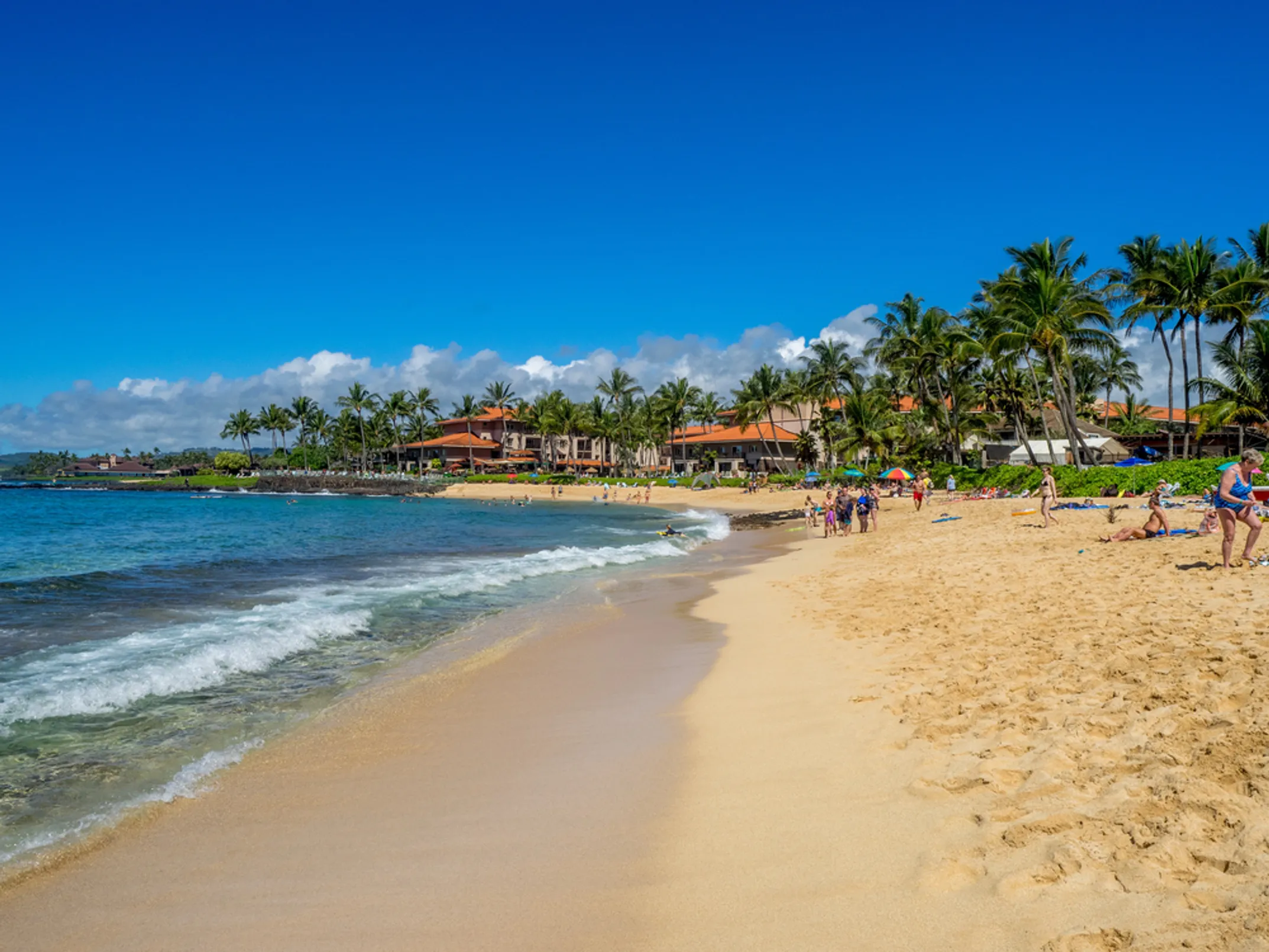
Best Times to Visit Poipu Beach
Seasons, weather patterns, and the perfect moments to experience paradise
Written by a Local Expert
Kalani MillerUnderstanding when to visit Poipu can make the difference between a good day and an unforgettable one. Each season brings its own character to this remarkable beach.
Best Times to Visit Poipu
Summer (May-September)
This is peak season for families, and for good reason. The weather is consistently sunny and dry, with gentle trade winds keeping temperatures comfortable. The ocean is at its calmest, making it perfect for beginning snorkelers and young children. However, this is also when the beach is most crowded, and parking becomes most challenging. The waves at Brennecke's Beach are typically at their largest during summer months, providing the best conditions for bodyboarding and bodysurfing.
✓ Pros
- • Consistently sunny weather
- • Calm ocean conditions
- • Best for snorkeling
- • Best waves at Brennecke's
✗ Cons
- • Most crowded period
- • Difficult parking
- • Higher accommodation prices
Winter (October-April)
Winter brings a different kind of magic to Poipu. While there may be occasional rain showers, they're usually brief and often create stunning rainbows. The crowds thin out significantly, giving you more space to enjoy the beach's natural beauty. Ocean conditions can be more variable, with occasional larger swells, but the snorkeling remains excellent on calm days. This is also prime season for whale watching, as humpback whales migrate through Hawaiian waters from December through April.
✓ Pros
- • Fewer crowds
- • Lower prices
- • Whale watching season
- • Beautiful rainbows
✗ Cons
- • Occasional rain showers
- • More variable ocean conditions
- • Larger swells possible
Shoulder Seasons (April-May and September-October)
These transition periods often offer the best of both worlds - pleasant weather with fewer crowds and more reasonable accommodation prices. The ocean conditions are generally favorable, and you'll have more flexibility in your daily schedule without the peak season rush.
Daily Timing: Regardless of season, the early morning hours (7:00-9:00 AM) offer the calmest ocean conditions, best visibility for snorkeling, and easiest parking. The afternoon brings stronger trade winds and more active surf conditions. For photography enthusiasts, the "golden hour" before sunset creates spectacular lighting for both landscape and wildlife photography.
📅 Quick Guide
- Best Weather May - September
- Fewer Crowds October - April
- Best Value April-May, Sept-Oct
- Daily Best Time 7:00-9:00 AM
🐢 Wildlife Seasons
- Humpback Whales Dec - April
- Turtle Nesting May - October
- Monk Seal Pups March - August
Weather and Ocean Safety
Safety should always be your top priority when enjoying any Hawaiian beach, and Poipu is no exception. Understanding ocean conditions and weather patterns will help ensure your visit is both safe and enjoyable.
Ocean Conditions
Always check the daily ocean report before entering the water. The National Weather Service provides detailed surf forecasts and ocean safety information. Pay special attention to surf heights, wind conditions, and any small craft advisories. Even on calm days, ocean conditions can change rapidly.
Rip Currents
As mentioned earlier, Poipu can experience rip currents, particularly through the channel created by the tombolo. These currents are most likely during high tide, large surf, or when there's a strong onshore wind. If caught in a rip current, don't panic or try to swim directly back to shore. Instead, swim parallel to the shoreline until you escape the current's pull, then swim at an angle back to shore.
Important Safety Reminders
- • Check daily ocean reports before swimming
- • Always swim near lifeguard towers
- • Never turn your back on the ocean
- • Use reef-safe sunscreen (SPF 30+)
- • Stay hydrated throughout the day
- • Be aware of signs of heat exhaustion
Sun Protection
The Hawaiian sun is intense year-round, and the risk of sunburn is high, especially when you're in and around water. Even on cloudy days, harmful UV rays can penetrate cloud cover. Use reef-safe sunscreen with at least SPF 30, and reapply frequently. Consider wearing a rash guard or UV-protective clothing for extended periods in the water.
Marine Life Awareness
While encounters with dangerous marine life are rare at Poipu, it's important to be aware of your surroundings. Box jellyfish can occasionally be present, typically 7-10 days after a full moon. Portuguese man-of-war, though uncommon, can deliver painful stings. If you see blue, balloon-like creatures on the beach or in the water, avoid contact and inform lifeguards.
Photography Tips for Poipu
Poipu offers endless opportunities for stunning photography, from dramatic landscapes to intimate wildlife portraits. Here are some tips to help you capture the essence of this remarkable place.
Landscape
The tombolo provides a unique compositional element. Position yourself on higher ground to capture the full scope of both bays.
Wildlife
Always maintain appropriate distances and use a telephoto lens. Golden hour light creates warm, dramatic tones.
Underwater
Shoot in the coral gardens zone for best clarity. Avoid using flash - natural light creates better results.
Seasonal Wildlife Viewing Opportunities
Different times of year offer unique wildlife viewing opportunities at Poipu, making repeat visits rewarding for nature enthusiasts.
Humpback Whale Season (December-April)
While you won't see whales from the beach itself, this is an excellent time to book whale watching tours departing from nearby harbors. The whales' presence in Hawaiian waters during their breeding season adds an extra dimension to the marine ecosystem you're snorkeling in.
Sea Turtle Nesting Season (May-October)
While Hawaiian green sea turtles don't typically nest on Poipu Beach itself, increased turtle activity during nesting season means more frequent sightings both in the water and basking on the beach. Early morning and late afternoon tend to be the best times for turtle watching.
Monk Seal Pupping Season (March-August)
This is when you're most likely to see monk seal mothers with pups. While incredibly exciting, these sightings require extra caution and distance. Mother seals are extremely protective and can be aggressive if they perceive threats to their young.
Seasonal Fish Populations
Different fish species are more active at different times of year. Summer months typically offer the best diversity for snorkeling, while winter can bring some species that are less common during other seasons.
My last piece of advice is the simplest, and the most important. Stay for the sunset. When the afternoon crowds begin to thin and the sun dips low on the horizon, the beach finds a quiet magic. The sky explodes in color, the first stars appear over the dark ocean, and you might see the last of the honu slipping silently back into the sea. That is the true soul of Poipu.