Aviation Rescue & Restoration
From Saving Lives to Saving a Landmark

Written by a Kauaʻi Historian
Kalani MillerWhen Aviation Met the Sea: A Famous Rescue
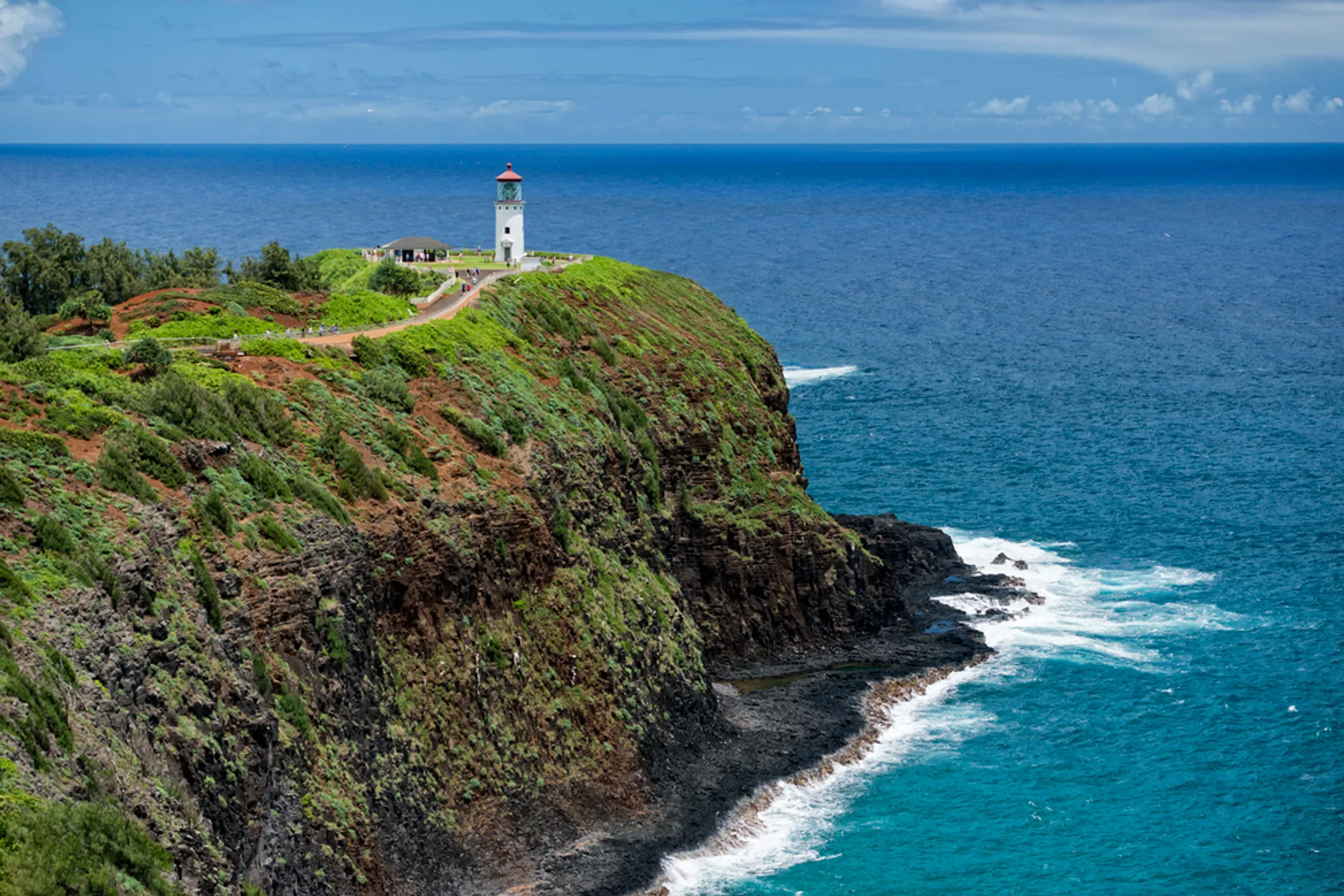
The lighthouse's most famous moment came from the sky, not the sea. On June 28, 1927, U.S. Army Lieutenants Lester Maitland and Albert Hegenberger attempted the first trans-Pacific flight from California to Hawaiʻi. Their Fokker C-2 Tri-Motor, named Bird of Paradise, carried experimental navigation equipment that failed over the vast ocean.
Flying blind through the night and low on fuel, they had overshot Oʻahu. Despair was setting in when they spotted a faint double flash on the horizon. The Kīlauea Point Lighthouse, visible from 10,000 feet at 90 miles distance, had found them.
The pilots circled the lighthouse for over an hour, waiting for dawn to get their bearings before completing the 100-mile flight to Wheeler Field on Oʻahu. They credited the lighthouse with saving their lives. In that moment, Kīlauea Point's mission expanded from maritime aid to aviation beacon.
War Changes Everything
December 7, 1941 brought "Condition One" to Hawaiʻi. The great light at Kīlauea Point went dark for the war's duration. But the station didn't fall silent. Military crews built observation bunkers on nearby Crater Hill. The site became a secret testing ground for revolutionary technologies: RADAR and LORAN.
These developments represented more than technical advancement. They marked the end of an era. For thousands of years, humans had navigated by observing stars, reading wave patterns, and watching for familiar landmarks. Polynesian navigators crossed vast ocean distances using knowledge passed down through generations. European sailors used compasses, sextants, and lighthouses to find their way.
Electronic navigation changed everything. RADAR could see through fog, darkness, and storms. LORAN provided position fixes accurate to within hundreds of yards anywhere in the ocean. Ships and planes could now navigate with precision that made visual beacons seem primitive.
📡 Technology Revolution
The irony wasn't lost on lighthouse keepers. The same technology that made their work obsolete was being perfected at the very places they had devoted their lives to maintaining.
🕯️ End of an Era
After 63 years of faithful service, the Coast Guard decommissioned Kīlauea Point Lighthouse in February 1976, replacing its powerful beam with a small automated beacon.
Senator Inouye's Vision: Saving a Treasure
Left inactive, the lighthouse began dying. Salt air, intense sun, and humidity took their toll. The white tower streaked with rust. Iron railings crumbled. A beloved landmark was dissolving before our eyes.
In 1979, the lighthouse joined the National Register of Historic Places. The surrounding land became Kīlauea Point National Wildlife Refuge in 1985. Community members, the Kīlauea Point Natural History Association, and the Fish & Wildlife Service began planning a rescue.
U.S. Senator Daniel K. Inouye became their champion. This decorated war hero and conservation advocate secured public and private funding for a multi-million dollar restoration that began in 2008.
The project required meticulous care. Workers repaired the cast iron roof, stabilized the fragile lens, and stripped away decades of deterioration. The concrete tower emerged gleaming white once again.
On May 1, 2013, exactly 100 years after first lighting, the lighthouse was rededicated as the Daniel K. Inouye Kīlauea Point Lighthouse. While the lamp can still be lit for ceremonies, the mercury flotation system couldn't be restored due to safety concerns.
Today the lighthouse stands as both historical monument and conservation symbol. It represents community love for heritage and honors the statesman who helped preserve it for future generations.
Continue Your Journey
From history to incredible wildlife, discover everything Kīlauea Point has to offer.
📅 Key Dates
- 1912 Construction begins
- May 1, 1913 First lighting
- June 28, 1927 Saves aviators
- February 1976 Decommissioned
- May 1, 2013 Centennial rededication
💡 Did You Know?
- The Fresnel lens had 1,008 individual glass prisms
- It floated on 260 pounds of mercury
- Visible 21 nautical miles at sea
- The site cost only $1 from Kīlauea Sugar Company
📖 Complete Guide
Built by hand & heart
Current page
Birds, whales & marine life
Planning Your VisitCalendar, tips & directions