The River of Kings
Ancient Stories and Sacred History of Wailua Falls
Written by a Local Expert
Kalani MillerThe River of Kings: Ancient Stories and Sacred History
To understand Wailua Falls, you must first know the Wailua River. This isn't just any waterway. For centuries, this was the river of kings.
The name Wailua means "two waters." Some say it refers to the river's two main forks. Others believe it honors the meeting of fresh water and salt at the river's mouth. Ancient stories suggest it was named for a great 14th-century chief.
This entire valley was one of two primary centers of power for Kauai's paramount chiefs. The area known as Wailuanuiahoano ("the great, sacred Wailua") was so revered that common people couldn't enter without royal invitation. Breaking this kapu meant death.
The sacred valley was a complete chiefdom. From the river mouth to Mount Waialeale's summit, the journey was lined with temples and holy sites. Each location played a crucial role in maintaining the power and spiritual connection of the ruling class.
The Wailua Complex: Temples of Power
The area around Wailua River contains Hawaii's most concentrated collection of sacred sites. Known as the Wailua Complex of Heiaus, it's now a National Historic Landmark. Each temple served a specific purpose in royal life.
Holoholoku Heiau and the Royal Birthstones
Near Kauai's oldest temple stand the Pohaku Hoohanau, the royal birthstones. Here, expectant mothers of the highest chiefly lineage would travel to give birth. The land itself would sanctify their child's royal status.
Legend says that when a child destined for greatness was born here, the sky would answer with thunder and rain. When the storm cleared, a brilliant rainbow would appear. One end would touch the exact spot of the royal birth. Kaumualii, Kauai's last king, was born at this sacred place.
Hikinaakala Heiau: Welcoming the Dawn
At the river's mouth stands Hikinaakala Heiau, meaning "The Rising Sun." Priests would greet each new day here with chants and prayers. The temple faces east, catching the first light that touches the island.
Nearby lies Hauola, a place of refuge. In ancient Hawaii, breaking sacred law usually meant death. But if lawbreakers could reach a place of refuge, they were safe from punishment. These sanctuaries provided second chances and showed the balance between justice and mercy.
Poliahu Heiau and the Bellstone
Further upriver sits Poliahu Heiau, named for the snow goddess. This ceremonial temple held great importance for royal rituals. Close by stands a remarkable basalt boulder known as the Bellstone.
When struck with other stones, this natural instrument produces a deep, hollow sound. The tone carries more than a mile, announcing important events. Royal births, sacred processions, and major ceremonies were all proclaimed by the Bellstone's voice.
Malae Heiau: Monument to Power
The largest remaining temple on Kauai, Malae Heiau is one of Hawaii's biggest sacred structures. As a luakini, or sacrificial temple, it was dedicated to Ku, the war god. The massive stone platform represents incredible engineering and spiritual power.
Oral tradition credits the menehune with building this temple. These mythical craftsmen were said to complete enormous projects in a single night. Whether built by supernatural beings or human hands, Malae Heiau stands as a testament to ancient Hawaiian achievement.
Stories in the Mist: The Falls' Own Legends
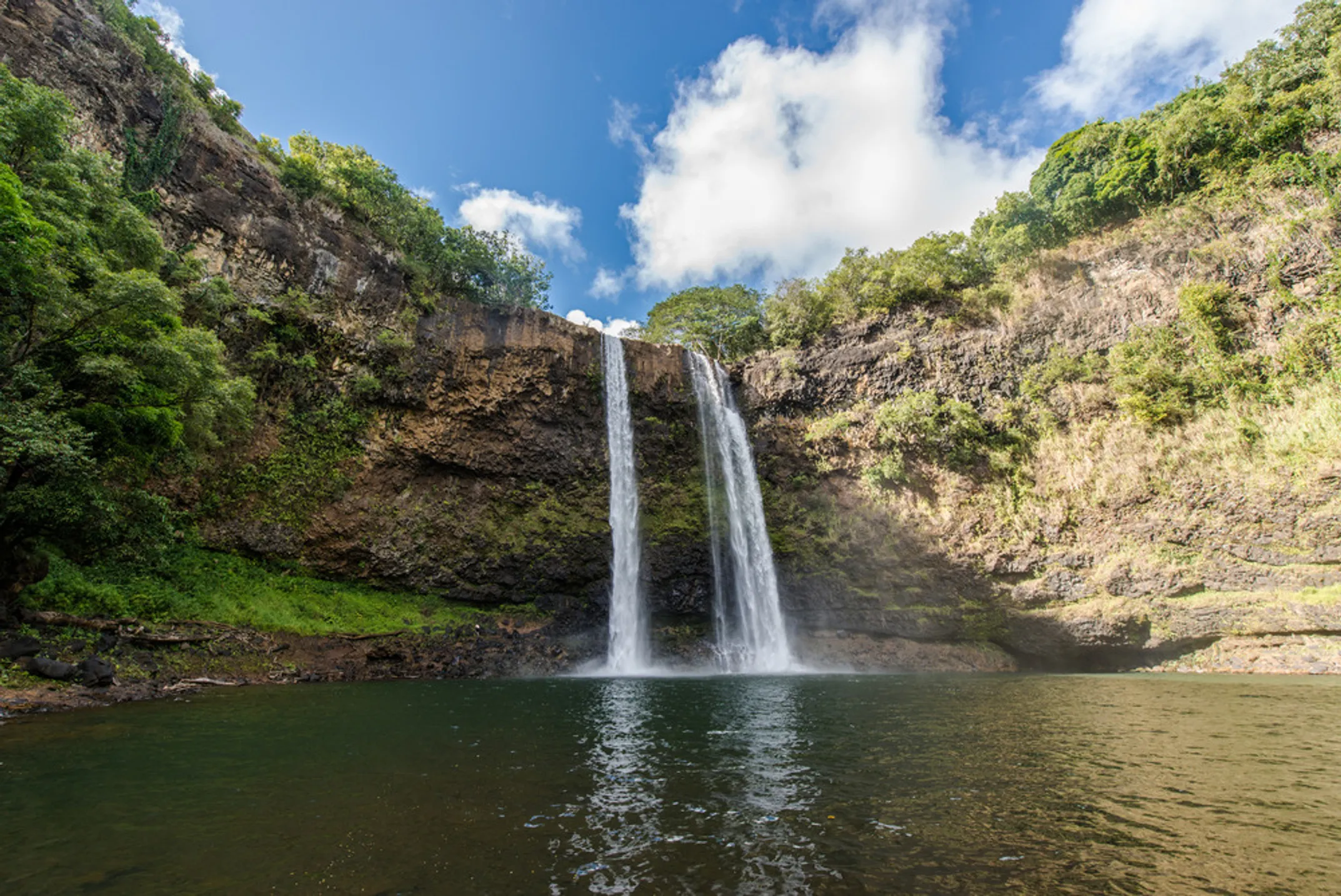
Wailua Falls holds its own powerful stories. The most famous is the Leap of the Alii, a test of courage that defined warriors for generations.
Young Hawaiian men would prove their bravery by leaping from the top of the falls into the churning pool below. The drop varies from 80 to over 170 feet, depending on which measurement you trust. The powerful currents made this an incredibly dangerous feat. Not all who attempted it survived.
This tradition shows the raw power these falls commanded. For centuries, Wailua Falls has been a place where life and death stakes proved one's worth. The courage required to make this leap connected young warriors to the spiritual power of the place.
Spiritual Guardians of the Water
The river was also protected by spiritual guardians. Legends speak of great moo, giant lizard-like beings who watched over Wailua's waters. Kamokila and Kawelowai were among these powerful protectors who controlled access to the river's resources.
One story tells of Hiiaka, Pele's favored sister, battling a moo who guarded a river crossing at the top of a waterfall in this area. These battles between divine powers shaped the landscape and established the spiritual boundaries that govern sacred places.
When you visit today, these stories live in the stones and water around you. The rainbow you might see in the morning mist connects you to the ancient sign that announced royal births. You're not just seeing a beautiful light show. You're witnessing an echo of sacred tradition.
Continue Your Wailua Falls Journey
Learn photography techniques, essential safety information, and plan your perfect day exploring the Wailua area.
🏛️ Sacred Sites
- Royal Birthstones
- Hikinaakala Heiau
- Poliahu Heiau
- Malae Heiau
- The Bellstone
🌺 Cultural Respect
- Observe from designated areas
- Never climb on sacred sites
- Don't remove stones or artifacts
- Speak quietly and respectfully
- Leave no trace
📖 Complete Guide
Getting there & timing
Sacred stories & legends
Capture stunning shots
Safety & AlternativesImportant warnings
Full Day AdventuresPlan your itinerary