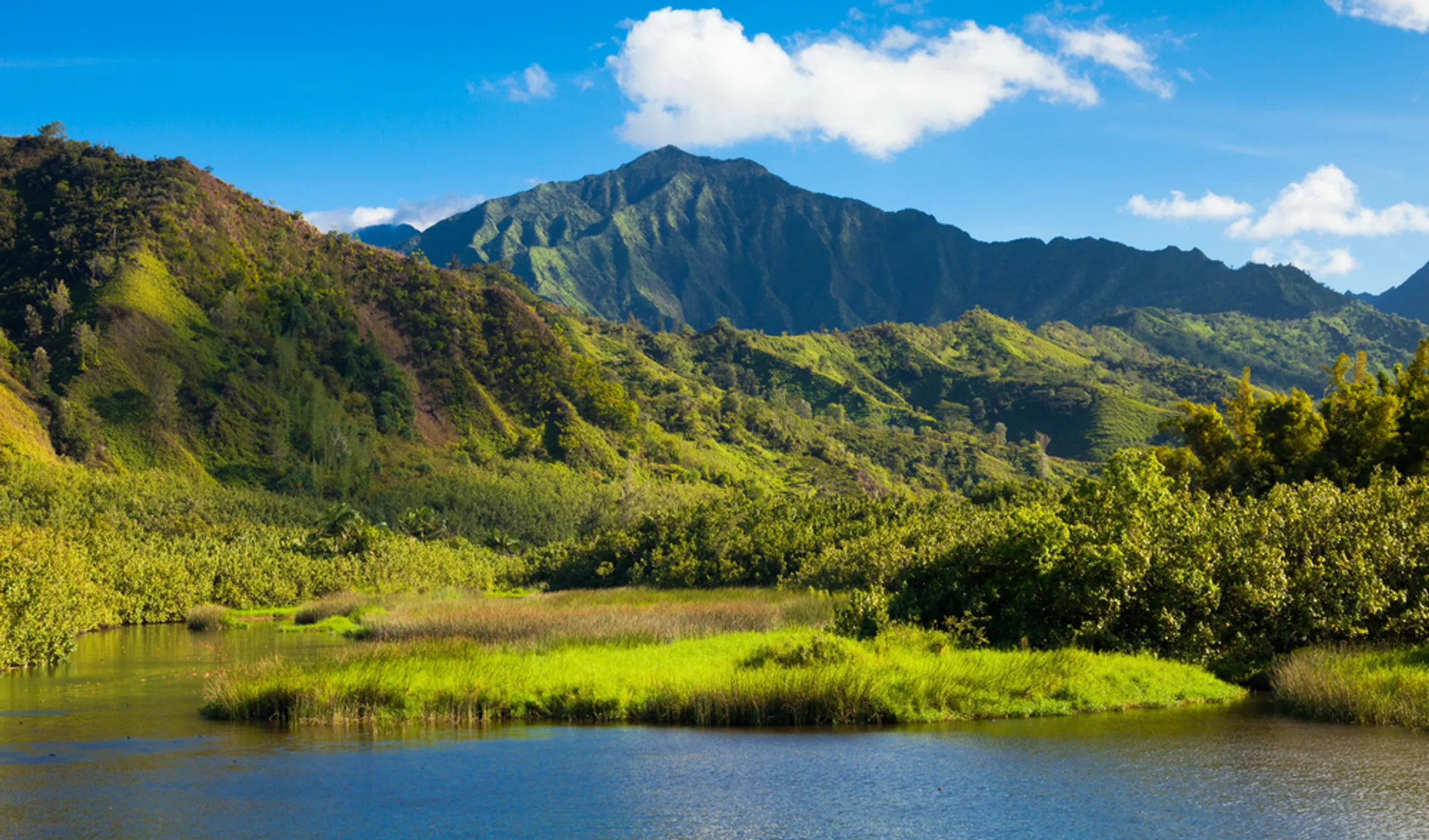
Alekoko Fishpond: Ancient Hawaiian Engineering Meets Menehune Magic
Discover a 600-year-old aquaculture masterpiece on Kauai's Hulēʻia River, where legend and science intertwine
Written by a Local Expert
Kalani MillerThe trade winds carry more than just the scent of plumeria and salt air across Kauai. They carry stories. Stories that my papa used to tell under the ironwood trees, stories that feel as real as the volcanic rock beneath your feet. Today, I want to share one of the most powerful stories our island holds—the tale of Alekoko Fishpond.
Most visitors drive to the overlook, snap a photo, and leave. They miss the deeper story. This isn't just another pretty spot on the Garden Isle. Alekoko is a wahi pana, a storied place that holds centuries of Hawaiian ingenuity, mystery, and community spirit.
I've spent my whole life on Kauai, collecting mele and family histories from our kupuna. The story of Alekoko teaches us about impossible engineering, ancient wisdom, and the power of working together. It shows us what happens when we keep our promises—and what happens when we don't.

The Menehune Legend: More Than Little People
The Moʻolelo of One Impossible Night
The most famous story of Alekoko begins with a ruling aliʻi and his sister. They wanted a fishpond built in the bend of the Hulēʻia River. Not just any fishpond—one grand enough to feed royalty.
They asked the Menehune for help. These weren't the tiny elves that tourist shops sell on t-shirts. The Menehune were master builders who lived deep in Kauai's forests and valleys. They worked only in darkness, and they worked fast.
The Menehune king agreed to build the pond, but he made one demand. No human eyes could watch them work. Break this rule, and the deal was off.
That night, thousands of Menehune came together. They formed a human chain stretching 25 miles from their village in Makaweli to the Hulēʻia River. All night long, they passed heavy lava stones hand to hand. Each stone was placed with care to build the massive wall that would hold back the river.
This "overnight construction" is classic Menehune mythology. It shows their legendary skill and teamwork. But the story doesn't end there.
Two Endings, Two Lessons
The legend splits into two powerful versions, each teaching different lessons about promise-keeping and sacrifice.
The first explains the pond's Hawaiian name: ʻAlekoko, meaning "dripping blood" or "bloody ripples." Passing those sharp lava stones for 25 miles cut the Menehune's hands. Their blood dripped into the river as they worked, staining the water red. The name reminds us of their sacrifice and hard work.
The second version is darker. As the Menehune worked through the night, the royal siblings grew curious. They couldn't resist peeking at the builders, breaking their sacred promise.
When the sun rose, the Menehune discovered the betrayal. Furious, they abandoned their work instantly. Two gaps in the fishpond wall mark their anger. As punishment, the spying brother and sister were turned to stone. Legend says you can still see these twin pillars on Hauʻpū Ridge, watching over the pond forever.
This version transforms a building story into a warning about keeping your word.
Who Were the Menehune Really?
The Menehune story carries deeper meaning than most people realize. Popular culture shows them as tiny magical beings, like Hawaiian leprechauns. But the truth is more complex and historically important.
The word "Menehune" likely comes from the Tahitian word "manahune," meaning "commoner" or person of low social rank. This wasn't about physical size—it was about social position.
Many scholars believe Hawaiʻi was settled in two major waves. The first group came from the Marquesas Islands between 300 and 800 CE. Around 1300 CE, a second, stronger wave arrived from Tahiti. These Tahitian settlers may have conquered or displaced the earlier Marquesan people.
The displaced Marquesans fled to remote forests and mountains. Over time, these "manahune"—the common people—became the basis for Menehune legends. Stories grew and changed through generations of telling.
This theory explains why we've never found skeletal remains of a race of "little people." An 1820 census on Kauai even listed 65 people who called themselves Menehune, suggesting they were real humans, not mythical beings.
Whether the Menehune were magical builders, memories of Hawaii's first people, or both, their story runs deep in Kauai's culture. It speaks to incredible skill, deep connection to the land, and social memory that has lasted centuries.
Explore the Complete Story of Alekoko
Discover the ancient engineering, visiting tips, conservation efforts, and the living legacy of this remarkable fishpond.
ℹ️ Quick Info
- Location: Līhuʻe, Kauai
- Age: ~600 years
- Type: Loko Kuapā
- Wall Length: 900-2,700 ft
- Status: Historic Place
- Access: Overlook/Tours
👁️ Viewing Options
- Scenic Overlook (Free)
- Kayak Tour ($150-160)
- SUP Tour (Available)
- Volunteer Workdays
🔗 Explore Alekoko
🦆 Wildlife to Spot
- ʻAlae Keʻokeʻo (Coot)
- ʻAlae ʻUla (Gallinule)
- Nēnē (Goose)