Sleeping Giant Trail Kauai
Complete Hiking Experience for All 3 Trailheads
Written by a Local Hiking Expert
Kalani MillerAn Invitation to Nounou Mountain
Aloha! The first time I hiked Nounou Mountain at sunrise, watching light spill over the Pacific and wake up the island, I understood why this mountain is more than just a trail. It's the guardian of Wailua. Every time I return, whether for a heart-pumping trail run or a quiet morning hike, I feel that same connection to the ʻāina (land).
Looming between Kapaʻa and Wailua, Nounou Mountain stands as the Sleeping Giant. This revered landmark has watched over the Royal Coconut Coast for centuries. From a distance, its ridgeline forms the unmistakable silhouette of a massive figure lying in eternal rest. The sight sparks imagination and beckons you closer.
But this isn't just another trail description. This is an invitation to understand the mountain's spirit. Together, we'll explore the sacred moʻolelo (story) of the giant, a tale that breathes life into these slopes. I'll walk you step-by-step through all three distinct trails, sharing personal tips to help you choose the right path. Most importantly, I'll give you the knowledge to ensure your hike is safe, respectful, and truly memorable.
The Moʻolelo of Puni: More Than a Legend, A Story of the ʻĀina
Before we take our first step on the trail, it's important to understand that in Hawaiʻi, a moʻolelo is far more than just a myth. It's a "succession of language," a sacred narrative that carries our history, genealogy, and cultural values through generations. These stories connect us, the kamaʻāina (people of the land), to the places we call home.
The Full Story of the Sleeping Giant
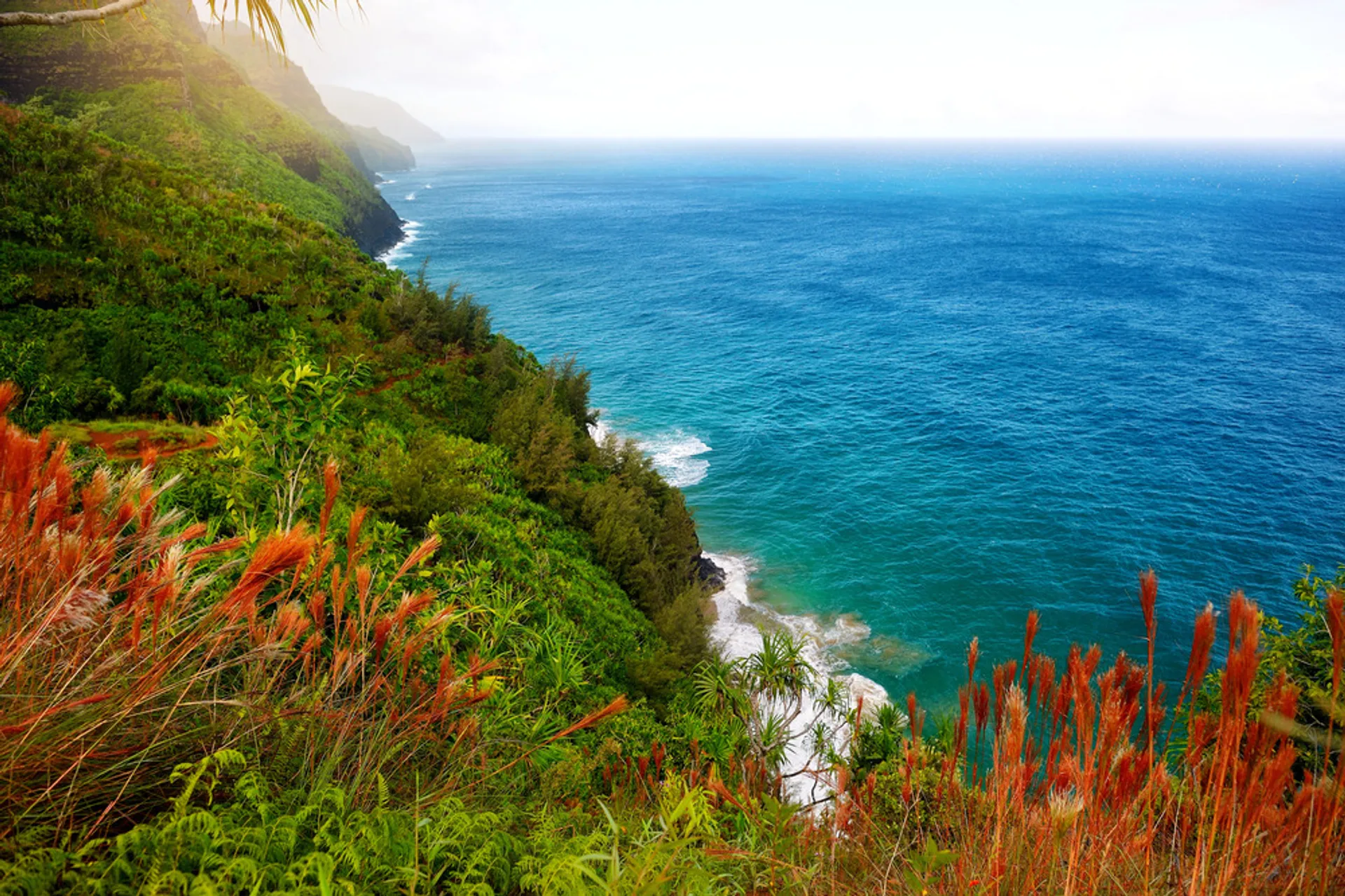
There are many tellings of this moʻolelo, but they all paint a picture of a kind and beloved figure. Puni was a gentle giant who befriended the Menehune, the legendary "little people" of Kauaʻi known for their masterful stonework. Puni would often travel with his small friends to the breathtaking Kalalau Valley. Because he was so immense and they were so small, he would find himself waiting for them. To pass time, he began to sculpt the magnificent cliffs of the Nāpali Coast with his hands, shaping the landscape we see today.
The most well-known version of his story begins with a great celebration. The people of Wailua, deeply grateful to Puni for his help—some say he helped build a great heiau (temple), others that he protected them from invaders—threw a massive lūʻau in his honor. The villagers, wanting to satisfy his colossal appetite, prepared an incredible feast. But they had a clever plan. They hid heavy, smooth river stones inside the fish and wrapped them in creamy poi.
Puni, enjoying the festivities, ate his fill, swallowing the rock-laden food without noticing. After the enormous meal, great sleepiness came over him. He lay down upon the mountain ridge overlooking the sacred Wailua valley, closed his eyes for a nap, and fell into a deep slumber from which he has never awoken. Over the centuries, his body turned to stone, becoming a permanent part of the ʻāina, forever watching over the land and people he loved.
The Sacred Ground of Wailua
Puni's resting place is no accident. The giant lies in the heart of one of the most sacred areas in all of Hawaiʻi. The Wailua River valley was the primary political, social, and religious center for the island's aliʻi ʻai moku (paramount chiefs). This area contains a dense complex of national historic landmarks, including four major heiau (places of worship), royal birthing stones where chiefs were born, and ancient petroglyphs carved into boulders.
The giant isn't just sleeping on any mountain. He is the eternal guardian of Kauaʻi's ancient capital, a silent testament to the deep mana (spiritual power) of this place. Understanding this context transforms the hike from a simple physical challenge into a rich cultural pilgrimage.
Choosing Your Path: A Deep Dive into the 3 Trailheads
I've hiked all three paths to the summit, and each offers a completely different personality and experience. To help you choose the right one for your adventure, I've broken them down in detail. But first, a critical safety update on the Kuamoʻo Trail is essential for anyone considering that route.
🌅 Nounou East Trail
- Distance: 3.4 miles RT
- Elevation: 1,000 feet
- Difficulty: Moderate
- Status: OPEN
"My go-to for sunrise and first-timers. The views unfolding as you climb are pure magic."
Best For: Sunrise hikers, first-timers, photographers
🌲 Nounou West Trail
- Distance: 2.2 - 3.0 miles RT
- Elevation: 800 feet
- Difficulty: Moderate
- Status: OPEN
"A beautiful, intense workout. That pine forest at the start feels like another world."
Best For: Hikers seeking a shorter but intense workout
🌿 Kuamoʻo-Nounou Trail
- Distance: 5.0 miles RT
- Elevation: 800 feet
- Difficulty: Easy-Moderate
- Status: LIKELY CLOSED
"A lovely, gentle walk along the ridge, but you MUST check its status before you go."
Best For: Scenic walkers, families (when open)
Ready to Explore the Sleeping Giant?
Get detailed trail guides, summit information, and essential planning tips for your Nounou Mountain adventure.
ℹ️ Quick Info
- Location: Wailua, Kauaʻi
- Time: 2-4 hours
- Best Time: Sunrise
- Cost: Free
- Parking: Limited
🥾 Trail Status
- East Trail OPEN
- West Trail OPEN
- Kuamoʻo Trail CLOSED
Always check Nā Ala Hele for current conditions
🎒 What to Bring
- Hiking shoes with good tread
- 1-2 liters of water
- Reef-safe sunscreen
- Bug spray
- Light rain jacket
- Snacks & first-aid kit