The Grotto - A Cathedral of Earth and Water
A geological marvel, botanical wonder, and cultural treasure

Written by a Local Expert
Kalani MillerNature's Masterpiece
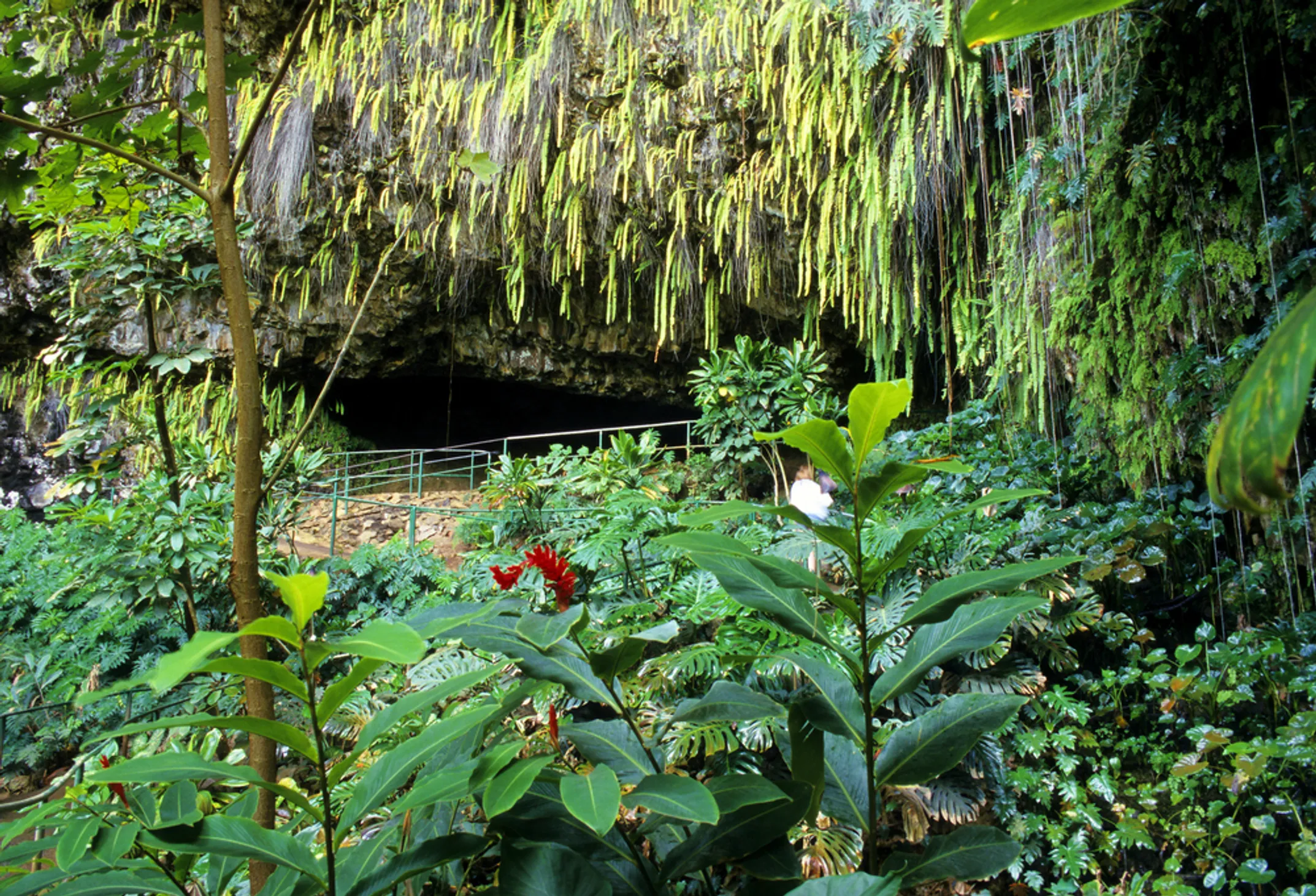
After the gentle cruise upriver, a short walk along a paved path through a rainforest of native and tropical plants leads you to the main event: the Fern Grotto. Standing before it, you are in the presence of a true geological, botanical, and cultural wonder. The first time I brought my own children here, my youngest, Kiele, whispered, "Papa, it looks like where the fairy queen would live." She wasn't wrong.
Geology - The Bones of the Island
The grotto is a natural marvel, a cave formed millions of years ago within the massive lava flows that built our island. Understanding its geology helps you appreciate not just how it formed, but why it's so special. Kauai is the oldest of the main Hawaiian islands, born from volcanic eruptions that began about six million years ago. The grotto is a feature of the Waimea Canyon volcanic series, the ancient shield volcano that forms the island's foundation.
Picture our island as it was millions of years ago: a bare volcanic cone rising from the deep Pacific, constantly growing as new lava flows added layer upon layer of rock. The Fern Grotto formed during this process, as flowing lava created a cave within the cooling rock.
Over millions of years, water action and erosion hollowed out this space in the porous lava rock, creating a perfect cavern. The dark, volcanic rock provides a stunning, stark contrast to the vibrant green life that clings to it. This isn't just aesthetically pleasing. It's scientifically fascinating. The mineral-rich volcanic soil provides perfect nutrition for the ferns, while the porous rock creates a natural irrigation system that keeps them constantly moist.
This geological formation also created a natural amphitheater. The curved shape of the rock walls produces incredible acoustics, amplifying sound with a rich, natural echo. Sound waves bounce off the curved walls and return with a fullness that makes even whispered words seem profound. This acoustic perfection is a key reason why the grotto has become a legendary stage for musicians and a sacred-feeling space for wedding ceremonies.
Standing in the grotto, you're literally inside the bones of our island. Every surface around you was once molten rock, flowing and cooling, creating the foundation for all the life that would follow. It's humbling to think about the vast timescales involved, the patient work of water and wind that shaped this space over millions of years.
🌋 Age: 6 Million Years
Formed during the Waimea Canyon volcanic series, making it part of Kauai's ancient geological foundation.
🎵 Perfect Acoustics
The curved volcanic walls create a natural amphitheater with rich, echoing sound that amplifies music and voices.
Botany - The Green Mantle
The grotto's most famous feature is, of course, its living mantle of ferns. But calling them "just ferns" is like calling the ocean "just water." These are species like the Boston sword fern and delicate maidenhair ferns that have found a way to grow upside down, hanging from the ceiling in a lush cascade that seems to defy gravity itself.
They thrive here because of the unique environment. The porous lava rock acts like a sponge, constantly seeping water that starts as rainfall on the slopes of Mount Waiʻaleʻale, one of the wettest spots on Earth, located 20 miles inland. This isn't just any water. It's been filtered through layers of volcanic rock, picking up minerals and nutrients that feed the ferns. This constant misting keeps the ferns green and vibrant year-round, creating a living ceiling that changes with the seasons but never loses its magic.
The science behind this hanging garden is remarkable. Most plants grow toward the light, but these ferns have adapted to life in perpetual shade. They've developed larger fronds to capture what little light filters through, and their root systems have evolved to grip the rough volcanic rock and absorb moisture from the air itself.
The walk to the grotto is a botanical education in itself. The path is lined with a mix of native Hawaiian plants and colorful, introduced tropicals. You'll see the broad leaves of the Hawaiian Ti Plant, sacred to ancient Hawaiians and still used today in ceremonies and cooking. The fiery red bracts of Torch Ginger add splashes of color, while dense stands of clumping bamboo create natural walls of green.
Look up and you'll see the sprawling philodendron climbing high into the canopy, their massive leaves creating a living roof over the path. These plants aren't native to Hawaii, but they've found a home here, adapting to our climate and becoming part of the ecosystem. It's a reminder that Hawaii has always been a place where different cultures and species meet, mingle, and create something new.
A History of Romance, Song, and Survival
While the grotto feels ancient and timeless, its modern identity is deeply tied to a history of romance, music, and incredible survival. The story of how an ancient Hawaiian sacred site became a symbol of tropical romance around the world is as complex and layered as the lava rock that forms its walls.
The melody most linked with the grotto is the "Hawaiian Wedding Song." But here's where the story gets interesting, and more complex than many realize. The song began its life in 1926 as a beautiful Hawaiian love song titled "Ke Kali Nei Au," composed by the great Charles E. King. King was a Hawaiian musician and composer who dedicated his life to preserving traditional Hawaiian music while also creating new songs that captured the spirit of the islands.
The original Hawaiian lyrics speak of patient waiting, of love that endures across time and distance. For over 30 years, "Ke Kali Nei Au" was beloved by Hawaiians but unknown to the outside world. It wasn't until 1958 that Al Hoffman and Dick Manning wrote a new set of English lyrics, which are not a translation of the original, and renamed it "Hawaiian Wedding Song."
Its fame exploded in 1961 when Elvis Presley performed the song in the film Blue Hawaii. Elvis was at the height of his popularity, and Blue Hawaii was one of his most successful films. The iconic wedding scene at the end of the movie was filmed at the nearby, and now legendary, Coco Palms hotel, forever linking the song, Elvis, and the Fern Grotto in the popular mind.
But here's what's really interesting: while ancient Hawaiians held the grotto as a sacred site dedicated to the god Lono, they did not use it for weddings. Traditional Hawaiian weddings were community affairs, often held on beaches or in family compounds. The idea of the grotto as a wedding venue is a modern invention, born from Hollywood's version of Hawaiian romance.
It was only after the film's popularity that it became a world-famous venue for exchanging vows, a tradition that continues with private wedding tours today. In some ways, this represents cultural adaptation at its finest. The grotto's sacredness wasn't destroyed by its new role. It was transformed, expanded to include new kinds of ceremony and celebration.
The Scars of Iniki - A Story of Survival
The grotto you see today is a survivor. Its modern history is marked by deep struggle and rebirth, a story that mirrors the resilience of the Hawaiian people themselves. Understanding this history makes visiting the grotto even more meaningful, because you're not just seeing natural beauty. You're seeing the power of regeneration, the ability of life to return even after devastating loss.
In 1982, Hurricane Iwa dealt a big blow to Kauai, but it was Hurricane Iniki in 1992 that brought near-total devastation. I was in high school when Iniki hit, and I still remember the sound. Not just the wind, though that was terrifying enough, but the sound of our island being torn apart. Trees snapping, roofs peeling away, the ocean roaring inland where it had no business being.
The Category 4 storm was a terrifying event that reshaped our island, and its fierce winds ripped most of the ferns from the grotto's rock face, leaving it scarred and bare. The fern ceiling that had taken decades to grow was destroyed in a matter of hours. The natural beauty that had made the grotto famous around the world was gone, leaving only naked rock and broken stems.
But nature is patient, and life finds a way. Slowly, gradually, new ferns began to sprout from the rock. At first, just tiny green shoots, barely visible against the dark stone. Then larger fronds, reaching down from the ceiling like green fingers. The process took years, but every time I visited, there was more green, more life, more hope.
The challenges continued beyond the hurricanes. In March 2006, unusually heavy rains caused severe flooding and sent rocks and boulders falling from the grotto's ceiling onto the viewing area below, forcing the state to close the site for safety reasons. It took over a year of reinforcement work, including stabilizing the rock walls and installing new ramps, before the grotto could reopen in 2007.
Because of these events, visitors can no longer walk inside the cave itself. In the old days, you could actually enter the grotto, stand directly beneath the hanging ferns, feel the mist on your skin. Today, a beautiful, spacious observation deck was built to allow for safe viewing from just outside the cave mouth.
When I look at the grotto today, I don't just see ferns on a rock. I see a survivor. The fact that the ferns have grown back, that this place of beauty endured, gives it a special kind of mana. It's a symbol of Kauai's own strength and resilience.
Continue Your Fern Grotto Journey
Ready to plan your visit? Explore practical information, accessibility details, and discover the living culture of the Wailua Valley.
🌿 Quick Facts
- Age: 6 million years
- Rock Type: Volcanic lava
- Fern Species: Boston sword
- Water Source: Mt. Waiʻaleʻale
- Survived: 1992 Iniki
📖 Explore This Guide
🌱 Fern Species
- Boston sword fern
- Maidenhair fern
- Hawaiian Ti Plant
- Torch Ginger
💡 Did You Know?
The ferns grow upside down, defying gravity by gripping the porous volcanic rock and absorbing moisture directly from the air. They've adapted to perpetual shade with larger fronds to capture minimal light.