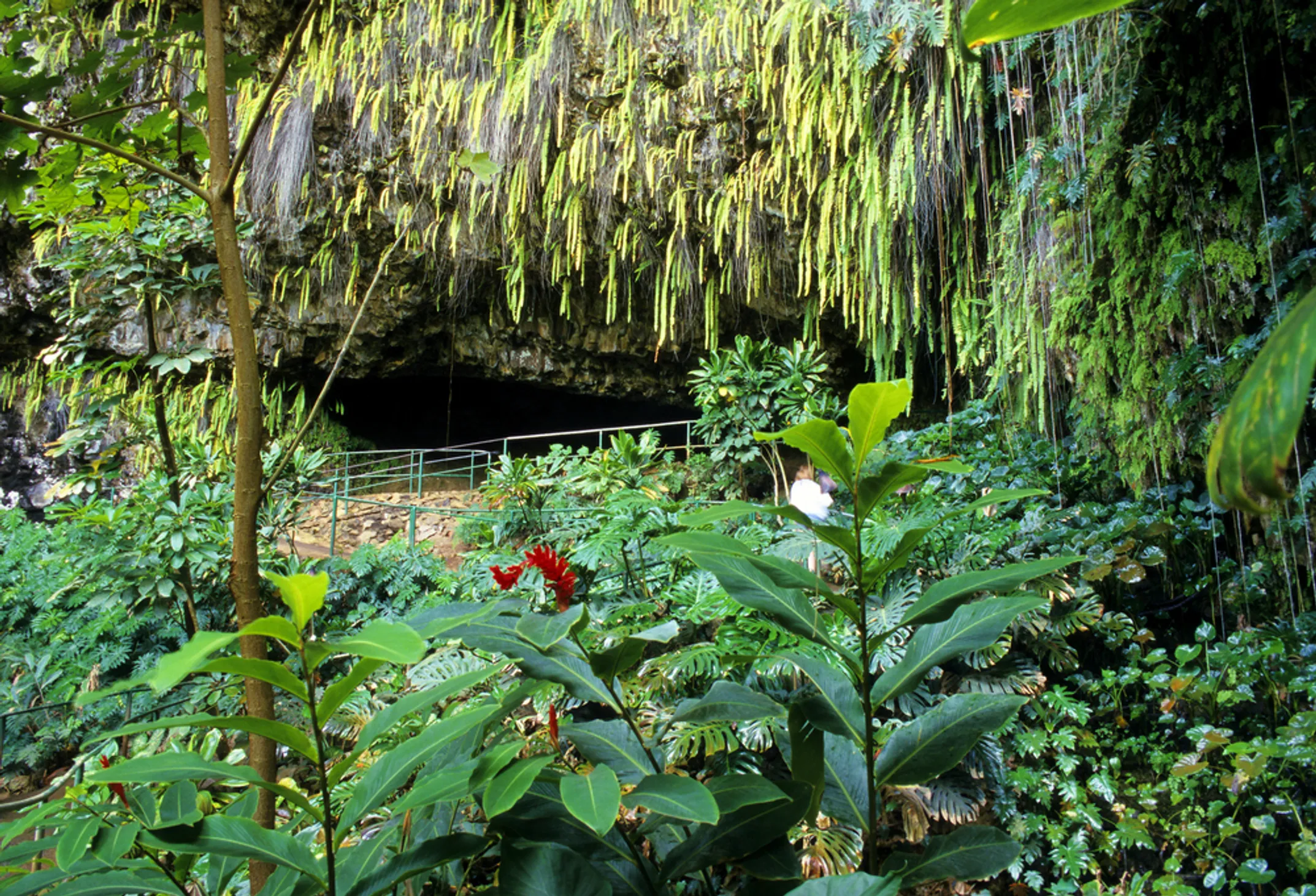
The Soul of the River: Discovering Kauai's Sacred Fern Grotto
Journey through the Wailua Valley to experience a natural cathedral where ancient Hawaiian royalty once walked
Written by a Local Expert
Kalani MillerThe Whisper of the River
Before I even knew its name, I knew its sound. Growing up on Kauai, the Wailua River wasn't just a line on a map. It was a constant whisper in the background of my childhood. It was the sound of history, of kings, and of magic hidden just around the bend. That magic has a name: the Fern Grotto. But to truly know the grotto, you have to first listen to the river.
This place is more than a postcard, more than a stop on a tour. It is a natural cathedral, the vibrant heart of Kauai's most sacred valley, a place once reserved only for Hawaiian royalty. This is my invitation to you, to journey beyond the surface and explore the stories etched into the lava rock, the science that sustains its lush life, and the enduring spirit that makes the Fern Grotto a place of pilgrimage. To understand the grotto, we must travel the river's sacred path together.
My papa used to tell me that water has memory. He'd sit on our lanai in Hanalei, watching the evening light dance across the mountains, and explain how every drop that falls on Waiʻaleʻale carries stories down to the sea. Some of those drops, he said, take a detour through the heart of our island's most sacred valley.
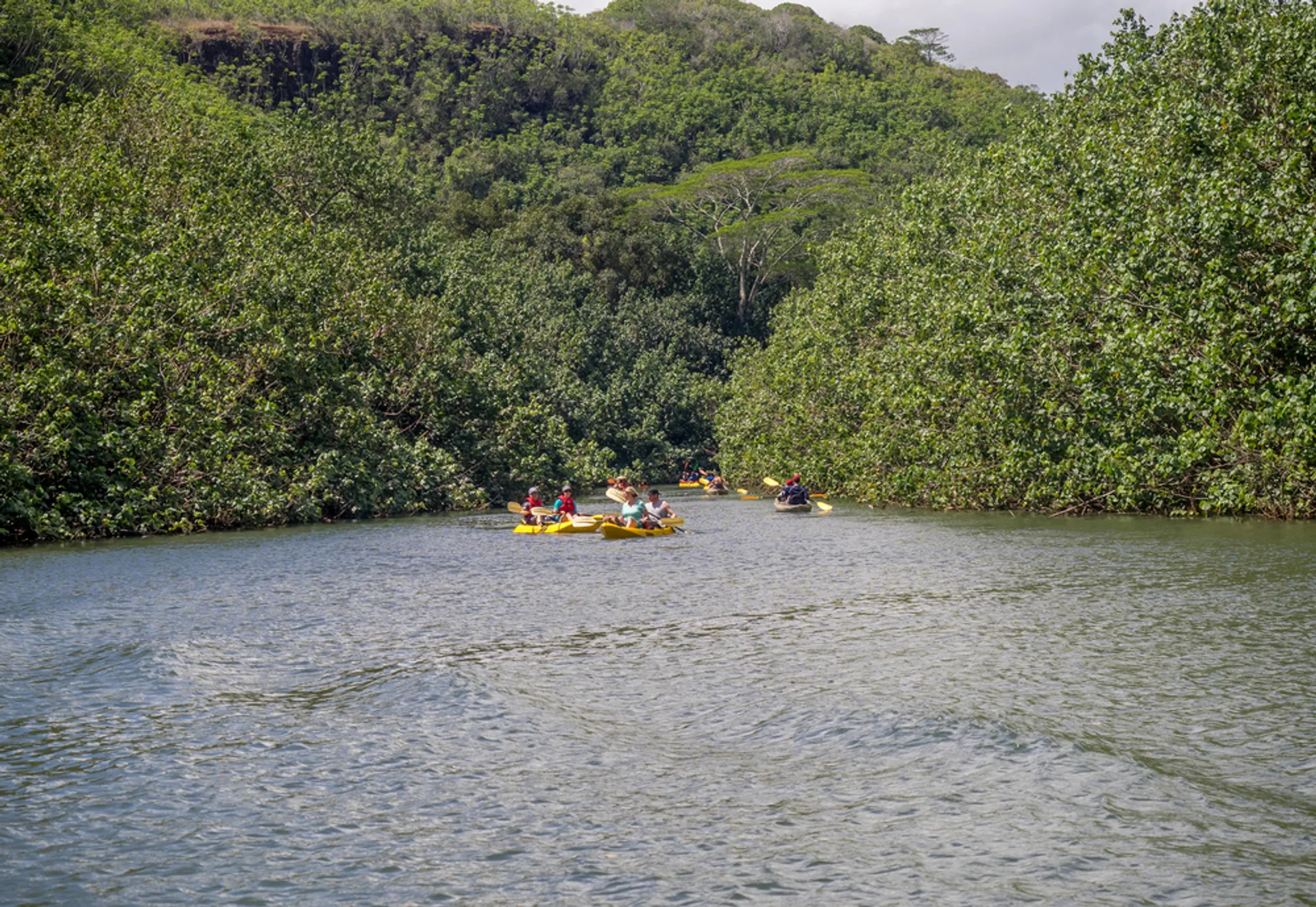
Wailuanuiāhoʻāno - The Sacred River of Kings
To understand the Fern Grotto's meaning, you must first understand the land it sits on. The journey to the grotto is a journey through Wailuanuiāhoʻāno—the Great Sacred Wailua. The name Wailua itself means 'two waters,' and this valley was one of the largest and most important ahupuaʻa on Kauai. An ahupuaʻa is a traditional Hawaiian land division that extends from the mountains to the sea, providing everything a community needs to survive and thrive.
For centuries, this was the island's main political, social, and religious center, the private domain of our highest chiefs. When I drive down Highway 56 today and cross the Wailua River bridge, I'm reminded that I'm crossing more than water. I'm crossing a threshold into one of the most powerful places in all of Polynesia.
The power of this place is not just in its history, but in its shape. A chain of seven sacred sites, or heiau, creates a spiritual pathway. They align from the river's mouth at the ocean all the way to the summit of the great Mount Waiʻaleʻale. This alignment is no accident. Ancient Hawaiians understood the connection between land and spirit, between the physical and the divine. Visiting the Fern Grotto means you are traveling along this ancient, royal path.
My kūpuna taught me that mana flows like water. It gathers in certain places, pools in sacred spots, and moves through the landscape in ways that shape both the land and the people who live on it. The Wailua Valley is one of those places where mana collects and concentrates. Every bend in the river, every stone temple, every royal birthplace adds to the spiritual power that still flows through this valley today.
The Trail of Temples - A Spiritual Path
As you move upriver, you are passing places of immense mana. The journey begins where the sun first touches Kauai each morning. This is not just geography. It's cosmology. Ancient Hawaiians understood that the rising sun brought life and power to the land. They built their most important temples to catch that first light and channel its energy into their ceremonies and prayers.
Hikinaakala Heiau sits at what is now Lydgate Park. The name of this temple means "Rising of the Sun." Built around 1,200 years ago, it was a sacred place where priests would welcome the dawn with chants and prayers. Every morning for over a millennium, voices rose from this spot to greet the new day. Can you imagine the accumulated power of all those prayers, all those dawns, all that devotion?
Just beside it lies the Hauola Puʻuhonua, a place of refuge. In ancient times, if someone broke a sacred law, or kapu, they could flee here to escape punishment, finding safety within its walls. The concept of puʻuhonua speaks to something deep in Hawaiian culture. Even in a society with strict laws and harsh punishments, there was always room for mercy, always a chance for redemption. The stones of this refuge have sheltered countless souls seeking forgiveness and a second chance.
When I take my own keiki to Lydgate Park to play on the playground or splash in the protected pools, I make sure they understand they're playing on sacred ground. The swings and slides are new, but the mana is ancient. This connection between past and present, between sacred and everyday, is what makes living on Kauai so special.
🏛️ Malae Heiau
One of Hawaii's largest and oldest temples, covering nearly two acres. Legend says the Menehune built it in a single night, passing stones hand to hand for miles.
⚔️ Holoholoku Heiau
Kauai's oldest temple with a fearsome reputation. Its name means 'run, run, stand fast,' where prisoners and kapu breakers faced their final judgment.
Pōhaku Hoʻōhanau - The Royal Birthstones
Of all the sacred sites in the Wailua Valley, none is more powerful than Pōhaku Hoʻōhanau, the Royal Birthstones. This was not merely a tradition. It was required. To secure their divine right to rule, all of Kauai's kings had to be born at this exact spot. Royalty from other islands would even travel here for the birth of their children, understanding that the mana of this place would flow into their babies and shape their destinies.
The site itself is simple and deep. Two large stones sit beside the Wailua River, worn smooth by centuries of wind and rain. An expecting mother of royal blood would be brought here, her back supported by one large stone while she placed her legs on another during labor. A nearby grass hut provided privacy before the birth. The positioning wasn't random. These stones were chosen and placed to align with the flow of mana through the valley, ensuring that children born here would inherit the spiritual power of the land itself.
The very ground was considered so sacred that a flat stone covering a sacrificed dog served as a warning to commoners that the area was forbidden. This might seem harsh to modern minds, but it reflects the serious responsibility that came with ruling in ancient Hawaii. Chiefs weren't just political leaders. They were spiritual conduits, responsible for maintaining the balance between the human and divine worlds.
The rituals continued after birth at the Pōhaku Piko, or umbilical stone. The newborn's umbilical cord was placed into a crack in the rock wall. Legend holds that if a rat came and stole the cord, it was a sign that the child would grow to be a thief. If the cord stayed untouched, the child's good future was secure. This wasn't superstition. It was a way of reading the signs, of understanding what the land itself was saying about this new life.
When a royal child was born, a kahuna would strike the nearby Bellstone, a unique reddish rock that made a deep, strong clang. The sound would echo for miles throughout the valley, telling the world a new chief had arrived. Imagine that sound rolling across the water, bouncing off the canyon walls, carrying the news from mountain to sea. Every person in the valley would stop what they were doing, listening to the birth announcement of their future ruler.
As a kamaʻāina, I was taught that you don't just go to the Fern Grotto. You travel the path of kings. Every bend in the river passes a place of great power. The grotto isn't the start of the story. It's a beautiful chapter in a much larger, sacred epic.
Continue Your Journey Through the Wailua
Discover the Smith family's four-generation legacy, the river cruise experience, and the geological wonders that make the Fern Grotto a natural cathedral.
ℹ️ Quick Info
- Duration: 1 hr 20 min
- Adult Price: $35.00
- Child (2-12): $17.50
- Operating Days: Mon-Fri
- Location: East Side
📖 Explore This Guide
You are here
Four generations of aloha
The Grotto ItselfGeology & botany
Planning Your VisitTours, tips & accessibility
Living CulturePresent & future
🎒 What to Bring
- Camera for photos
- Comfortable walking shoes
- Sunscreen & hat
- Light raincoat/jacket