Shore Fishing the Big Island
Shoreline Fishing Secrets from Volcanic Shores
Part IV of Big Island Fishing Guide
By Kalani MillerShore Fishing the Big Island: Shoreline Fishing Secrets
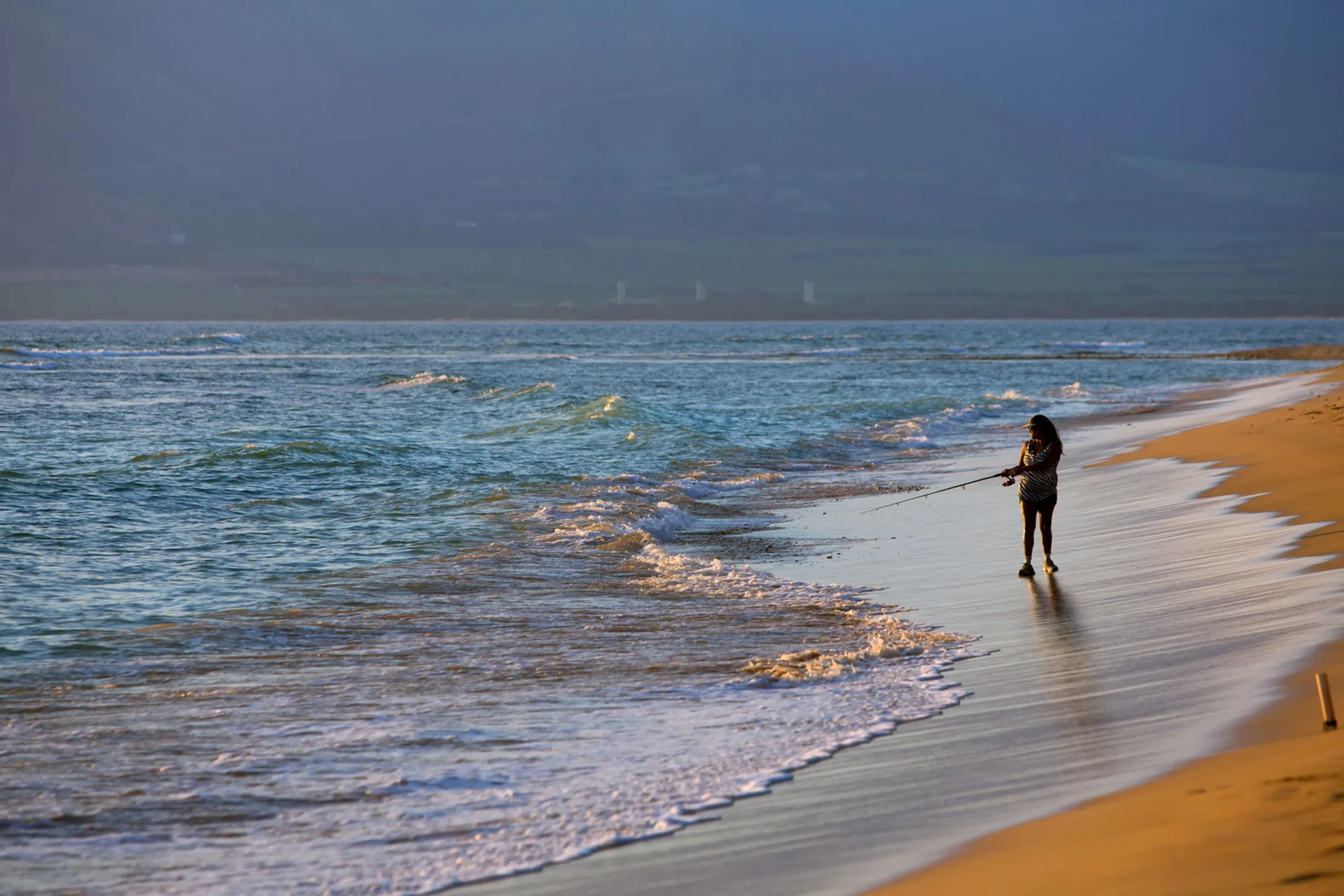
While the deep-sea charters get most of the glory, some of the most rewarding fishing on the Big Island can be done with your own two feet planted on our volcanic shores. Shore fishing, or "whipping" as we often call it, is a beloved practice and a fantastic way to connect with the ocean on a more intimate level. It's also a perfect option for those on a budget or anglers who just want a few quiet hours of casting. This is an area where other sources fall short, but we're going to give you the knowledge you need to succeed.
The Law of the Land (and Sea): A Clear Approach to Regulations
This is the most confusing topic for visitors, so let's make it simple.
Good News for Shore Anglers
You do NOT need a state license for recreational saltwater fishing from the shoreline in Hawaiʻi. You can grab your rod and head to any publicly accessible beach or rocky coast without needing a permit.
Important: Boat Fishing License Required
However, and this is a critical distinction, the rules changed recently for boat fishing. A Nonresident Recreational Marine Fishing License (NRMFL) IS REQUIRED for any non-resident aged 15 or older who is fishing recreationally in the ocean from a boat. This applies to both private and shared charters.
You can get your license from the official Hawaii Department of Land and Natural Resources (DLNR) portal at fishing.hawaii.gov.
Important Regulations to Know
Even without a license, shoreline fishing is still highly regulated to protect our resources. Be aware of:
🗓️ Seasons
Some species have closed seasons. The popular table fish moi (Pacific threadfin), for example, is off-limits from June through August.
📏 Size & Bag Limits
There are minimum size limits and daily bag limits for many species to ensure they have a chance to reproduce. For example, the bag limit for ʻōʻio (bonefish) is 10 fish per day with a minimum size of 14 inches.
🚫 Protected Areas
Fishing is restricted or prohibited in certain areas, such as Marine Life Conservation Districts (MLCDs), military bases, and historical sites like Puʻuhonua o Hōnaunau. These areas will be marked with signs.
Always respect these boundaries. For a complete and up-to-date approach, always check the official Hawaii DLNR fishing regulations page at dlnr.hawaii.gov/dar/fishing/fishing-regulations/.
Gear & Bait: What to Pack, Rent, or Buy
Your first stop on the island shouldn't be the beach; it should be a tackle shop. Places like the S. Tokunaga Store in Hilo have been outfitting anglers for over a century. The gear is important, but the advice you'll get from the staff on what's biting, which bait is working, and what techniques to use is priceless. Always trust the locals.
Essential Gear You'll Need
🎣 Rod and Reel
A 7-to-9-foot spinning rod is a versatile choice for most shoreline applications. Pair it with a quality reel spooled with 15-20 lb test line.
👟 Footwear (Most Important!)
Do not attempt to fish from our lava rock coastlines in sandals or standard water shoes. The volcanic rock is incredibly sharp and becomes dangerously slick when wet.
Rigs & Techniques
🌊 Whipping
This is the most popular style of shore fishing. It uses a modified Carolina rig, often with a lead weight or a clear bubble float, to cast and retrieve a lure.
⚓ Dunking
This is a more stationary, relaxing method of bait fishing. It uses a three-way swivel rig where one line goes to your hook and bait, and a separate, weaker line goes to a lead sinker.
Bait & Lures
🦑 Fresh Bait
You can't go wrong with fresh, simple bait like squid (ʻika) or shrimp.
🎣 Lures
Translucent or sparkly soft plastic grubs and spoons like Kastmasters are favorites that will catch a wide variety of fish.
Finding a Spot: How to Read the Water, Not Just a Map
I'm not going to give away my secret spots—that's not the way, and part of the adventure is in the discovery. Instead, I'll teach you how to find your own productive spots by reading the coastline.
🌅 Kona & Kohala Coasts (Leeward Side)
This side of the island is defined by its rugged lava rock shorelines. Look for rocky points and lava ledges that give you access to deeper water. These are prime ambush points for predators like papio and omilu.
🌧️ Hilo & Puna Coasts (Windward Side)
The east side offers a different environment, with more protected coves, black sand beaches, and flourishing reefs. The Hilo Breakwater is a famous spot where you can walk out and access deep water.
⚠️ Safety First
I cannot stress this enough. The Hawaiian shoreline is beautiful but can be incredibly dangerous. I've seen it a hundred times—a visitor gets too close to the edge, mesmerized by the view, and a rogue wave they never saw coming sweeps them or their gear into the ocean.
- • Never, ever turn your back on the sea
- • Always keep an eye on the waves
- • Stay well back from the edge on cliffs
- • Be aware that conditions can change in an instant
Ready to Learn About Your Catch?
Now that you know how to fish from shore, let's explore the amazing fish species you might encounter in Big Island waters.
Know Your Catch🎒 Shore Fishing Essentials
- Felt-soled tabis (most important!)
- 7-9 foot spinning rod
- 15-20 lb test line
- Fresh squid or shrimp bait
- Soft plastic grubs
- Kastmaster spoons
📖 Fishing Guide Navigation
📋 License Requirements
Shore Fishing
No license required
Boat Fishing
License required for non-residents
Get your boat license at:
fishing.hawaii.gov
🐟 Shore Target Species
Ulua / Papio
Giant Trevally - the ultimate prize
ʻŌʻio
Bonefish - ghost of the flats
Omilu
Bluefin Trevally
Āholehole
Hawaiian Flagtail
⚠️ Critical Safety Tips
- Never turn your back on the ocean
- Wear proper tabis on lava rock
- Watch for rogue waves
- Stay back from cliff edges