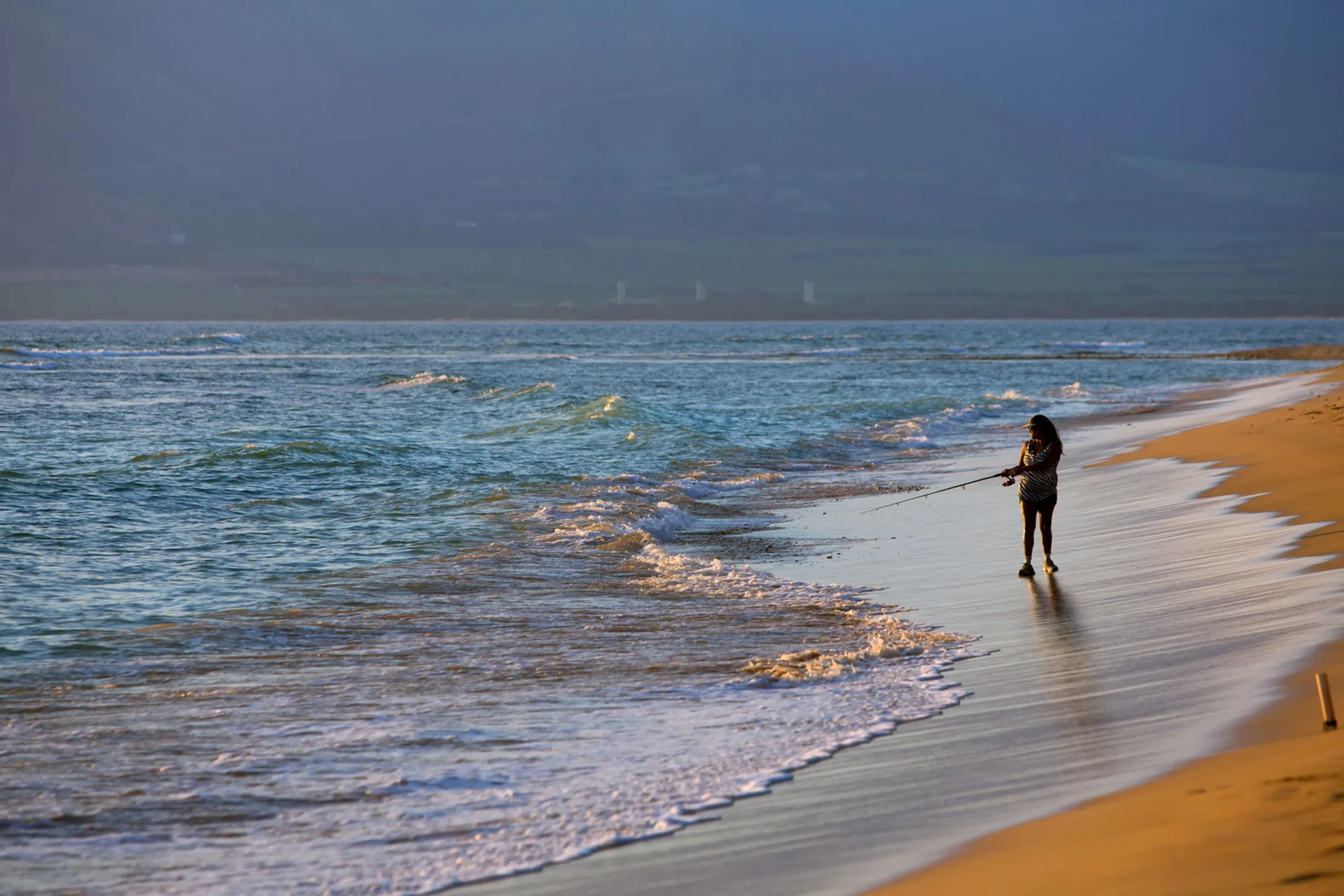
Why Kona?
The Science and Soul of "Grander Alley"
Part II of Big Island Fishing Guide
By Kalani MillerThe Science and Soul of "Grander Alley"
Visitors always ask me the same question: "Why here? What makes Kona so special?" It's not just luck. Kona is a perfectly engineered fish trap, created by a powerful convergence of geology and oceanography. Understanding this is the key to appreciating why these waters are so legendary. Other fishermen might mention the calm seas, but they rarely explain the science behind it, which is where the real story lies.
The Great Wall of Paradise: The Lee Effect
The first thing you'll notice about fishing in Kona is how incredibly smooth the ride is, even miles offshore. This isn't an accident; it's a gift from our mountains. The Kona coast sits in the "lee," or the sheltered side, of three massive volcanoes: Mauna Kea, Mauna Loa, and Hualālai. These towering peaks, reaching up to nearly 14,000 feet, create a colossal natural windbreak that blocks the powerful northeasterly trade winds that buffet the rest of the state.
The result is a vast stretch of ocean that remains remarkably calm for more than 300 days a year. While anglers in other parts of the world are battling rough seas just to get to the fishing grounds, we're often trolling on water that's as flat as a pond. This unique calmness makes Kona fishing accessible and enjoyable for everyone, from families with young children to serious anglers who can focus on spotting fish without being tossed around.
Fun Fact: It's this protected environment that allowed Kona to become the birthplace of modern trolling lures, as the consistent conditions were perfect for fine-tuning their action.
The Deep Drop: Instant Access to the Action
In most of the world's top fishing destinations, you have to travel for hours, sometimes 50 miles or more, to reach the deep water where pelagic giants hunt. Not in Kona. The Big Island is the youngest in the Hawaiian archipelago, a volcanic mountain rising steeply from the ocean floor. This dramatic underwater topography means the deep water is right at our doorstep.
📏 Distance from Harbor
🏆 Grander Alley Stats
This immediate access to prime big-game territory is a game-changer. It means you're fishing for marlin, tuna, and other pelagics within minutes of leaving the dock, maximizing your fishing time and your chances of hooking a monster before you've even finished your morning coffee. This 1,700 square-mile playground, known as "Grander Alley," is where 63 marlin over 1,000 pounds have been caught, cementing Kona's reputation.
The Ocean's Engine: Eddies and Upwelling
The calm water and deep drop-off are only two parts of the equation. The final, crucial element that makes Kona a supercharged fishery is the presence of offshore eddies. These are massive, slow-rotating currents of water, some up to 200 miles wide, that spin off the main ocean currents flowing past the islands.
When these eddies collide with the Big Island's steep underwater ledges, they create a powerful phenomenon called upwelling. This process pulls cold, nutrient-rich water from the deep ocean to the sunlit surface. This nutrient surge acts like a powerful fertilizer, kickstarting the entire marine food chain from the bottom up.
The Food Chain Explosion
Plankton blooms erupt, which attract massive schools of small organisms and baitfish like pelagic shrimp, scad, and skipjack tuna (aku). Where there's bait, the big predators are never far behind. This "conveyor belt of biodiversity" creates a consistent, reliable feeding ground for the apex predators we all come here to catch: Pacific blue marlin (aʻu), yellowfin tuna (ahi), mahi-mahi, and wahoo (ono).
The interaction of these currents with specific ledges, like those in the area known as "the Grounds," creates predictable hotspots where fish congregate. It is this perfect storm—the calm lee allowing access to the deep water, which is constantly being enriched by eddy-driven upwelling—that makes Kona one of the most productive and consistent big-game fisheries on the planet.
Ready to Experience These Legendary Waters?
Now that you understand why Kona is so special, let's explore how to make the most of these incredible fishing opportunities.
Explore Charter Options📊 Kona Quick Facts
- Calm days/year: 300+
- Deep water: 1.5 miles out
- Granders caught: 63
- Fishing area: 1,700 sq miles
- Depth at 3.5 miles: 6,000 feet
📖 Fishing Guide Navigation
🏔️ The Three Giants
Mauna Kea
13,803 ft - White Mountain
Mauna Loa
13,679 ft - Long Mountain
Hualālai
8,271 ft - Creates lee effect