Your First Flight Over Paradise
From fear to pure aloha spirit - your complete first-timer's guide to Big Island ziplining

Written by a Local Expert
Kalani MillerYour First Time Ziplining: What to Expect
I get it, it can be scary! That first look down from the platform can make your knees wobbly. I've seen it a hundred times. It's totally normal! But I promise you, after that first zip, it all turns into pure fun. To help calm those nerves, let me walk you through exactly what to expect.
Last month, I took my nephew Kai on his first zipline adventure. At eight years old, he was all confidence until we reached that first platform. His eyes went wide as dinner plates as he looked down at the canopy below. By the end of the tour, he was begging to go again. That transformation—from fear to pure aloha spirit—happens on every single tour.
Step 1: Arrival and Check-in
Your adventure begins the moment you pull up. You'll be greeted by friendly staff who will get you checked in. You'll sign a waiver (standard for any adventure activity) and step on a scale for a quick, private weigh-in. Don't stress about the scale. It's purely for safety to make sure the equipment and braking systems are balanced correctly for your ride.
💡 Pro Tip
This is a great time to ask questions and use the restroom before you head out. The guides are super friendly and love sharing their knowledge!
Step 2: Gearing Up
Next, it's time to get into your gear. The guides will help you into a harness, which will feel snug around your waist and legs. That's a good thing! It's what holds you securely and comfortably during the flight. They'll fit you with a helmet and likely some gloves. The guides are pros and will check and double-check every strap and buckle to make sure you're perfectly secure.
🦺 Safety Gear
- • Full-body harness (snug fit is safe)
- • Protective helmet
- • Gloves (for grip and protection)
- • Pulley system (attached by guides)
👕 What You Should Wear
- • Closed-toe shoes (mandatory)
- • Knee-length shorts or pants
- • Comfortable t-shirt
- • Secure glasses with strap
Step 3: Ground School
Before you go anywhere near a high platform, every tour starts with "ground school." Here, on a short, low-to-the-ground practice line, your guides will give you a full safety briefing. This is your chance to get a feel for the equipment. You'll learn how to sit back in the harness, how to hold the handles (if any), and what it feels like to land. It takes all the mystery and a lot of the fear out of the process.
✅ What You'll Learn
- • How to sit properly in your harness
- • Proper hand and body positioning
- • How the braking system works
- • Landing technique and leg positioning
- • Hand signals and communication
Step 4: The First Platform
Now it's time to head to the first platform. This might involve a short hike or a fun off-road vehicle ride. As you climb the stairs to the platform, you'll start to feel the height. But look closely at your guides. You'll notice they are always clipped into a safety line with multiple, redundant clips. You will be too. You'll hear a lot of 'click-clack' sounds of carabiners. That's the sound of safety—your guides clipping and unclipping you with at least two points of contact at all times.
Step 5: The Leap of Faith
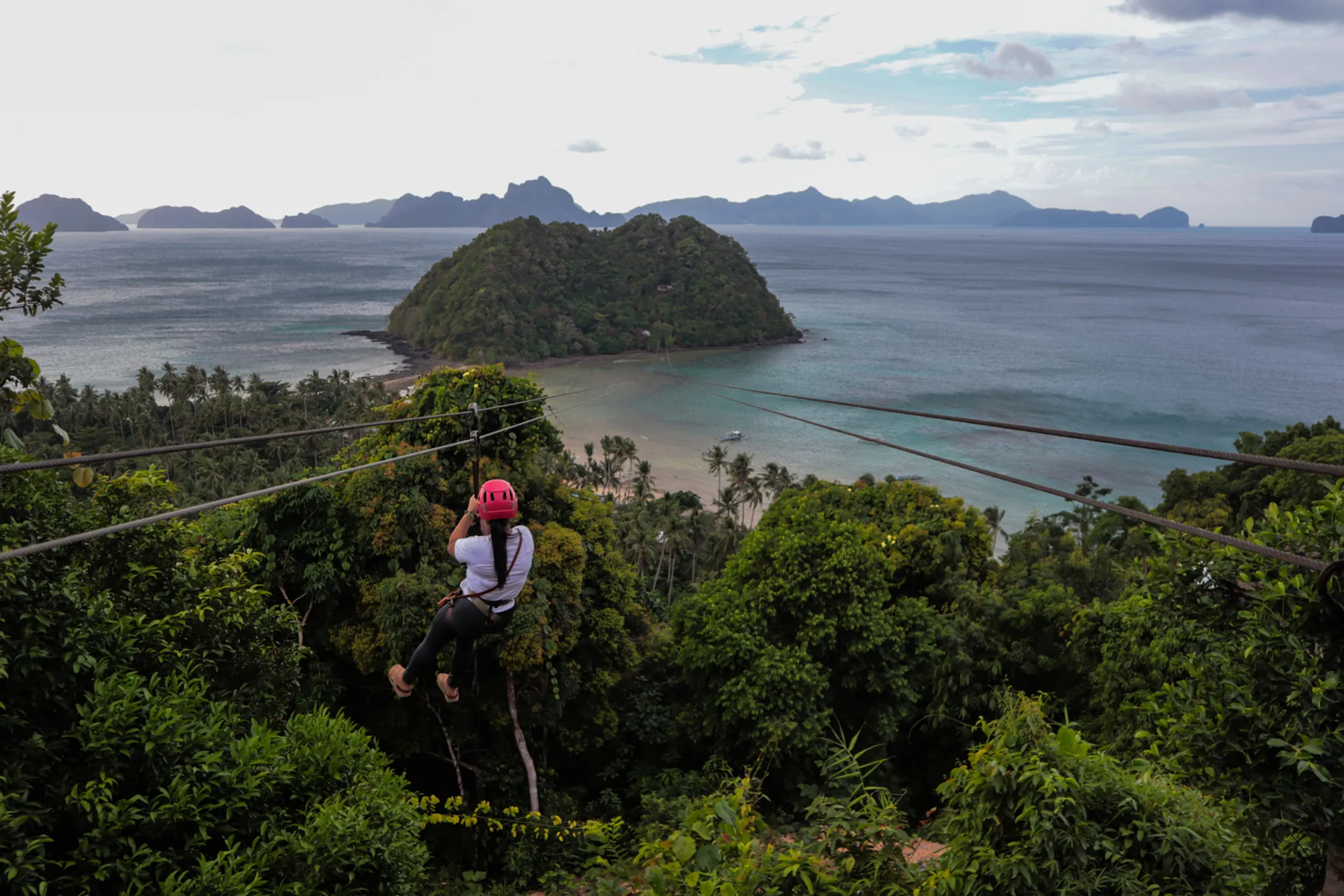
This is the moment. You're clipped into the main zipline, your toes are at the edge of the platform, and your heart is pounding. My best advice? Don't look down at the last step. Look out at the incredible view in front of you. Trust your gear, trust your guides, take a deep breath, and just... let go.
What Actually Happens in Those First Few Seconds:
Your brain is going to scream at you that this is crazy. That's normal. Your lizard brain doesn't understand that you're safely attached to a cable system that could hold a small car. The guides know this, which is why they often count down: "Three, two, one, GO!" That countdown helps override your brain's panic response.
The moment your feet leave the platform, that jolt of fear transforms into the incredible sensation of flight. I promise. The first few seconds feel like falling, but then the cable catches you and suddenly you're soaring.
Step 6: The Ride and Landing
You're flying! Feel the wind, take in the scenery, and let out a good yell! Your only job is to enjoy the ride. This is the time to really look around. Notice how different the forest looks from above. See if you can spot native birds or wildlife below. Listen to the sounds of the wind and the distant waterfalls.
The sensation of speed is incredible, but you're actually traveling at a pretty reasonable pace. Most zips top out around 25-35 mph, though the longest ones can hit 50+ mph. It feels much faster because you're suspended in the air with nothing around you.
🎯 Landing Like a Pro
On almost every course, the guides or an automatic braking system handle the slowing and stopping for you. As you approach the landing platform, the guide will give you a signal to lift your legs up. You'll come in for a smooth, easy stop, and they'll be right there to unclip you. You did it!
Conquering Your Fears
😰 Common Fears:
- • Fear of heights
- • Equipment failure worries
- • Loss of control
- • Looking foolish
💪 Reality Check:
- • Equipment inspected daily
- • Guides are certified professionals
- • You're never truly "in control" anyway
- • Everyone's nervous - guides expect it!
💪 Confidence Boosters
- Start with Hawaii Zipline Tours (progressive design)
- Book morning tours for calmer conditions
- Tell your guide about any concerns
- Focus on the view, not the height
📏 Requirements
🌟 Best for Beginners
Progressive design builds confidence
Gardens provide calm backup activity
Lowest age/weight minimums
📖 Complete Guide
Navigate through our comprehensive Big Island ziplining guide.