Luau Culture & Traditions
Understanding the Sacred Roots of Hawaiian ʻAhaʻaina

Written by a Local Cultural Expert
Kalani MillerWhat Makes a Great Luau? The Foundations of an Unforgettable Evening
A great luau is a feast for all the senses, but its foundations are built on centuries of history and culture. Understanding these elements transforms the experience from a simple dinner show into a meaningful cultural immersion.
As you search for an "authentic" luau, you'll find that many of the best shows feature dances and music from Tahiti, Samoa, and Aotearoa (New Zealand). This might seem contradictory, but the inclusion of pan-Polynesian performances is a beautiful extension of the original spirit—celebrating the shared voyaging heritage that connects all the peoples of the Pacific.
The Soul of the Feast (Ka Mea ʻAi): An Education in Flavor
The food at a luau is more than just a meal; it's a direct link to the land and the traditions of our ancestors.
🔥 The ʻImu Ceremony
At the heart of any traditional luau feast is the ʻimu, an underground oven that is a marvel of ancient engineering. The process connects the food directly to the ʻāina (land), imparting a unique, earthy, and smoky flavor.
🐷 Kālua Pig
The undeniable centerpiece of the luau menu. A whole pig is rubbed with Hawaiian sea salt, wrapped in ti and banana leaves, then cooked slowly for 6-10 hours until the meat falls off the bone.
🌿 Poi & Laulau
Poi, made from pounded kalo (taro), is considered the elder brother of the Hawaiian people. Laulau consists of pork or chicken wrapped in taro leaves and steamed in ti leaf pouches.
🥥 Sacred Ingredients
Traditional foods like pork, banana, and coconut were once kapu (forbidden) to women and commoners, reserved only for male chiefs and priests until the kapu system was abolished in 1819.
The Spirit of the Story (Ka Hula): A Visual Language
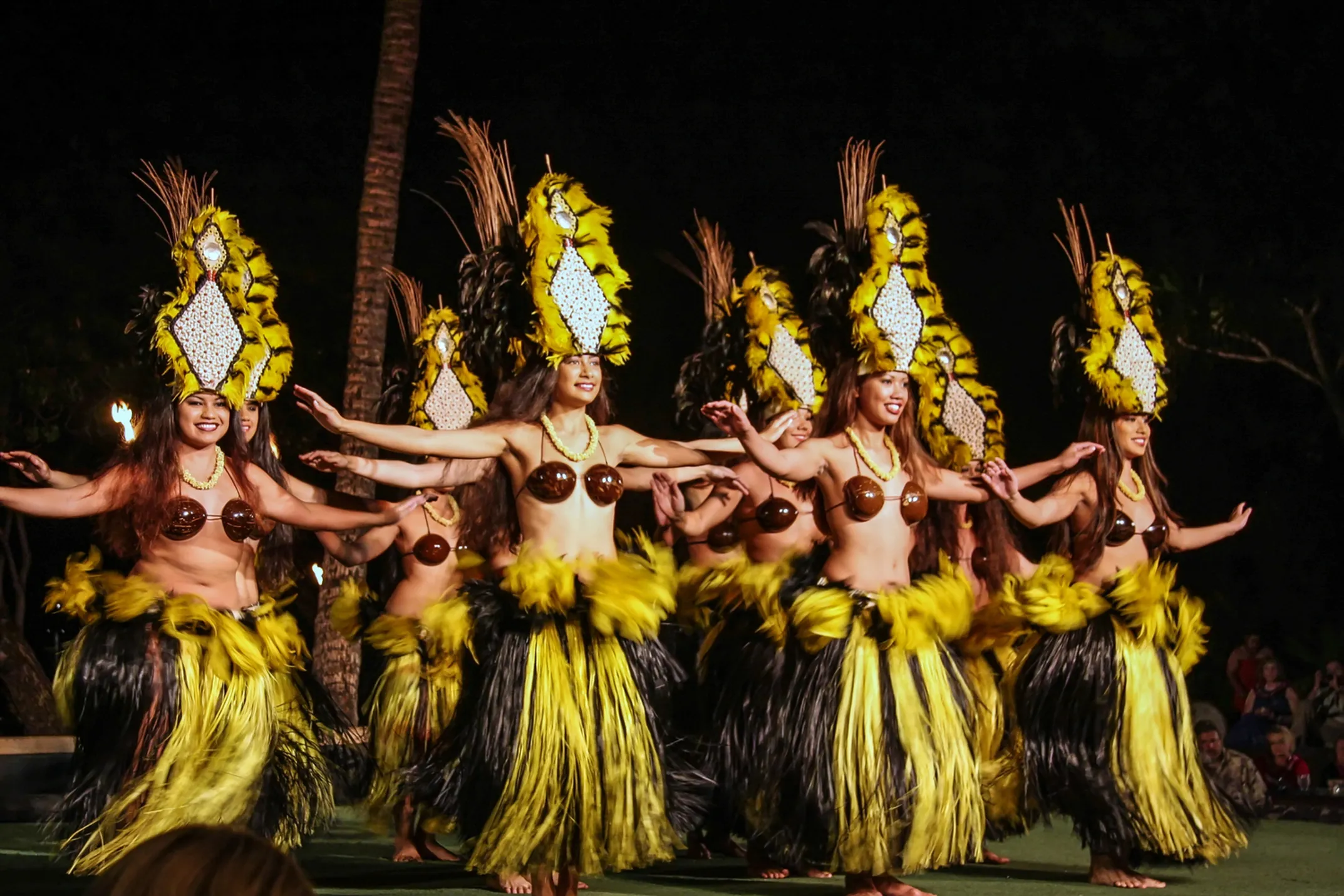
Before the written word came to these islands, our history, genealogies, and legends were passed down through oli (chant) and hula (dance). Hula is not just a dance; it is a visual language where every gesture of the hand and sway of the hips tells a story.
Hula Kahiko (Ancient Hula)
This is the original, pre-Western contact style of hula. It is powerful, dramatic, and deeply spiritual. Hula kahiko is performed to the accompaniment of an oli and percussive instruments like the ipu heke (gourd drum), pahu (sharkskin drum), and puʻili (split bamboo rattles). The dances tell the sacred stories of creation, of our gods and goddesses like Pele and Hiʻiaka, of great chiefs, and of epic battles.
Hula ʻAuana (Modern Hula)
The word ʻauana means "to wander or drift," which perfectly describes this style that evolved during the 19th and 20th centuries under the influence of Western melodies and instruments. Accompanied by the sweet sounds of the ʻukulele, guitar, and steel guitar, hula ʻauana is more melodic and flowing. The stories are often about love, beautiful places, or honoring the people of Hawaiʻi.
The Fire-Knife Dance (Siva Afi)
The grand finale of almost every luau is the thrilling fire-knife dance. While it is an electrifying spectacle, it's important to know that this tradition, the siva afi, comes from our Polynesian cousins in Samoa, not from Hawaiʻi. It was originally a warrior's display of strength with a war club. Its inclusion in modern luaus is a tribute to the shared heritage of the Pacific and a guaranteed showstopper.
🎭 Cultural Elements
- ʻImu underground cooking
- Traditional oli chanting
- Hula storytelling
- Lei greeting ceremony
- Polynesian performances
🍽️ Traditional Foods
Slow-cooked in ʻimu
Pounded taro root
Meat in taro leaves
Fresh seasoned fish
📖 Luau Guide
Getting started
Current page
Detailed comparisons
Planning GuideTips & booking info