The Best Kona Coffee Tours
A Local's Journey Through Hawaii's Coffee Belt

Written by a Local Coffee Expert
Kalani MillerA Local's Welcome to Coffee Country
Aloha! I'm Kalani Miller, your local friend for Things To Do Hawaii. The rich scent of roasting Kona coffee beans brings back childhood memories from my home in Hanalei. I've spent years driving the winding roads of the Kona Coffee Belt. Not just as a coffee lover, but as someone who cares deeply about the stories of our ʻāina and the families who grow this world-famous crop.
A fresh cup right at the farm is something special. The ocean view spreads below you. Steam rises from your mug. This isn't just a drink. It's the story of our land and people passed down through generations.
Many travel sites give you simple farm lists. That misses the real magic. This is your complete resource to understand why Kona coffee stands apart. You'll learn how to find the perfect experience that fits your travel style. We'll explore everything from the unique conditions that make our coffee a global treasure to a self-guided trip through coffee country.
So grab your cup and let's start this journey together.
Why Kona Coffee Is So Special
You need to understand what makes this coffee among the most expensive in the world before you visit your first farm. The answer lies in place, history, and careful attention to detail. The story starts with the land itself.
The Magic of the Kona Coffee Belt
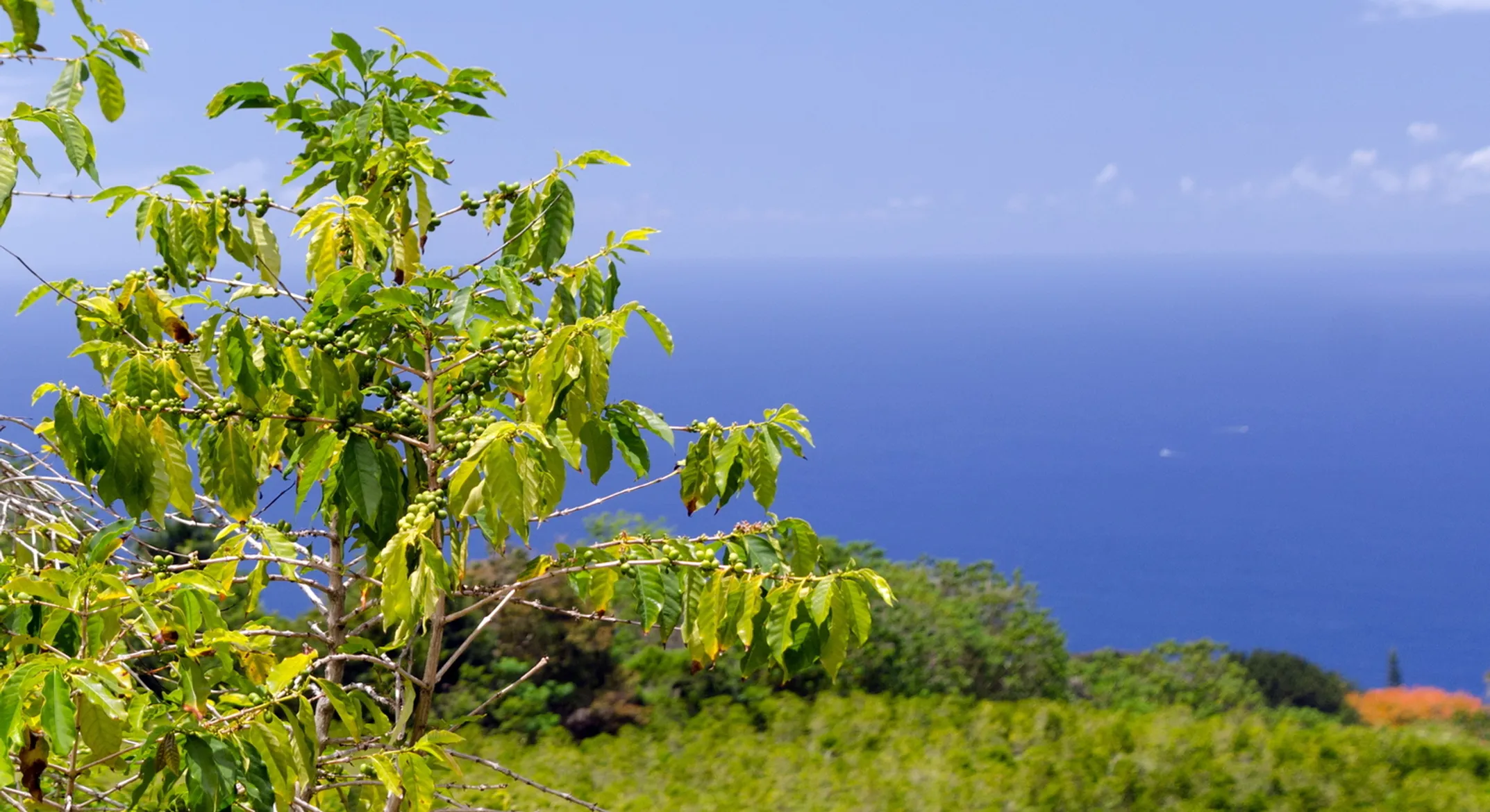
Kona coffee grows in a very specific area called a terroir. This French term describes how soil, climate, and elevation give crops unique traits. The Kona Coffee Belt is a narrow strip just 30-35 miles long and a couple miles wide. It sits on the western slopes of two massive volcanoes: Hualālai and Mauna Loa. This small region has perfect conditions for world-class coffee.
🌋 Volcanic Soil
The slopes are covered in rich, dark, porous volcanic soil. This soil packs essential minerals and drains well. Coffee trees love good drainage.
⛰️ Perfect Altitude
Coffee farms sit between 800 and 2,500 feet above sea level. Some reach 3,200 feet. This elevation creates warm days and cool nights. That balance develops complex flavors.
☁️ Unique Weather
Bright, sunny mornings give coffee trees energy to grow. Then afternoon clouds roll in from the ocean. They blanket the slopes in gentle mist. This natural shade protects trees from harsh afternoon sun.
From Missionaries to Family Farms
Coffee arrived in Kona through an interesting path. Spanish advisor Don Francisco de Paula y Marin brought the first plants to Oahu around 1813. They didn't grow well there.
The real story of Kona coffee begins in 1828. American missionary Reverend Samuel Ruggles brought Arabica cuttings from Oahu to the Kona district. He planted them near Kealakekua. In the perfect conditions of the Kona Coffee Belt, the trees flourished.
The cultural backbone of Kona coffee formed during a big shift around 1900. The world coffee market crashed in 1899. Large plantations owned by white families began to fail. They leased small plots of 3 to 5 acres to their workers. Many were Japanese immigrants who had come to Hawaii for sugar plantation work. These hardworking families took over. Their careful, hands-on farming became the standard.
This legacy of small, family-run farms continues today. About 800 farms operate in Kona. Most are still less than 5 acres. This deep family tradition makes the Kona coffee experience so authentic.
Ready to Explore Coffee Country?
From free farm tours to premium tastings, discover the perfect Kona coffee experience for your Hawaiian adventure.
ℹ️ Quick Info
- Best Season: Year-round
- Tour Duration: 20min-2.5hrs
- Price Range: Free-$190
- Total Farms: 800+ farms
- Coffee Belt: 30-35 miles
🌸 Best Times to Visit
- "Kona Snow" Blossoms Feb-Mar
- Harvest Season Aug-Jan
⭐ 100% Kona Coffee Grades
- Kona Extra Fancy (highest)
- Kona Fancy
- Kona Number 1
- Kona Prime
- Peaberry (special)
How to Choose Your Perfect Tour
With over 600 farms in the region, picking a tour can feel overwhelming. Not all tours are the same. They serve different interests, budgets, and time limits. Here's how to find your perfect coffee exploration.
What Kind of Coffee Explorer Are You?
Think about what you want from the experience. Do you want a quick taste, deep education, or hands-on workshop?
Quick & Free Introduction
Perfect for families, budget travelers, or anyone short on time. These tours are typically walk-in for small groups. They last 20 to 60 minutes.
Farms: Greenwell, Mountain Thunder, Kona Joe
In-Depth "Bean-to-Cup"
For serious coffee lovers. These are paid, small-group tours lasting 1.5 to 2.5 hours with exclusive behind-the-scenes access.
Farms: Hula Daddy, Buddha's Cup, UCC Estate
Hands-On Workshop
Interactive workshops where you join the process. Learn to roast your own beans or master brewing methods.
Farms: Hala Tree, Kona Joe, Heavenly Hawaiian
Kalani's Pro-Tip on Timing Your Visit
The Kona coffee landscape changes with seasons. Your visit timing can offer different experiences.
For "Kona Snow"
To see coffee trees covered in beautiful, fragrant white blossoms, visit in February or March.
For Harvest Season
To see trees loaded with bright red coffee "cherries," visit between August and January. This is the busiest and most visually interesting time on farms.