Sun, Sand, and Honu
Exploring Keauhou's World-Class Coastline

Written by a Cultural Expert
Leilani AkoOcean Adventures by Day
While manta rays rule the night, Keauhou's coastline offers world-class ocean adventures by day, centered around another protected bay full of life. This is where families come to create memories, where children get their first taste of snorkeling, where even the most nervous swimmers discover they can float peacefully with sea turtles.
I spend countless hours at these beaches with Malia and Nalu. Watching them discover the underwater world reminds me why I fell in love with the ocean in the first place. Their excitement is infectious. Their questions keep me learning. Their natural respect for sea life gives me hope for the future.
Keauhou's coastline is where ancient geology meets modern conservation. Thousands of years ago, lava flows created the perfect foundation for coral growth. Today, dedicated volunteers work to protect this underwater paradise for future generations.
Kahaluʻu Beach Park: Kona's Snorkeling Treasure
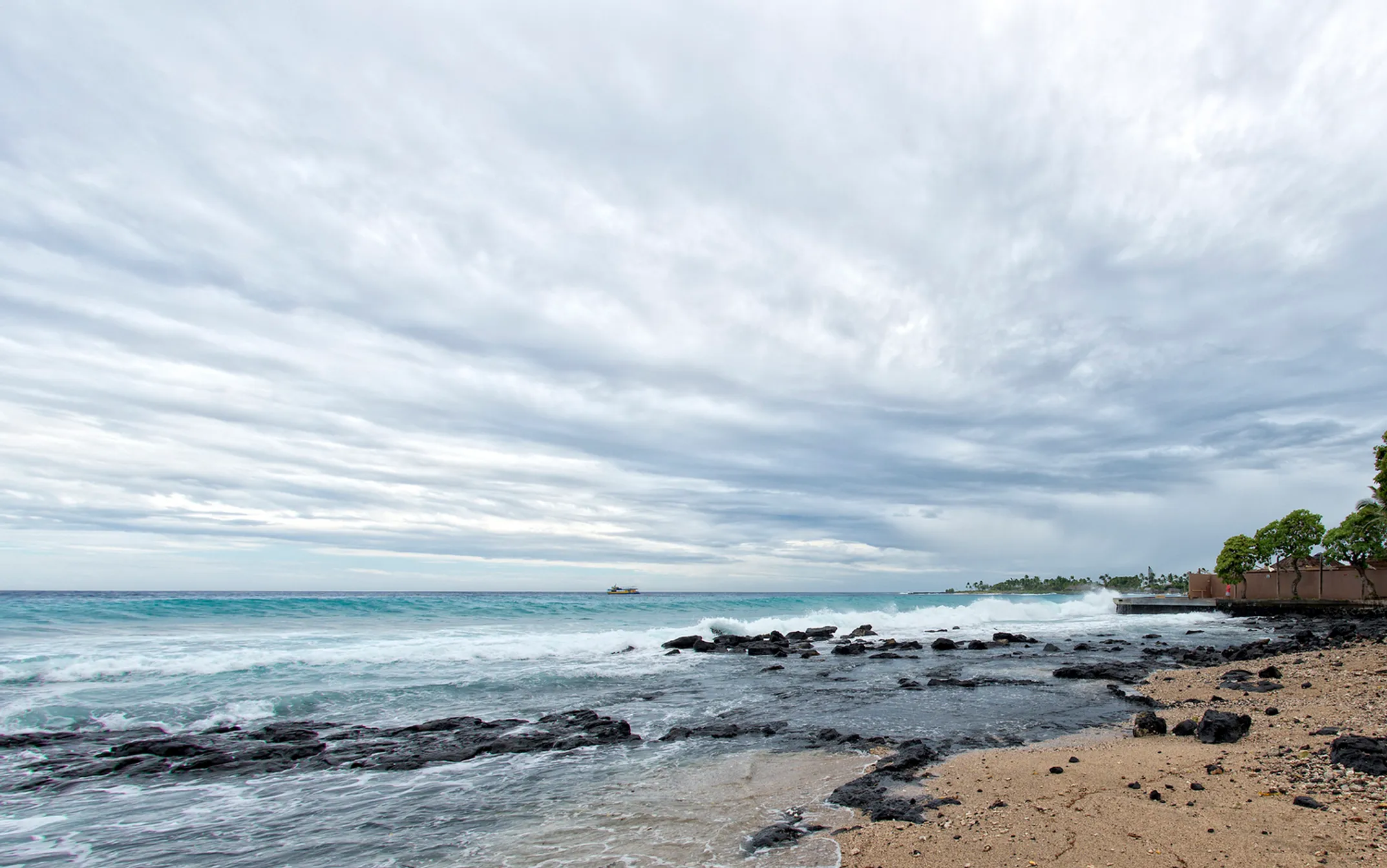
Just north of Keauhou Bay sits Kahaluʻu Beach Park, widely considered one of the best and most accessible snorkeling spots on the Big Island. A natural breakwater of lava rock creates a calm, shallow lagoon, making it perfect for families and beginner snorkelers. But don't let the easy access fool you. This bay holds some of the richest marine life you'll find anywhere.
The geology here tells a fascinating story. Thousands of years ago, lava flows from Mauna Loa reached the ocean at this exact spot. As the molten rock hit cold seawater, it shattered and cooled, creating the perfect foundation for coral growth. Over centuries, the reef built up, creating the protected lagoon we see today.
An Underwater Rainbow of Life
The moment you slip into clear water, you enter a vibrant underwater world. The bay is a "jewel box" of marine life, home to schools of colorful yellow tang, ornate butterflyfish, Moorish idols, and parrotfish that crunch on coral all day long. You'll see Achilles tangs with their distinctive orange spots, raccoon butterflyfish with their masked faces, and if you're lucky, the humuhumunukunukuāpuaʻa (reef triggerfish), Hawaiʻi's state fish.
🐠 Yellow Tang
Bright yellow schools that swim within inches of your mask - the most abundant and friendly fish here.
🦋 Butterflyfish
Ornate and raccoon varieties with intricate patterns and graceful swimming movements.
🐟 Parrotfish
Large, colorful fish that crunch on coral all day, creating the white sand beaches we love.
🎺 Trumpet Fish
Masters of camouflage that hover vertically, perfectly still until they suddenly move.
🌊 Moorish Idols
Elegant black, white, and yellow fish with long, flowing dorsal fins - true reef royalty.
🏝️ State Fish
The humuhumunukunukuāpuaʻa (reef triggerfish) - Hawaii's official state fish with an unforgettable name.
The True Stars: Hawaiian Green Sea Turtles (Honu)
But the true stars of Kahaluʻu are the honu, beloved Hawaiian green sea turtles. You'll almost certainly see them gliding gracefully through water or resting on lava rocks, grazing on limu (seaweed). These ancient creatures, some over 50 years old, have made Kahaluʻu their regular feeding ground.
Watching a honu feed is mesmerizing. They use their beak-like mouths to scrape algae from rocks with methodical precision. Sometimes they'll surface right next to you to breathe, their ancient eyes meeting yours for a brief moment of connection. It's a privilege that never gets old.
⚠️ Important: Respect the Honu
As a protected species under the Endangered Species Act, honu must be given space. The law requires you to stay at least 10 feet away, but a respectful distance of 30 feet is even better.
- • Never touch, chase, or block a turtle's path to the surface
- • Let them approach you rather than swimming toward them
- • The best encounters happen when you stay perfectly still
- • Patience rewards with magical close encounters
Practical Information for Your Visit
The beach itself offers excellent facilities for a day-long adventure. There's a large parking lot, though it fills up quickly on sunny weekends. Arrive early, especially during peak tourist seasons. The park has restrooms, outdoor showers, and picnic tables under shady trees. Lifeguards are on duty during busy periods.
Entry Tips:
- • The shoreline is rocky lava, not sand - reef shoes or tabis are highly recommended
- • Rocks can be slippery when wet, so take your time entering
- • Once swimming, the bottom is mostly sand and coral - perfect for snorkeling
- • For non-swimmers, tide pools along the rocky shore offer plenty to explore
For non-swimmers, the beach offers plenty to enjoy. The tide pools along the rocky shore teem with small fish, crabs, and sea urchins. It's a natural aquarium perfect for keiki who aren't ready for snorkeling yet. Just remember to look but not touch. These tide pool creatures are fragile and easily stressed by handling.
The Kahaluʻu Bay Education Center: Reef Guardians
Kahaluʻu Bay's huge popularity, welcoming over 400,000 visitors annually, has put its fragile coral reef under enormous stress. This is where the Kahaluʻu Bay Education Center (KBEC) plays a vital role. This on-site educational hub, a partnership between the non-profit The Kohala Center and the County of Hawaiʻi, leads a "new era" of conservation-focused tourism.
I've worked closely with KBEC volunteers over the years, and their dedication amazes me. These are local people who give their time freely because they love this place. They're teachers, retirees, college students, and concerned parents who've decided to make a difference. They represent the best of Hawaiian values: mālama ʻāina (caring for the land) and kōkua (helping others).
ReefTeach: Education in Action
The center's most visible program is ReefTeach, volunteers stationed at the beach to educate visitors about proper reef behavior. You'll recognize them by their bright blue shirts and friendly smiles. They're not enforcement officers. They're educators, there to help you have the best possible experience while protecting the reef.
🪸 Coral Protection
Never touch or step on coral - it's a living animal made of thousands of tiny polyps building limestone skeletons.
When you step on coral, you crush these living animals. Oils from your skin damage their protective mucus layer.
🤿 Snorkeling Technique
Learn proper mask clearing, efficient fin use, and calm floating techniques from experienced volunteers.
Better technique means more enjoyment and less impact on the reef ecosystem.
Reef-Safe Sunscreen: A Critical Choice
One of their most critical missions is educating people about reef-safe sunscreen. This issue is close to my heart because I've seen the damage that chemical sunscreens can cause. Many common sunscreens contain chemicals like oxybenzone and octinoxate, which are toxic to coral larvae and contribute to coral bleaching.
When coral bleaches, it expels the colorful algae that live inside its tissues and provide most of its food. Bleached coral isn't dead yet, but it's severely stressed and more likely to die. Climate change is the biggest cause of coral bleaching worldwide, but chemical sunscreens make the problem worse in heavily visited areas like Kahaluʻu.
✅ Reef-Safe Sunscreen Guidelines:
- • Use mineral-based sunscreens with only zinc oxide or titanium dioxide
- • These ingredients sit on your skin instead of absorbing into it
- • Free reef-safe sunscreen dispensers available at the park pavilion
- • Apply before arriving, then use dispensers for touch-ups
- • Newer formulations are less chalky than older mineral sunscreens
Beyond sunscreen education, the KBEC conducts regular reef health surveys, organizes community clean-up events, and advocates for policies that protect marine ecosystems. They're not just talking about conservation. They're actively working to preserve this special place for future generations. By choosing the right sunscreen, listening to KBEC volunteers, and following their guidance, every visitor can become part of the solution.
🗺️ Explore Keauhou
🏖️ Kahaluʻu Beach Info
- Best Time: Early morning
- Facilities: Restrooms, showers
- Parking: Free (fills up fast)
- Lifeguards: During busy periods
- Entry: Rocky - wear reef shoes
🎒 What to Bring
- Reef-safe sunscreen
- Reef shoes or tabis
- Snorkel gear (optional)
- Plenty of water
- Waterproof camera
🐠 Marine Life Spotting
🪸 Protect the Reef
Use reef-safe sunscreen, don't touch coral, and follow ReefTeach volunteer guidance.
Your choices help preserve this underwater paradise for future generations.