A Kingdom Foretold
The Prophecy of Kāpoūkahi and the Divine Blueprint for Victory

Written by a Local Cultural Expert
Leilani AkoThe Fractured Land (1782-1790)
To understand why this temple was built, picture Hawaiʻi in the late 18th century. The islands were not a unified kingdom but a patchwork of warring chiefdoms. The island of Hawaiʻi itself was engulfed in bitter civil war.
In 1782, the ruling chief of the island, Kalaniʻōpuʻu, died. In a fateful decision, he split his legacy. He passed his lands and title to his son, Kīwalaʻō. But he entrusted the guardianship of his family's powerful war god, Kūkāʻilimoku—"Kū, the Snatcher of Islands"—to his ambitious nephew, Kamehameha.
This division of power was a spark in a tinderbox. The conflict erupted at the Battle of Mokuʻōhai, where Kīwalaʻō was slain. The victory, however, was not absolute. It left Kamehameha as ruler of the western districts of Kona and Kohala. But the eastern half of the island remained loyal to his cousin and chief rival, the formidable warrior Keōua Kūahuʻula.
For eight long years, they fought brutal but inconclusive battles.
The Lonely One's Quest
Kamehameha was a man born for greatness. Legend tells that his birth in 1758 was signaled by a light in the sky. Historians believe it was Halley's Comet, fulfilling a prophecy of a great chief's arrival. Given the birth name Paiʻea, he was hidden in youth to protect him from rival clans. When he emerged, he was renamed Kamehameha, "The Lonely One." His legendary strength was proven when he overturned the massive Naha Stone. An act said to be possible only for the one destined to rule all the islands.
By 1790, his destiny seemed partly fulfilled. He had launched invasions of neighboring islands, conquering Maui, Lānaʻi, and Molokaʻi. Yet the ultimate prize remained elusive. Every time he focused his attention elsewhere, Keōua would strike. He reclaimed territory on their home island. Kamehameha was a conqueror abroad but remained contested at home. He could not deliver the final, decisive blow.
✅ Conquered Territories
- • Maui (invaded and conquered)
- • Lānaʻi (under control)
- • Molokaʻi (conquered)
- • Western Hawaiʻi Island (Kona & Kohala)
⚔️ Contested Territory
- • Eastern Hawaiʻi Island (Keōua's stronghold)
- • Ongoing raids and counter-attacks
- • Stalemate preventing full unification
- • Need for decisive spiritual advantage
The Word from the Prophet
Seeking a clear path forward, a way to end the ceaseless warfare, Kamehameha turned to spiritual authorities. He sent his aunt to consult a renowned kahuna (priest and prophet) from Kauaʻi named Kāpoūkahi.
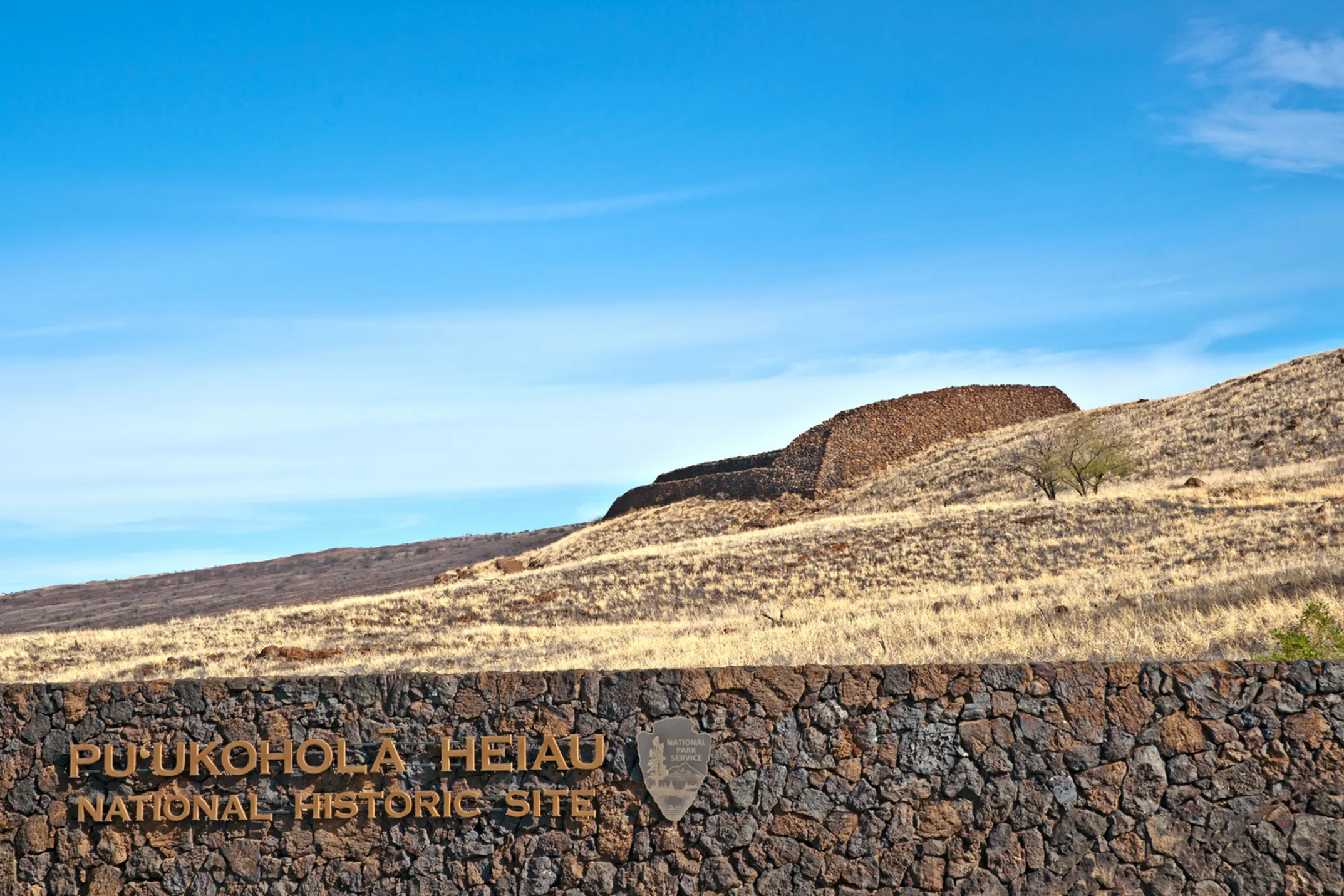
The prophecy Kāpoūkahi delivered was not a vague prediction but a divine blueprint for victory. He told Kamehameha that he would conquer and unite all the islands. But only if he first built a great and sacred luakini heiau—a temple for war, requiring human sacrifice—and dedicated it to his war god, Kūkāʻilimoku. The location was just as specific. It had to be built atop the prominent hill overlooking the sea at Kawaihae, the hill known as Puʻukoholā.
This was more than spiritual advice. It was a masterful stroke of political and psychological strategy.
In a society where the favor of the gods was paramount, such a prophecy provided divine sanction for Kamehameha's ambitions. It transformed his war from a personal power struggle into a sacred mandate.
This would have been a powerful rallying cry for his followers. The news that Kamehameha was constructing a massive temple to the war god would have spread like wildfire. An undertaking of immense spiritual and physical commitment struck awe and fear into the hearts of his rivals. It was a public declaration that the gods were on his side. A psychological blow delivered before a single spear was thrown.
Kamehameha, a brilliant strategist, understood this and began the work at once.
📖 Chapter Navigation
Current chapter
Temple construction & sacrifice
Chapter 3: ʻOlohana's LegacyJohn Young & modern times
Chapter 4: Visiting GuidePractical information
👑 Key Figures
- Kamehameha (Paiʻea): "The Lonely One" - Future unifier
- Keōua Kūahuʻula: Kamehameha's rival cousin
- Kāpoūkahi: Prophet from Kauaʻi
- Kīwalaʻō: Kalaniʻōpuʻu's son, killed at Mokuʻōhai
⏰ Timeline
- 1758: Kamehameha's birth
- 1782: Kalaniʻōpuʻu dies, power split
- 1782-1790: Eight years of civil war
- 1790: Kāpoūkahi's prophecy received
📚 Sacred Terms
- Luakini Heiau: War temple requiring human sacrifice
- Kūkāʻilimoku: "Kū, the Snatcher of Islands" - war god
- Kahuna: Priest and spiritual advisor
- Mana: Spiritual power and authority
A Temple Built of Mana and Muscle
A Monumental Undertaking
The scale of the project was staggering. The temple platform was to be immense, measuring 224 feet long by 100 feet wide. Imposing walls rose 16 to 20 feet high on three sides. To accomplish this feat in less than a year, Kamehameha summoned thousands of men from all his territories. They descended upon the arid hills of Kawaihae, setting up vast camps that would be their home for most of a year.
To ensure that every ritual detail was perfect and the temple would please Kū, the prophet Kāpoūkahi himself was enlisted to serve as the royal architect. He oversaw the sacred design.
The Great Human Chain
The most legendary aspect of the construction was the method of gathering the stones. The prophecy demanded a specific type of stone: smooth, water-worn lava rocks, rounded by the endless action of the sea. These were not available on the dry slopes of Kawaihae. The source was the distant Pololū Valley, a lush, sea-level valley on the other side of the Kohala mountains, more than 20 miles away.
To transport them, Kamehameha organized one of the most incredible feats of labor in Hawaiian history. His people formed a massive human chain, stretching from the shores of Pololū, up the steep mountain slopes, across the high plateau, and down to the construction site at Puʻukoholā. For months, thousands of men stood shoulder to shoulder, passing the heavy, water-worn boulders from hand to hand. A living conveyor belt of human will. It was a testament not only to physical endurance but to an astonishing level of organization and shared purpose.
Temple Dimensions
- • Length: 224 feet
- • Width: 100 feet
- • Wall height: 16-20 feet
- • Construction time: Less than 1 year
Stone Transport
- • Source: Pololū Valley
- • Distance: Over 20 miles
- • Method: Human chain
- • Workers: Thousands
The Aliʻi Who Labored
This monumental effort was not just the work of the makaʻāinana (common people). In a powerful display of leadership and unity, Kamehameha himself and the other high-ranking aliʻi (chiefs) labored alongside the workers. They passed the stones with their own hands. This act would have been revolutionary, dissolving the rigid class distinctions for a common cause. It forged an unbreakable bond of loyalty and shared sacrifice among his followers.
The very act of building the temple was, in itself, the first great act of unification.
The human chain was a living metaphor for the kingdom Kamehameha envisioned. Thousands of individuals, from the highest chief to the common man, connected as one to achieve a sacred goal. The kingdom was being built in practice long before it was declared in name.
The Kapu of Construction
The work was governed by the strictest kapu (sacred laws). This was a house for a god, and any ritual impurity could anger Kū and doom the entire enterprise. The stones were fitted together with breathtaking precision, without any mortar or cement. A technique known as dry-stack masonry that stands as a testament to the builders' incredible skill.
A powerful story passed down through generations illustrates the deadly seriousness of these protocols. Kamehameha's younger brother, Kealiʻimaikaʻi, was given a sacred duty and instructed not to participate in the physical labor, lest he be defiled. Ignoring the command, he joined the line and began passing stones. When Kamehameha learned of this transgression, his fury was immense. He ordered that every single stone his brother had touched be identified, gathered up, placed onto a canoe, and carried far out beyond the horizon to be dumped into the deep sea. Only by removing the contamination could he hope to appease Kūkāʻilimoku.
This single act reveals the immense spiritual weight of the project.
Failure was not an option, and the stakes were nothing less than the fate of a people.