A Journey for a King
The Unbelievable History
The Kamehameha statue shows how far the Hawaiian Kingdom reached in the late 1800s. Its story crosses continents. It involves artists, money people, and sailors from around the world.
A Monument for a Unifier
The project started in 1878. The Kingdom of Hawaiʻi's legislature put aside $10,000 for a monument. They wanted to honor King Kamehameha I. The statue would mark 100 years since Captain James Cook arrived in our islands.
Thomas R. Gould got the job. He was a well-known American sculptor living in Florence, Italy. Creating the king's likeness was hard work. No clear portraits of Kamehameha in his prime existed. Gould was told to show the king at age 45. He used a third-hand drawing for the face.
Two part-Hawaiian brothers helped with the body. John Timoteo Baker and Robert Hoapili Baker served as models. John Baker wore Kamehameha's real feather cloak and helmet. These priceless items now rest at the Bishop Museum in Honolulu.
The artist made sure every detail was right. He even included the sacred sash of Līloa.
Forged in Europe, Lost at Sea
Gould finished the 9-foot model in his Italian studio. It was sent to a fancy foundry in Paris, France. There it was cast in bronze in 1880. This masterpiece of European craft was made for a Polynesian kingdom. Then it was packed for its long trip home.
The monument was loaded onto the German ship G.F. Haendel in Bremen, Germany. The ship set sail for Honolulu. But the trip went wrong. As the ship rounded Cape Horn near the Falkland Islands, fire broke out. The ship sank with all its cargo. The beautiful statue of King Kamehameha was lost forever. Or so everyone thought.
The King's Stand-In and an Unlikely Return
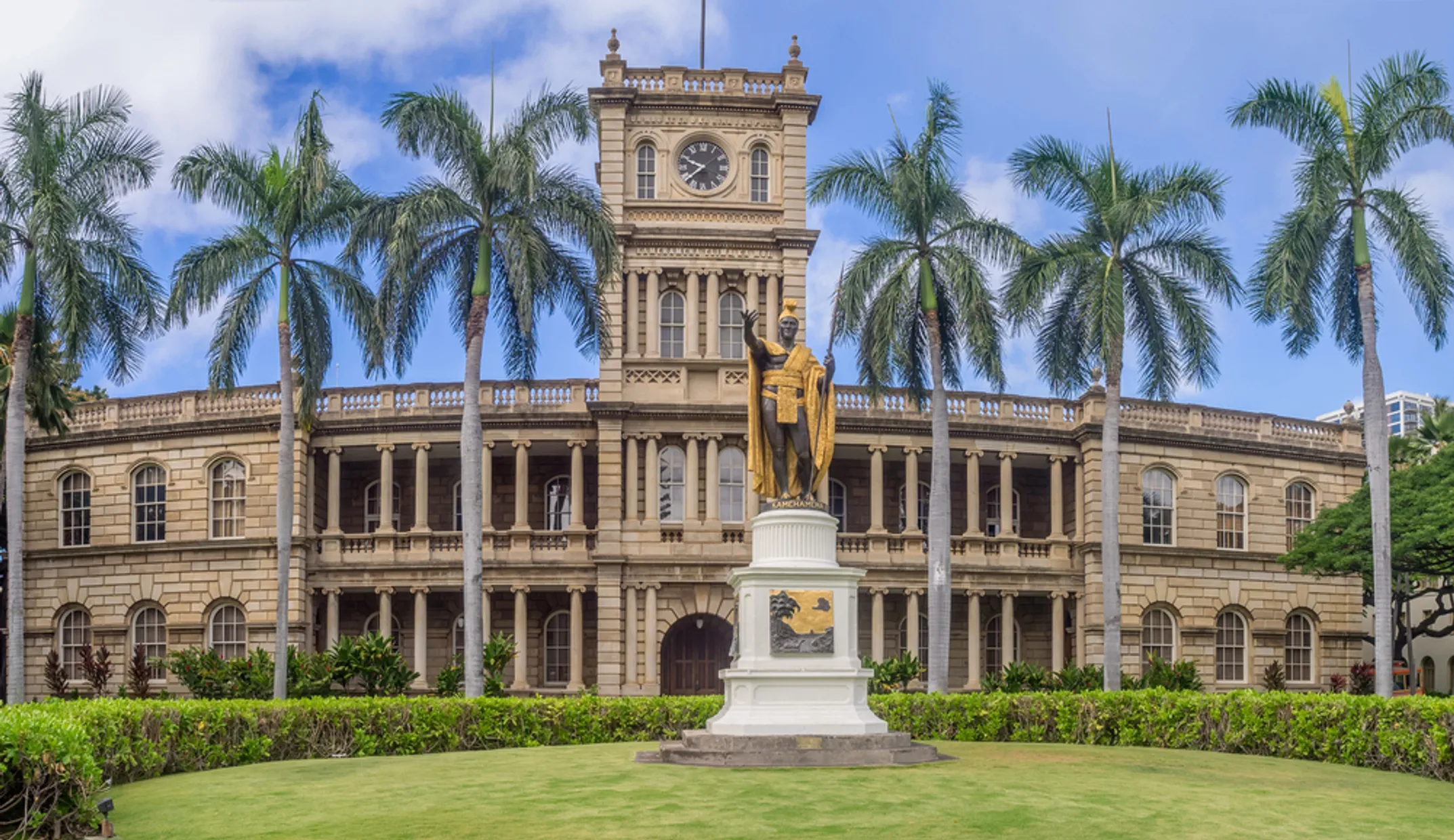
News of the disaster was terrible. But the Hawaiian government had bought insurance for $12,000. With that money, they ordered a second statue from Gould's original molds. This replica arrived safely in Honolulu on July 31, 1883. King David Kalākaua unveiled it on February 14, 1883. The Royal Hawaiian Band played "Hawaiʻi Ponoʻī." The statue was placed where it was meant to go. It still stands there today.
But the original statue's story wasn't over. Local fishermen in the Falkland Islands pulled the heavy bronze figure from the wreck. A British sea captain named Jervis bought it for just $500. He brought it to Port Stanley and then sailed to Honolulu. In March 1882, he sold the original statue back to the Hawaiian government for $875.
Think about this amazing chain of events. The kingdom spent a lot of money. They lost everything in a wreck. Insurance paid them back. Then they got the original back for almost nothing.
A Homecoming to Kohala
Now the Kingdom of Hawaiʻi owned two identical statues of its founding king. King Kalākaua made a wise choice. He said the original statue should go to North Kohala. This was Kamehameha's ʻāina hānau - his birthplace.
After repairs, the original statue was sent to the Big Island. On May 8, 1883, King Kalākaua came to Kohala for a second ceremony. The statue was first placed at ʻĀinakea. In 1912, it was moved to where it stands now. It sits in front of the North Kohala Courthouse in Kapaʻau. There it has watched over the community ever since.
Timeline of the Statue's Journey
Hawaiian Kingdom commissions statue
Cast in Paris foundry, shipped from Bremen
Ship sinks near Falkland Islands
Original recovered and sold back to Hawaii
Placed in North Kohala by King Kalākaua
A Tale of Four Kings: The Kapaʻau Statue in Context
Four major statues honor Kamehameha the Great. Each tells its own story. Understanding them helps show why the Kapaʻau statue is so special.
The Kapaʻau statue is the original survivor. Lost at sea and recovered. It was unveiled in 1883. It's made of painted cast brass. The Honolulu statue is the famous replica. It stands where the original was meant to go. Also unveiled in 1883. It's made of gilded bronze.
The Hilo statue is a modern tribute. It was made for Kauaʻi but moved. Unveiled in 1997. Made of bronze. The Washington D.C. statue represents Hawaiʻi in the U.S. Capitol. Unveiled in 1969. It's a bronze replica.
👑 Original Kingdom Statues
Kapaʻau (Original)
Unveiled 1883 • Painted cast brass • Shipwreck survivor
Honolulu (Replica)
Unveiled 1883 • Gilded bronze • Famous replica
🗽 Modern Tributes
Washington D.C.
Unveiled 1969 • Bronze • Represents 50th state
Hilo
Unveiled 1997 • Bronze • Moved from Kauaʻi
The first two statues came from the Hawaiian Kingdom. They show King Kalākaua's efforts to celebrate Hawaiian royal identity. The Washington statue shows Hawaiʻi as the 50th U.S. state. The Hilo statue tells a modern story. It was moved after Kauaʻi people objected. They said Kamehameha never conquered their island by force.
Discover the Living Tradition
Learn how this survivor statue became more than bronze through the loving care of the Kohala community and their unique tradition of painting their king.
The Living Heart Story📜 Historical Details
- Sculptor: Thomas R. Gould
- Foundry: Paris, France
- Ship: G.F. Haendel
- Recovery Cost: $875
- Insurance: $12,000
- Final Home: May 8, 1883
👥 The Models
John Timoteo Baker
Wore the actual feather cloak and helmet
Robert Hoapili Baker
Part-Hawaiian brother, body model
The original artifacts used by the models are now preserved at the Bishop Museum in Honolulu.
👑 Kamehameha Guide
🗿 Four Kings
Four major statues honor Kamehameha the Great across the Pacific.