Sacred Places & Cultural Respect
Honoring the sacred land where gods walk and history lives in stone
Sacred Places and Cultural Respect
Hawaii Volcanoes National Park is more than geology. This is sacred land, a wahi pana where our gods walk and our people's history is written in stone. Visiting here means accepting responsibility to care for this place with respect.
Many visitors want to participate in what they think are "authentic" Hawaiian practices. But many sacred traditions are personal and not meant for public performance. The best way to honor this place is through quiet, respectful observation.
This land holds the mana (spiritual power) of our ancestors. Every step you take is on ground that has been sacred to Hawaiian people for over a thousand years. Approach with humility and aloha.
Puuloa Petroglyphs: The Hill of Long Life
Hawaii's Largest Petroglyph Field
At the end of Chain of Craters Road, near the coast, you'll find Puuloa, Hawaii's largest petroglyph field. Over 23,000 carvings cover a 500-year-old lava flow. For Hawaiian people who didn't have written language, these petroglyphs recorded family lines, important events, and spiritual beliefs.
Puuloa means "hill of long life," and that name holds deep meaning. Most carvings are small cup-like holes called poho or puka. Families with ties to this land would come here to place the piko (umbilical cord) of newborn children. This ritual was believed to give the child a long, prosperous life and spiritual connection to ancestral land.
Understanding the Carvings
Design Meanings
- • Single dot in circle: Firstborn child
- • Two circles: Firstborn of a chief
- • Connected circles: Family genealogy
- • Complex patterns: Important events or spiritual beliefs
Visiting Guidelines
- • 1.5-mile hike over uneven lava
- • Boardwalk extends over densest carvings
- • Stay on boardwalk always - cultural rule
- • Bring water & sun protection - no shade
Critical Cultural Rule
Stay on the boardwalk always. Stepping on the lava can destroy these priceless carvings and desecrate this sacred place. The petroglyphs are irreplaceable records of Hawaiian families and spiritual practices spanning five centuries.
Honoring Pele: What Not to Leave
Clearing Up Common Misunderstandings
Many visitors feel moved to leave offerings for Pele at the crater. While this comes from respect, it has led to practices that are culturally wrong and based on misunderstanding.
Let me clear up these myths:
🚫 No Alcohol of Any Kind
Leaving gin bottles started in the late 1800s when a hotel owner used it as a tourist gimmick to "encourage" Pele to perform. This isn't ancient Hawaiian tradition.
🪨 No Rocks or Stones
Leaving rocks, even wrapped in ti leaves, is offensive. This fake custom probably came from visitors misunderstanding the practice of putting stones on top of food offerings just to keep rodents away. Moving rocks from one part of the park to another disturbs the land. The legend of "Pele's Curse" reminds us that land elements should stay where they belong.
💍 No Personal Items
Never leave hair, jewelry, or photos as offerings. In Hawaiian spirituality, such offerings can create spiritual ties with lasting effects you don't understand.
The Most Authentic Offering
The most authentic offering you can make is invisible. Your aloha (love and respect), your ha (breath of life), and your olelo (spoken word). Stand at the crater's edge, feel its power, and make a quiet promise to protect this sacred land. That's the best gift you can give.
How to Act in Sacred Spaces
Living the Aloha Spirit
The spirit of kuleana (responsibility) guides all aspects of your visit. This connects to the broader concept of Aloha Spirit, which is so important to our islands that it's written into state law. It includes five key ideas: Akahai (kindness), Lokahi (unity), Oluolu (being agreeable), Haahaa (humility), and Ahonui (patience).
Practice This Spirit By:
Respecting Trail Markers
The stone stacks (ahu) you see aren't decorative. They're official trail markers, sometimes ancient ones, crucial for navigation. Never disturb existing ahu or build your own.
Driving with Aloha
Park roads are narrow and winding. Drive patiently, follow speed limits, and if a local driver is behind you, find a safe place to let them pass.
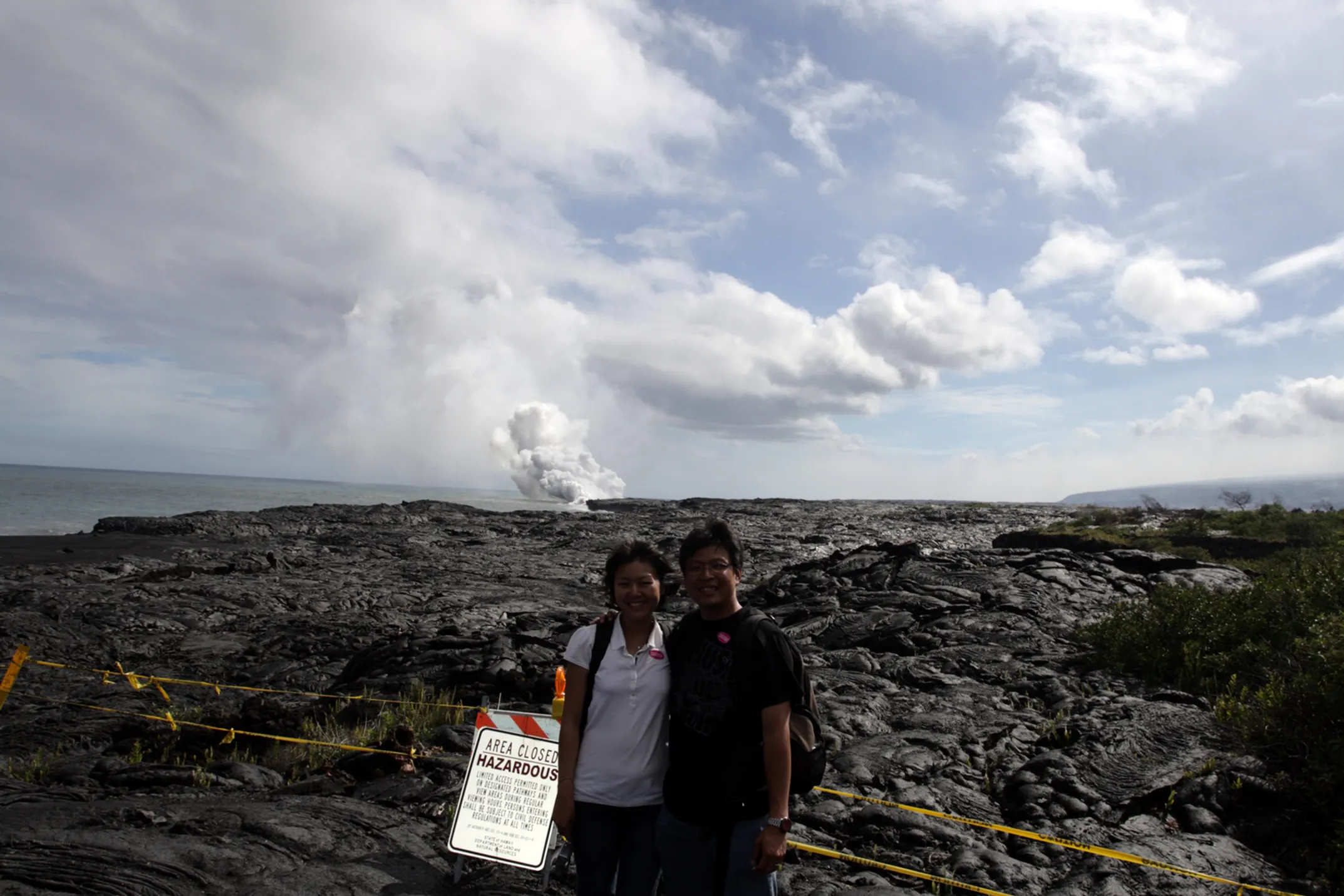
Respecting Closures
All closed areas are off-limits for safety and cultural protection. Entering closed areas endangers you and the park rangers who might have to rescue you.
Quiet Observation
Speak softly at sacred sites. Loud voices disrupt the spiritual atmosphere and disturb other visitors' contemplation.
The Five Principles of Aloha Spirit
Akahai
Kindness
Lokahi
Unity
Oluolu
Agreeable
Haahaa
Humility
Ahonui
Patience
🤲 Cultural Guidelines
DO
- • Show quiet respect
- • Follow all posted signs
- • Stay on designated paths
- • Take only photos
DON'T
- • Leave any offerings
- • Touch petroglyphs
- • Build rock stacks
- • Make loud noises
🏛️ Sacred Sites
Puuloa Petroglyphs
23,000+ ancient carvings
Halemaumau Crater
Home of Pele
Steam Vents
Sacred geothermal sites
Trail Markers (Ahu)
Ancient navigation aids
🙇 Respectful Practices
- Approach with humility
- Speak softly or not at all
- Observe quietly
- Feel the mana (spiritual power)
- Make silent promises to protect
⚡ Hawaiian Values
Kuleana
Responsibility
Mana
Spiritual power
Wahi Pana
Sacred place
Malama Aina
Care for the land
Piko
Umbilical cord/center