The Sugar-Coated Kingdom: A Plantation Empire
How King Sugar shaped Kauaʻi for over 150 years

Written by a Local Expert
Kalani MillerFor over 150 years, one crop reigned supreme in Hawaiʻi: sugarcane. This industry didn't just shape the economy. It fundamentally reshaped Kauaʻi's landscape, demographics, and culture. This section explores the rise and fall of "King Sugar" and the enduring legacy it left behind.
The Birth of an Industry: The Old Kōloa Sugar Mill
Our sugar story begins in the small south shore town of Kōloa, at weathered ruins of a stone chimney. This is the site of the Old Kōloa Sugar Mill, where Ladd & Company established the first commercially successful sugar plantation in the Hawaiian Islands in 1835. This venture sparked a revolution, setting the stage for sugar to become Hawaiʻi's dominant industry for the next century and a half.
The early days were challenging. The mill's first wooden rollers quickly wore out, but their replacement with iron rollers marked a crucial technological leap forward. The plantation was also the site of the first organized labor strike in Hawaiʻi in 1841, when native Hawaiian workers demanded higher wages.
Today, the Old Kōloa Sugar Mill stands as a powerful monument. You can see the original stone chimney and foundations of the 1840 mill, silent testaments to the dawn of a new era. Nearby, a striking sculpture honors the diverse groups of immigrant laborers—from China, Japan, the Philippines, Portugal, and beyond—who came to Hawaiʻi to work the fields. Their toil and sacrifice were the true backbone of the sugar industry, and their legacy is the vibrant, multicultural society that defines Hawaiʻi today.
The Old Kōloa Sugar Mill is a designated National Historic Landmark and a key stop on the self-guided Kōloa Heritage Trail. It's accessible daily with no admission fee.
Grove Farm Museum: A Living Portrait of Plantation Life
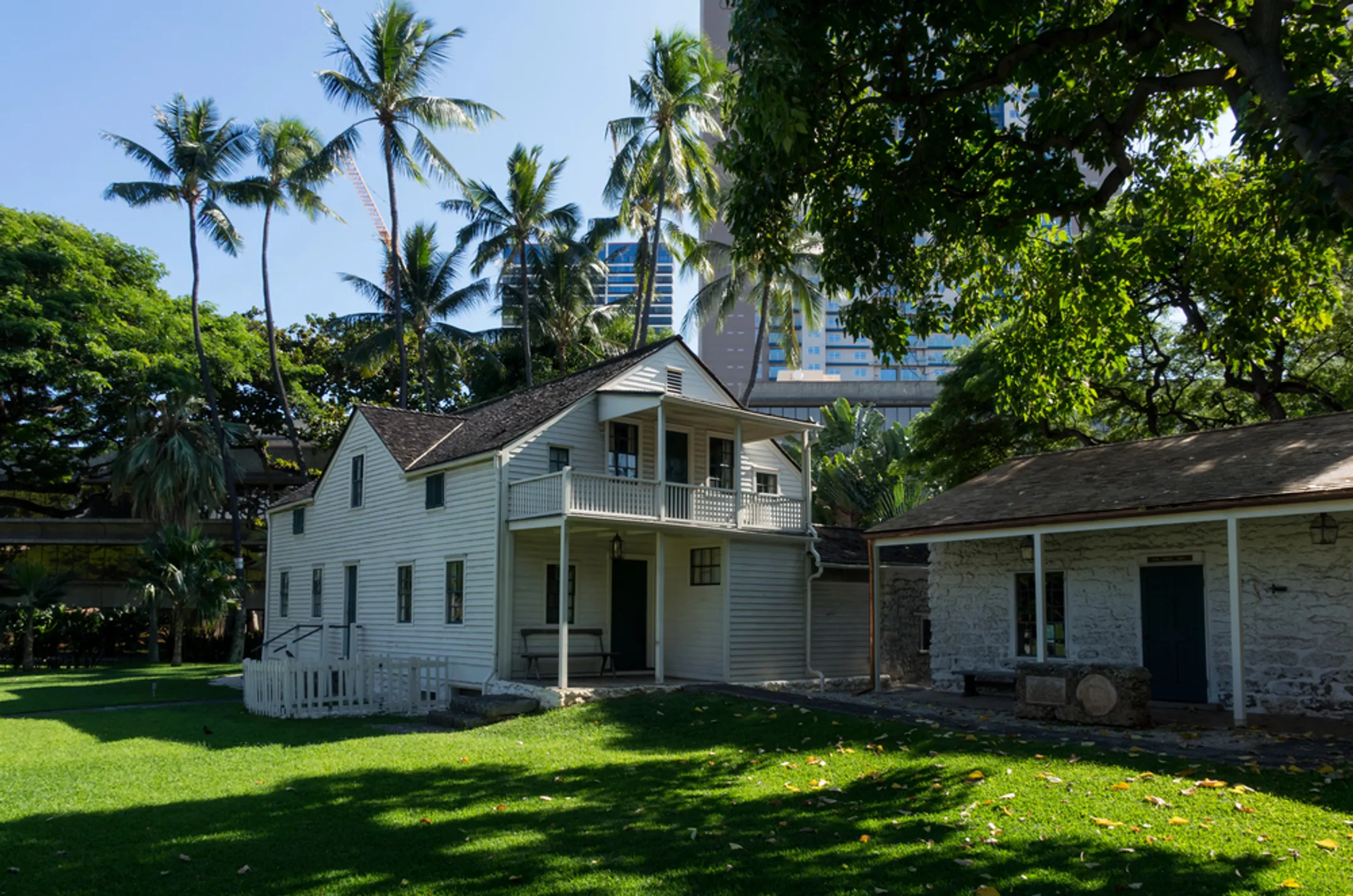
If the Old Kōloa Mill is where the sugar story began, Grove Farm in Līhuʻe is where you can experience that story in its fullest, most immersive form. This is no ordinary museum. It's a beautifully preserved 100-acre homestead that feels as though the Wilcox family, who owned and operated it for over a century, has just stepped out for the afternoon.
Purchased in 1864 by George N. Wilcox—son of the Waiʻoli missionaries Abner and Lucy—Grove Farm became one of the most innovative and successful plantations in Hawaiʻi. The 2-hour guided tour here is a journey through the daily lives of both the plantation owners and the multicultural community of workers who called this place home.
Must-See Exhibits and Features
The Owner's World
The elegant main house filled with the Wilcox family's original period furniture, fine art collected from their world travels, and an extensive library, offering a glimpse into the lives of the plantation elite.
The Worker's Perspective
Stark and important contrast through the simple, humble cottage of Kikunyo Moriwaki, the Japanese laundress who worked at Grove Farm for five decades. This gives crucial perspective on the lives of plantation laborers.
The Engines of Industry
An extraordinary collection of four restored 19th-century steam locomotives. These engines, including the German-built "Paulo" (1887) and the Baldwin-built "Wainiha" (1915), once hauled sugarcane from fields to mill. The "Wainiha" holds the distinction of pulling the very last steam-powered cane train in all of Hawaiʻi in 1957.
The Living Kitchen
Often the tour highlight, the original kitchen where the resident cook might be baking fresh sugar cookies on a working 1904 wood-burning stove. Here, guides share stories of Miss Mabel Wilcox, who lived on the farm until her death in 1978 and was instrumental in preserving it as a museum for future generations.
Tips for Your Visit
These personal touches make Grove Farm incredibly special. It's a place where history feels alive and personal. Remember, the intimate, small-group tours are available by reservation only on Mondays, Wednesdays, and Thursdays. They fill up, so book well in advance.
Grove Farm sits on Nawiliwili Road in Līhuʻe. For directions and to make your mandatory tour reservation, visit their official website: grovefarm.org.
The End of an Era and a New Beginning
By the late 20th century, the reign of King Sugar was coming to an end. A combination of rising labor costs, global market competition, and the emergence of tourism as a more profitable industry led to plantation closures across the islands. On Kauaʻi, the closures happened one by one: Kōloa Plantation in 1996, Lihue Plantation in 2000, and finally, the last operating sugar company on the island, Gay & Robinson, in 2009.
This economic shift marked the definitive transition to tourism as Kauaʻi's primary industry. Today, you can see fascinating examples of how the island's sugar-era past has been repurposed for its present. The hand-dug irrigation ditches of the former Lihue Plantation, an engineering marvel from the 1870s, are now the setting for popular tubing adventures.
A prime example of this adaptive reuse is the Kilohana Plantation. This grand 16,000-square-foot Tudor-style mansion was built in 1935 by sugar baron Gaylord Wilcox. Today, the beautifully restored estate is a premier visitor destination, home to artisan shops, art galleries, the renowned Gaylord's restaurant, the Koloa Rum Company's tasting room, and the Kauai Plantation Railway, which offers scenic train rides through the historic grounds. Kilohana stands as a living bridge between Kauaʻi's plantation past and its tourism-focused present.
Continue Your Journey Through Time
Visit the Kauaʻi Museum to see the complete story of the island.
📖 Museum Guide
Current page
ℹ️ Grove Farm Info
- Location: Līhuʻe
- Tours: Mon, Wed, Thu
- Duration: 2 hours
- Booking: Required
- Cost: Admission fee
🎒 What to Bring
- Walking shoes
- Sun protection
- Water bottle
- Camera
- Reservation confirmation