Sacred Grounds of Wailua
Where History Breathes: Ancient Hawaiian Heiau & Legends

Written by a Local Expert
Leilani AkoTo stand at the northern end of Lydgate Park is to stand at the gateway to one of the most historically significant and sacred areas in all of Hawaii. The park sits at the mouth of the Wailua River. This area was the political and religious center of ancient Kauai. This was the land of the aliʻi, the ruling chiefs, and a place revered as the birthplace of royalty. The entire Wailua Complex of Heiaus, which begins here, is a designated National Historic Landmark. Its story is deeply woven into the fabric of the park.
Hikinaakala Heiau: "Rising of the Sun"
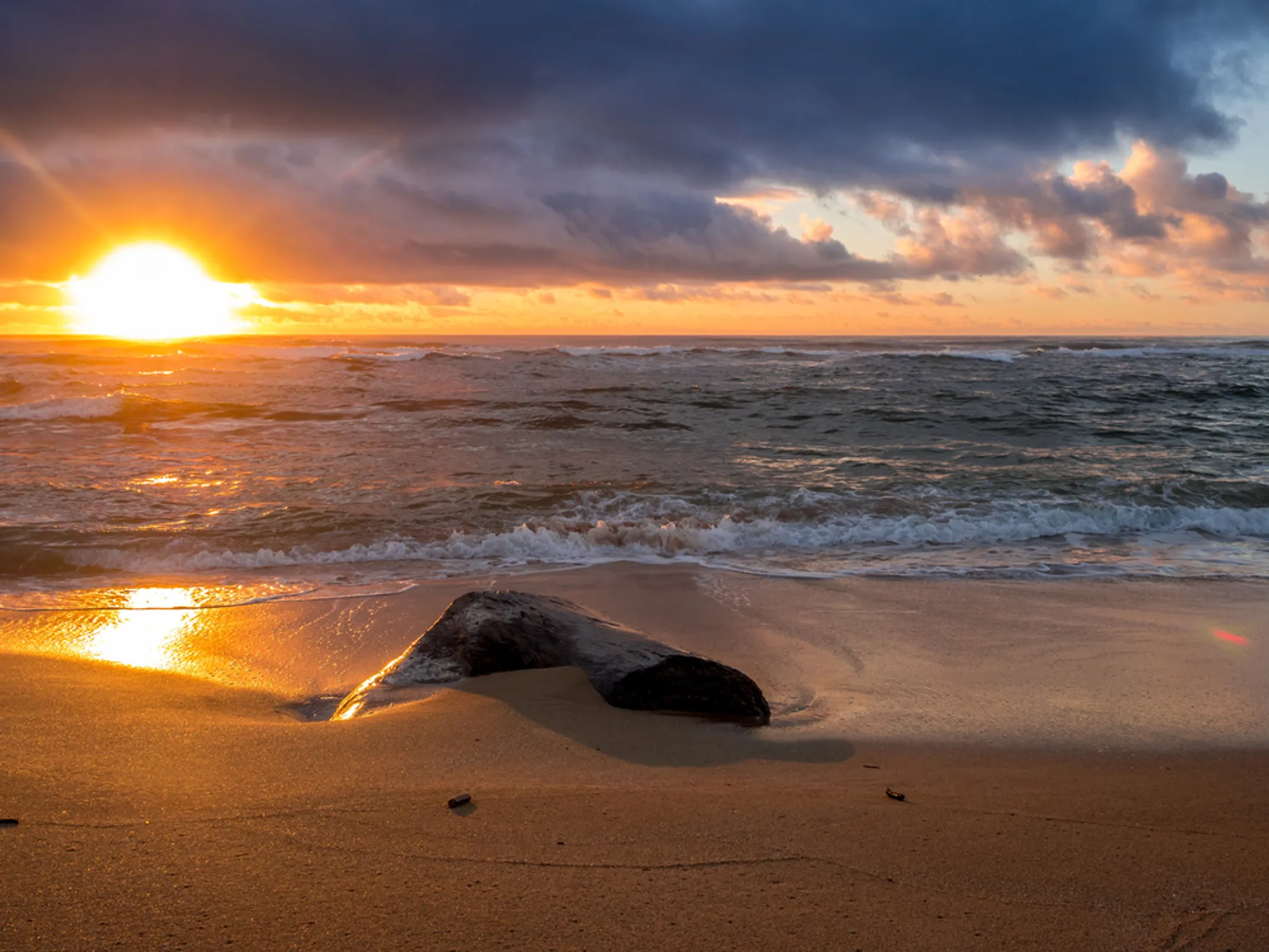
Just north of the swimming ponds, you will find the stone foundation of Hikinaakala Heiau. Dating back to the 13th or 14th century, this sacred temple (heiau) was precisely aligned to greet the sunrise over the ocean. Its massive stone and coral walls once stood between 6 and 11 feet tall. Here, priests and chiefs would perform sunrise rituals with chants and prayers to ensure prosperity and health for their people. After the traditional Hawaiian religion was abolished in the 19th century under the influence of western missionaries, many of the heiau's stones were sadly removed and used for other construction projects, such as roadbeds. This left only the sprawling foundation we see today.
🙏 Cultural Protocol: Visiting with Respect
As someone who grew up here, I ask every visitor to approach this site with the utmost reverence. This is not a ruin to be climbed on or a collection of rocks to be moved. It is a church, a place of deep spiritual importance that is still sacred to Native Hawaiians.
Please stay on the designated paths, speak softly, and take only pictures. Your respect is the greatest gift you can offer.
Hauola: The Place of Refuge (Puʻuhonua)
Adjacent to the heiau are the remains of Hauola, a puʻuhonua or place of refuge. This concept was a vital part of ancient Hawaiian law and society. In a time when breaking a sacred law, or kapu, was often punishable by death, a puʻuhonua served as a sanctuary. A lawbreaker, a defeated warrior, or a non-combatant could flee to the safety of its walls. If they reached the sanctuary, they were protected from harm and could remain for a period of time to be ritually cleansed and absolved. After which they could return to society without fear of punishment. The presence of Hauola here underscores the immense spiritual authority this area held.
🏛️ Hikinaakala Heiau
- • Built 13th-14th century
- • Walls 6-11 feet tall
- • Aligned to sunrise
- • Ritual ceremonies
- • National Historic Landmark
🛡️ Hauola Puʻuhonua
- • Place of refuge
- • Sanctuary from kapu
- • Ritual cleansing
- • Protected walls
- • Spiritual authority
The Man Behind the Park's Name
The park owes its very existence as a protected public space to Reverend John Mortimer Lydgate. Born in Canada in 1854, Lydgate became a prominent minister, surveyor, and civic leader on Kauai. In the early 1900s, he discovered the archaeological remains of Hikinaakala Heiau and Hauola. Recognizing their profound cultural and historical importance, he successfully petitioned the territorial governor to set aside the area as a public park. This preserved these sacred sites from development and ensured they would be protected for all future generations. The park that now bears his name is a testament to this remarkable act of cross-cultural preservation.
Legends of the River Mouth
The Wailua River is steeped in mythology, and many legends are tied to this very spot. One of the most famous is the story of Kawelo, a chief born in nearby Hanamaulu. From birth, it was prophesied that he would become a great and powerful warrior king. He was taken by his grandparents to be raised in the sacred Wailua district. As a child, Kawelo had a prodigious appetite. To keep the hungry boy occupied, his grandparents hewed a canoe for him. Every day, Kawelo would take his canoe and paddle it up and down the Wailua River, right where the park now stands. He was honing the strength that would later make him a legend. When you look out at the river mouth, you can almost imagine the young chief, destined for greatness, paddling in the same waters.
"The entire Wailua Complex of Heiaus is a designated National Historic Landmark. This was the land of aliʻi, the political and religious center of ancient Kauai, revered as the birthplace of royalty."
Continue Your Lydgate Journey
Discover activities, practical tips, and the cultural heart of this special place.
🏛️ Sacred Site Info
- Era: 13th-14th century
- Status: Nat'l Historic
- Type: Heiau & Puʻuhonua
- Best Time: Sunrise visits
- Access: Free, open daily
🙏 Respectful Visiting
- Stay on designated paths
- Never climb on stones
- Don't move any rocks
- Speak softly & quietly
- Photos OK, no touching
- Leave no trace
📖 Explore Sections
📜 Historical Note
Reverend John Mortimer Lydgate discovered these sites in the early 1900s and successfully petitioned to preserve them as a public park.
Part of the Wailua Complex of Heiaus