Hāʻena Beaches & Snorkeling
The Sacred Sands & Waters of Kauaʻi's North Shore

Written by a Kauaʻi Local Expert
Leilani AkoThe Sacred Sands & Waters: Exploring Hāʻena's Beaches
Once you have your precious reservation, a world of unparalleled beauty awaits. The beaches within and around Hāʻena are the heart of the experience, each with its own unique character, story, and rules of engagement.
Keʻe Beach: Where the Road Ends and Legend Begins
Arriving at Keʻe (pronounced Keh-EH) feels like reaching the end of the world in the best possible way. The road literally stops here, giving way to the majestic, fluted cliffs of the Nāpali Coast. The beach itself is a jewel-box lagoon, protected by an offshore reef that, in the calm summer months, creates a tranquil swimming pool perfect for families and snorkelers.
But Keʻe is so much more than a pretty beach. It is a wahi pana, a place saturated with legend and spiritual importance.
The Cultural Heartbeat
This area is considered a cradle of Hawaiian culture. Just above the sands sits Kaulu o Laka heiau, a sacred stone platform dedicated to Laka, the goddess of hula. This is one of the most important hula sites in all of Hawaiʻi, a place where the art form is said to have been born and where hālau hula (hula schools) from across the islands still come to perform ceremonies and pay tribute.
The Legend of Pele and Hiʻiaka
The stories of this place are woven into the landscape itself. It is said that the volcano goddess Pele fell in love with a handsome Kauaʻi chief named Lohiau. When Lohiau died of a broken heart, Pele sent her beloved younger sister, Hiʻiaka, on an epic journey to retrieve his spirit. Hiʻiaka found his body in a cave in the cliffs above Keʻe and, using her divine power, chanted him back to life. This miraculous event was marked by the appearance of three brilliant rainbows, a phenomenon still common in the skies over Hāʻena today.
The Kilioe Stone
Near the beach rests a large basalt boulder etched with deep grooves. This is the Kilioe Stone, a sacred pōhaku piko (umbilical cord stone). In ancient tradition, families would place a newborn's piko (umbilical cord) into one of the stone's crevices. This act spiritually anchored the child to their ancestral land and sought the lifelong protection of the moʻo (lizard guardian) spirit named Kilioe, for whom the stone is named.
When you stand on the sands of Keʻe, remember you are in a place of deep reverence. You'll find restrooms, outdoor showers, and the trailhead for the Kalalau Trail conveniently located here.
🏖️ Keʻe Beach Features
- Protected lagoon
- Summer snorkeling
- Restrooms & showers
- Lifeguards (summer)
- Kalalau trailhead
⏰ Best Times
Summer months (May-Sep)
Morning, before 10 AM
Golden hour (sunrise/sunset)
Tunnels Beach (Makua): A World-Class Underwater Cathedral
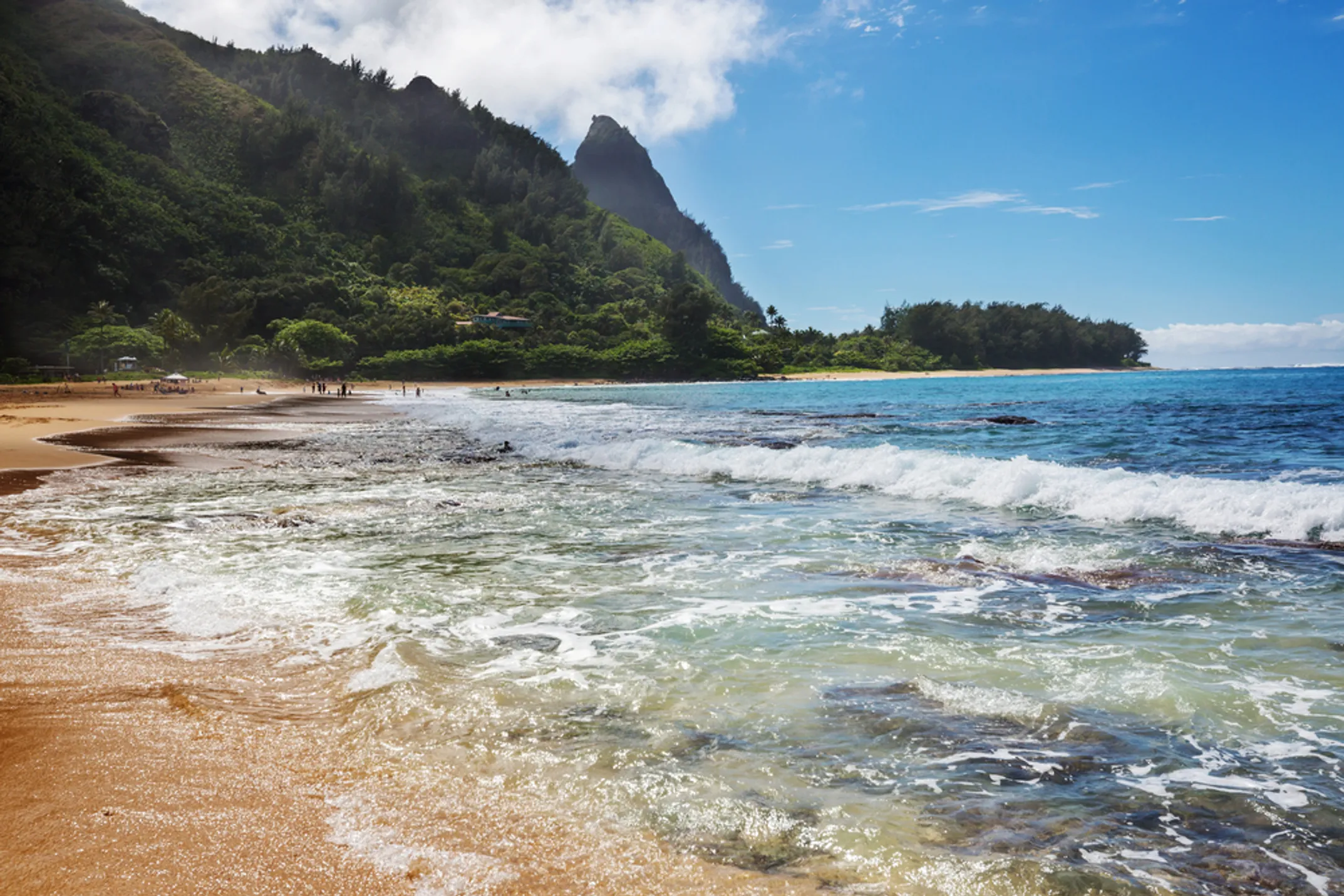
Just east of Hāʻena State Park lies a snorkeler's paradise. While everyone calls it Tunnels, its proper Hawaiian name is Makua. It's important to know that Tunnels is not technically inside the state park and does not require a reservation. The easiest way to access it is to find one of the two small public access paths off the highway near the 8-mile marker, or to park at the adjacent Hāʻena Beach Park (which has limited, free parking) and walk about ten minutes west along the sand.
The beach gets its name from the incredible underwater landscape. Ancient lava flows cooled to form a network of submerged tubes, arches, and caverns, creating a spectacular habitat for marine life.
Your Snorkel Plan for Tunnels Beach
Snorkeling at Tunnels is a world-class experience, but safety and conditions vary dramatically. Following this plan will ensure you have a safe and unforgettable time.
Best Season
Summer (May-September). The water is typically calm, clear, and lake-like. WINTER IS EXTREMELY DANGEROUS. Massive North Shore swells create hazardous conditions unsafe for anyone but expert surfers.
Best Time of Day
Morning (before 10 AM). This is when the water is at its clearest and the trade winds are at their calmest, providing the best visibility.
Entry Point
Look for the sandy channels between the coral to enter the water. NEVER walk on or touch the coral. It is a fragile living organism that you will kill, and its sharp edges can easily cut your feet.
For Beginners & Kids: The Inner Reef
Stick to the Inner Reef. This is the shallow, protected area that lies just 100-200 feet offshore. It's calm and teeming with colorful fish, many of which can be seen in just knee-deep water.
For Advanced Snorkelers: The Outer Reef
The Outer Reef is a crescent-shaped barrier reef further out. This area is for strong, experienced swimmers only. The topography is more dramatic, and you'll see larger fish, but you must be constantly aware of strong currents that can pull you out to sea.
Marine Life to Spot
Keep an eye out for honu (Hawaiian Green Sea Turtles), our state fish the humuhumunukunukuāpuaʻa (reef triggerfish), parrotfish, butterflyfish, schools of yellow tang, and the occasional, precious Hawaiian monk seal resting on the beach. Always maintain a respectful distance of at least 10 feet.
Restricted Area
A portion of the reef, known as the Makua Puʻuhonua, is a designated no-entry zone to allow the coral to rest and regenerate. This area is usually marked with buoys. Please respect these boundaries.
Hāʻena Beach Park: The Welcoming Neighbor
To clear up one of the biggest points of confusion for visitors: Hāʻena Beach Park is a Kauaʻi County park located immediately next to Hāʻena State Park. The Beach Park does not require a reservation. It serves as an excellent base of operations for a day at Tunnels Beach, as it is the location of the nearest lifeguards, restrooms, and showers, which Tunnels itself lacks. Camping is also permitted at the beach park, but it requires a separate permit obtained in advance from the County of Kauaʻi's website, not the state system.
No Reservation
County park, free to access without state park reservation.
Full Facilities
Lifeguards, restrooms, showers, and picnic areas available.
Camping Available
Permit required from County of Kauaʻi, not state system.