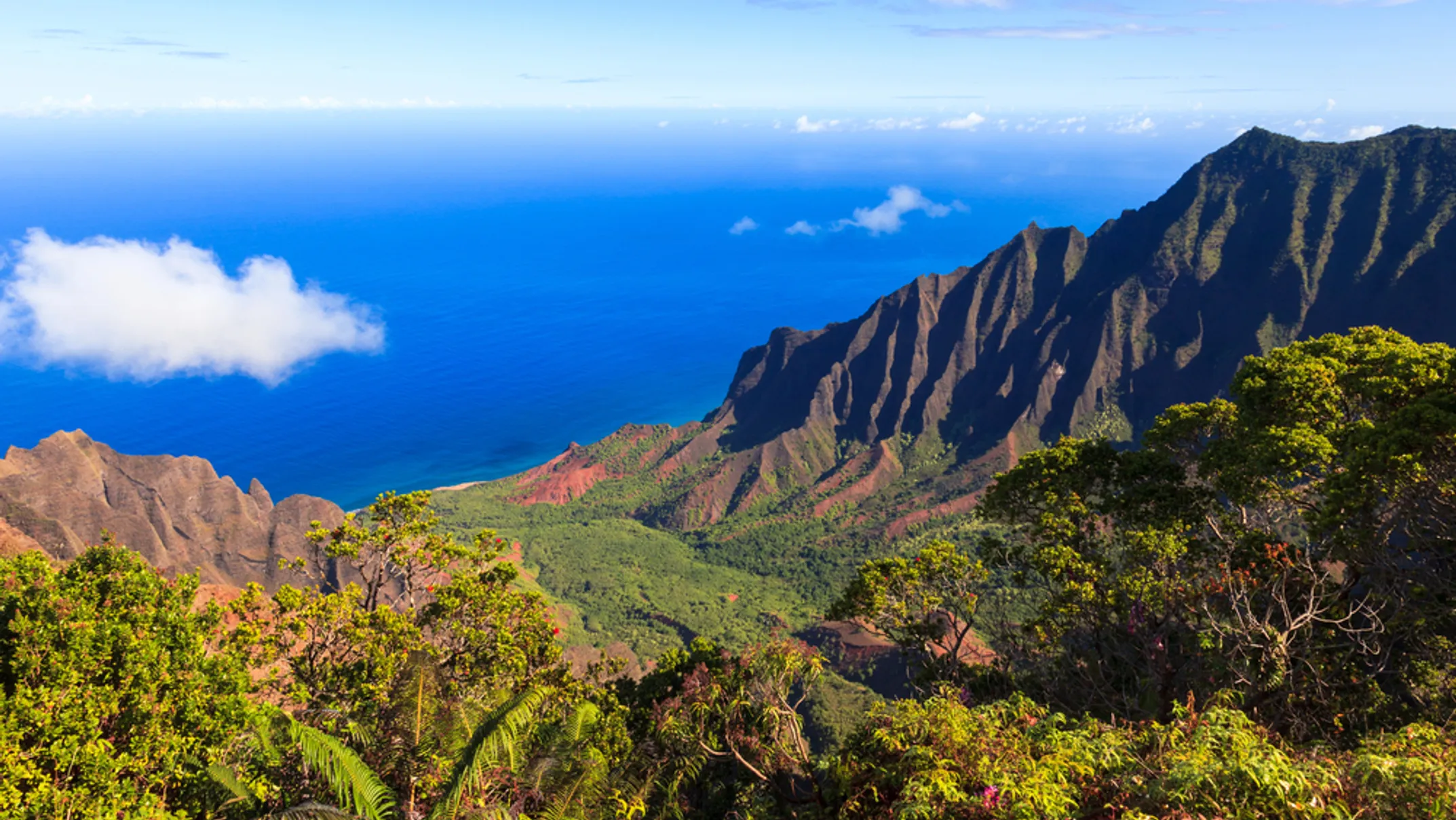

The trails and lookouts are the skeleton of Kokeʻe, but the forest is its living, breathing soul. Taking a moment to appreciate the unique plants and animals here deepens the entire experience.
The Forest: A Montane Mesic Ecosystem
The park is a montane mesic forest, dominated by two iconic native Hawaiian trees. Look for the mighty Koa (Acacia koa), with its beautiful sickle-shaped leaves, and the sacred ʻŌhiʻa Lehua (Metrosideros polymorpha), often identifiable by its fluffy, vibrant red blossoms. You'll also find stands of introduced trees, like California Redwoods and Sugi pines, planted in the last century.
🌳 Koa (Acacia koa)
The mighty koa is one of Hawaii's most valuable native trees. Its wood is prized for canoes, surfboards, and furniture.
- • Distinctive sickle-shaped leaves
- • Can grow up to 100 feet tall
- • Culturally significant to Hawaiians
- • Threatened by koa wilt disease
🌺 ʻŌhiʻa Lehua
Sacred to Pele, the volcano goddess, ʻōhiʻa is the most common native tree in Hawaii.
- • Fluffy red, yellow, or orange blossoms
- • First to colonize lava flows
- • Critical habitat for native birds
- • Threatened by Rapid ʻŌhiʻa Death
Other Notable Native Plants
Hāpuʻu Tree Ferns
Giant ferns that can grow 20+ feet tall, common in the Alakaʻi Swamp
Iliau
Rare silver-leafed plant found only in Waimea Canyon and Kokeʻe
Maile
Fragrant vine used in lei-making, sacred in Hawaiian culture
ʻŌlapa
Small tree with trembling leaves, used in hula ceremonies
Birdwatching Paradise: Last Refuge of the Forest Birds
Kokeʻe is a world-class destination for birders because its cool, high-elevation forests have become the last refuge for Kauaʻi's endemic forest birds. Many of these are critically endangered. Listen carefully as you hike, and you might be rewarded with a glimpse of these forest jewels.
Why Kokeʻe is Critical for Birds
Avian malaria, carried by mosquitos introduced to Hawaii, has devastated native bird populations at lower elevations. The cool temperatures at Kokeʻe's high elevation limit mosquito populations, making it one of the last safe havens for these endangered species.
Birds You Might See
ʻApapane (Apapane)
CommonBright crimson bird with black wings and a curved bill. The most commonly seen native bird in Kokeʻe.
- • Where: Throughout the park, especially near ʻōhiʻa trees
- • Sound: Varied calls, including whistles and buzzes
- • Best Time: Morning hours
ʻAmakihi (Kauai Amakihi)
CommonSmall yellowish-green bird with a slightly curved bill. One of the more adaptable native species.
- • Where: Kaluapuhi Trail, Pihea Trail, Museum Nature Trail
- • Sound: High-pitched "wheet" calls
- • Behavior: Active forager, often seen moving through foliage
ʻElepaio (Kauai Elepaio)
UncommonSmall brown and white flycatcher. Known for being curious and approaching hikers.
- • Where: Pihea Trail, Kaluapuhi Trail
- • Sound: Distinctive "ele-PAI-o" call
- • Behavior: Often curious about humans, may follow hikers
ʻAnianiau (Anianiau)
UncommonTiny bright yellow bird, the smallest Hawaiian honeycreeper. Endemic to Kauaʻi only.
- • Where: Pihea Trail, Alakaʻi Swamp Trail
- • Sound: Soft, high-pitched calls
- • Size: Only 4 inches long
ʻIʻiwi (Iiwi)
RareStunning scarlet bird with black wings and a long, curved orange bill. One of Hawaii's most iconic birds.
- • Where: Higher elevations near flowering ʻōhiʻa trees
- • Sound: Rusty-hinge-like squeaks and whistles
- • Behavior: Feeds on ʻōhiʻa nectar
ʻAkekeʻe (Akekee)
Very RareCritically endangered. Yellowish-green with a distinctive crossed bill. Endemic to Kauaʻi.
- • Where: Upper Pihea Trail, Alakaʻi Swamp Trail
- • Population: Estimated fewer than 500 individuals
- • Status: Critically endangered
Puaiohi & ʻAkikiki
Extremely RareBoth critically endangered species found only in the deepest parts of the Alakaʻi Wilderness.
- • Where: Remote Alakaʻi Wilderness only
- • Sightings: Extremely rare, even for experienced birders
- • Status: Among Hawaii's most endangered birds
Birdwatching Tips for Kokeʻe
Best Trails for Birding
- • Pihea Trail: Best overall diversity
- • Alakaʻi Swamp Trail: Rare species
- • Kaluapuhi Trail: Easy access, good for beginners
- • Museum Nature Trail: Short, near visitor center
Best Times for Birding
- • Early Morning: Most active (6-9 AM)
- • Sunny Days: Birds more vocal and visible
- • After Rain: Increased insect activity attracts birds
- • Avoid: Heavy rain, strong winds
What to Bring for Birdwatching
- • Binoculars: 8x42 or 10x42 recommended
- • Field Guide: "Hawaii's Birds" or similar
- • Camera: With telephoto lens if possible
- • Notebook: To record sightings
- • Patience: Birds can be shy and elusive
- • Quiet Demeanor: Speak softly, move slowly
Other Wildlife
🦆 Nēnē (Hawaiian Goose)
Hawaii's state bird. Once nearly extinct, now recovering thanks to conservation efforts.
- • Often seen near the lodge and campground
- • Important: Never feed them—it's illegal and harmful
- • Give them space, especially during nesting season
- • Drive carefully—they sometimes cross roads
🐗 Feral Pigs
Invasive species that damage the forest ecosystem. Usually avoid humans.
- • May see evidence (rooted ground, tracks)
- • Generally not aggressive toward humans
- • Major threat to native plants and birds
- • Active management efforts to control population
Conservation: A Call to Action
This forest is a fragile treasure facing serious threats. Avian malaria, carried by mosquitos at lower elevations, has forced these beautiful birds into this last mountain stronghold. At the same time, fungal diseases like Rapid ʻŌhiʻa Death and koa wilt threaten the very trees they call home. These diseases are spread through contaminated soil on shoes and gear.
🌿 Your Kuleana: How You Can Help
This is where our kuleana (responsibility) comes in. Please, help us protect this magic:
Clean Your Boots
Before and after your hike, use boot brushing stations if available, or scrub your shoes to remove all visible soil and mud. This prevents the spread of deadly plant diseases.
Stay on Trails
Never leave marked trails. The forest floor is incredibly fragile, and off-trail hiking damages native plants and spreads invasive species.
Never Feed Wildlife
Feeding nēnē or other wildlife is illegal and harmful to their health. It makes them dependent on humans and changes their natural behavior.
Pack Out Everything
Leave no trace. Pack out all trash, even biodegradable items. What you bring in, you take out.
Support Conservation
Donate to the Kōkeʻe Museum (Hui o Laka) or other conservation organizations working to protect this ecosystem.
Educate Others
Share what you've learned about Kokeʻe's fragile ecosystem with friends and family. Awareness is key to conservation.
Explore More of Kokeʻe
Discover the trails, lookouts, lodge, and camping
🦜 Bird Status
🗺️ Kokeʻe Guide
🗺️ West Side Guide
🥾 Best Birding Trails
- Pihea Trail: Best diversity
- Alakaʻi Swamp: Rare species
- Kaluapuhi: Easy access
- Museum Trail: Beginners
🌿 Conservation Tips
- Clean boots before & after
- Stay on marked trails only
- Never feed wildlife
- Pack out all trash
- Support conservation efforts