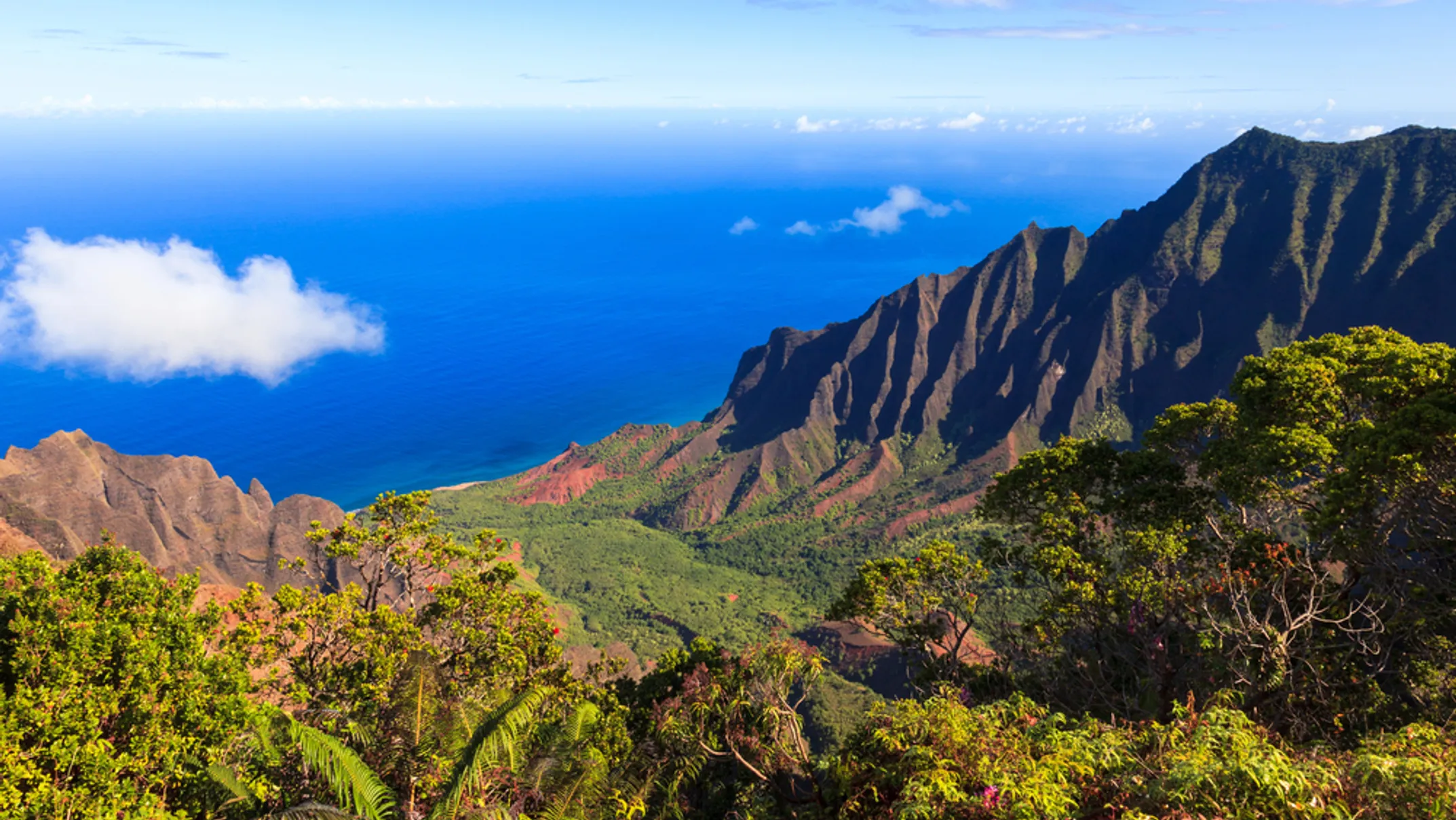
Kokeʻe Hiking Trails
Complete Guide to Kauaʻi's Mountain Trails

Written by a Local Expert
Leilani AkoThis is the heart of the Kokeʻe experience. The park is laced with over 45 miles of trails. They range from easy nature walks to some of the most challenging ridge hikes in the state. While many sources list trail stats, I want to give you the feel of each hike—the challenge, the reward, and the little secrets that make them special.
This is where you find the Kokeʻe that tour buses can't reach.
Trail Overview: Choose Your Adventure
Awaʻawapuhi Trail
Difficulty: Strenuous but Unforgettable
Distance: 6.2 miles round-trip
Elevation: ~1,600 feet down, then back up
Experience: Epic Nāpali ridge views
Pihea Trail
Difficulty: Moderate to Strenuous
Distance: 3.8 miles round-trip
Elevation: ~500 feet
Experience: Muddy rim walk, Kalalau views
Canyon Trail
Difficulty: Moderate
Distance: ~3.6 miles round-trip
Elevation: ~1,000 feet
Experience: Canyon views, top of waterfall
Alakaʻi Swamp Trail
Difficulty: Moderate to Strenuous
Distance: ~7.0 miles round-trip
Elevation: ~330 feet
Experience: Otherworldly boardwalk trek
The Awaʻawapuhi Trail: The Ridgetop Epic
My Rating: Strenuous but Unforgettable
The Experience
This is what I call an "inverted hike," and it's a mind-bender if you're not prepared. The journey begins with a 3.1-mile descent of over 1,600 feet. It winds through the cool, shaded Na Pali-Kona Forest Reserve. The path is lined with native koa and ʻōhiʻa trees. Every so often, the forest canopy breaks, giving you a tantalizing preview of the deep, emerald valleys of Awaʻawapuhi and Nuʻalolo to your left.
The anticipation builds with every step down. The trail culminates at an unfenced lookout point perched at 2,500 feet. The view is simply staggering—a 180-degree panorama of the Nāpali Coast, with cliffs dropping thousands of feet to the ocean below. It's a true edge-of-the-world feeling.
The Challenge
The descent is the easy part. The real challenge, and the reason for its strenuous rating, is the return journey. You have to climb back up every single one of those 1,600+ feet over 3.1 miles. It is a relentless, leg-burning, lung-busting ascent that tests your endurance.
Gear and Pro-Tips
Essential Gear
- • Sturdy hiking shoes are a must
- • Bring at least 2-3 liters of water per person—you will need it for the climb out
- • Pack high-energy snacks like trail mix or protein bars
- • Sun protection is key for the exposed lookout
Pro-Tip
My rule for Awaʻawapuhi is simple: when you reach the lookout, you should still have more than half your water and half your energy left. The real hike is the climb out. Also, that final narrow ridge that juts out? It's wider than it looks from a distance. But this is not the place for risky selfies if you have any fear of heights. Find a safe spot, sit down, and just soak in the majesty of it all.
The Pihea Trail: The Muddy Rim Classic
My Rating: Moderate (if miraculously dry) to Strenuous (when muddy)
The Experience
This hike begins right at the Puʻu O Kila Lookout, starting as a wide, red dirt path that looks more like a road than a trail. There's a fascinating reason for this: it's the remnant of a failed road project from the 1950s. The project attempted to connect Kokeʻe with the North Shore before the formidable Alakaʻi Swamp defeated the machinery.
The first mile of this trail offers some of the most accessible and spectacular views into Kalalau Valley. But then, the trail transforms. It narrows, plunges into the forest, and often becomes a slippery, muddy gauntlet of gnarled roots and slick clay. It requires some hands-on scrambling for balance.
The Destinations
The trail officially leads to the Pihea Vista, a high point on the rim that is very often shrouded in clouds. More importantly, it serves as the gateway to the Alakaʻi Swamp Trail, with a junction marking the turn-off.
Gear and Pro-Tips
Essential Gear
- • Footwear with aggressive tread that you are perfectly willing to sacrifice to the red mud
- • Seriously, don't wear your new white sneakers
- • Hiking poles are an absolute game-changer here, providing crucial stability on the slippery sections
- • And, as always in Kokeʻe, bring your rain gear
Pro-Tip
Don't get fixated on reaching the official "end" of the trail, especially if the weather is bad. The most rewarding and photo-worthy views are found along that first spectacular mile of the rim. If it's a muddy day, just embrace it. Think of it as a 'Kauai facial' for your boots. The true goal is to enjoy the journey along the edge of the world, not just to tick a box at a foggy viewpoint.
The Canyon Trail to Waipoʻo Falls: The Waterfall Illusion
My Rating: Moderate
The Experience
This is one of the best trails for getting up close and personal with the grandeur of Waimea Canyon itself. The hike starts from a trailhead near the Puʻu Hinahina Lookout (between mile markers 13 and 14). It descends into a forested gulch. You'll cross the cool waters of the Kōkeʻe Stream before the trail climbs back up to follow the canyon rim. It offers magnificent, open views of the "Grand Canyon of the Pacific."
Now, here is the most important thing to know about this hike—a secret that prevents disappointment: the trail leads you to the top of the 800-foot Waipoʻo Falls. You will end at a series of lovely, small cascades and pools that are the source of the main waterfall. But you will not see the massive, plunging waterfall itself from the trail's end.
Gear and Pro-Tips
Essential Gear
- • The canyon rim sections are exposed, so sunscreen and a hat are essential
- • Wear sturdy shoes for the rocky parts
- • Of course, bring plenty of water
Pro-Tip
This is one of my favorite trails, but you must manage your expectations. You will be standing on top of Waipoʻo Falls, looking out over the vastness of the canyon. It's a magnificent and unique perspective. But it's not the iconic photo of the falls you see from the roadside lookouts. To get that classic shot, you need to stop at the main Waimea Canyon Lookout on your drive up or down. Knowing this ahead of time transforms the hike from a potential letdown into the awesome canyon-rim adventure that it truly is.
The Alakaʻi Swamp Trail: The Otherworldly Trek
My Rating: Moderate to Strenuous
The Experience
Prepare to enter a primeval world. The Alakaʻi Swamp Trail is a journey into one of the planet's most unique ecosystems—one of the world's highest-elevation wetlands, often shrouded in sacred mist. The experience is defined by the famous boardwalk, a wooden path installed in 1991 that snakes for miles through this fragile environment. It protects the ecosystem from hikers' boots.
You'll be surrounded by an alien landscape of moss-draped ʻōhiʻa trees, giant hāpuʻu tree ferns, and low-lying bog plants. It's a haven for rare native birds. The silence is often broken only by their melodic calls.
The Route
The most popular way to access the trail is via the Pihea Trail, as described above. However, it can also be reached from the other end via the rugged Mohihi-Camp 10 Road, which requires a 4x4 vehicle. The journey involves boardwalks, very muddy sections where the boardwalk ends, a crossing of the Kawaikoi Stream (which can be impassable after heavy rain), and a steep, challenging climb after the stream. Then you reach the final, long stretch of boardwalk that leads to the Kilohana Lookout.
Gear and Pro-Tips
Essential Gear
- • Waterproof hiking boots are absolutely non-negotiable
- • A high-quality rain jacket is your best friend
- • If you're a birder, bring your binoculars
- • Hiking poles are also highly recommended for stability on the muddy sections and during the stream crossing
Pro-Tip
The Alakaʻi is pure magic, but it demands deep respect. The weather can shift from sun to thick fog and pouring rain in a matter of minutes. Always stay on the boardwalk; the ecosystem beneath is incredibly fragile. The view from the Kilohana Lookout at the end is a fantastic bonus. On a clear day, the panorama of Hanalei Bay is breathtaking. But on a foggy day, remember that the journey through the mystical swamp itself is the true reward.
For the Avid Adventurer: More Kokeʻe Trails
To truly make this complete, here are a few more trails that showcase the park's diversity. These are for those with extra time or a thirst for more.
Iliau Nature Loop (Easy)
Perfect for families or those short on time. This 0.3-mile roadside loop near the beginning of the park offers great canyon views. It has interpretive signs identifying native plants, including the rare, silver-leafed Iliau plant for which it's named.
Kukui Trail (Very Difficult)
This is for expert hikers only. It's a brutally steep 2.5-mile trail that drops 2,000 feet in elevation from the rim all the way down to the floor of Waimea Canyon. It ends at the Waimea River. Remember, you have to climb all the way back up.
Nuʻalolo Trail (Difficult)
For a truly epic day, seasoned hikers can combine the Nuʻalolo Trail with the Awaʻawapuhi Trail to form a challenging loop (connected by the Nuʻalolo Cliffs Trail). The 3.8-mile Nuʻalolo Trail offers its own spectacular views into the pristine Nuʻalolo Valley.
Explore More of Kokeʻe
Discover the lookouts, lodge, camping, and wildlife
📊 Difficulty Guide
Short, flat, well-maintained
Some elevation, 3-5 miles
Significant elevation, 6+ miles
Expert hikers only
🗺️ Kokeʻe Guide
🗺️ West Side Guide
🎒 Trail Essentials
- 2-3 liters of water
- High-energy snacks
- Rain jacket (essential!)
- Sturdy hiking boots
- Hiking poles (for mud)
- Trail map (no cell service)
💡 Trail Tips
- Start early (before 9 AM)
- Check conditions at museum first
- Save energy for return climb
- Embrace the mud on Pihea
- Clean boots to protect forest