Hanapepe's Sacred Places
Where Culture Endures and Stories Live On

Written by a Local Expert
Leilani AkoHanapepe's Sacred Places: Where Culture Endures
Beyond bustling main street lie two landmarks that anchor town to its history and soul. They are places of connection—to past, to land, and to way of life that perseveres.
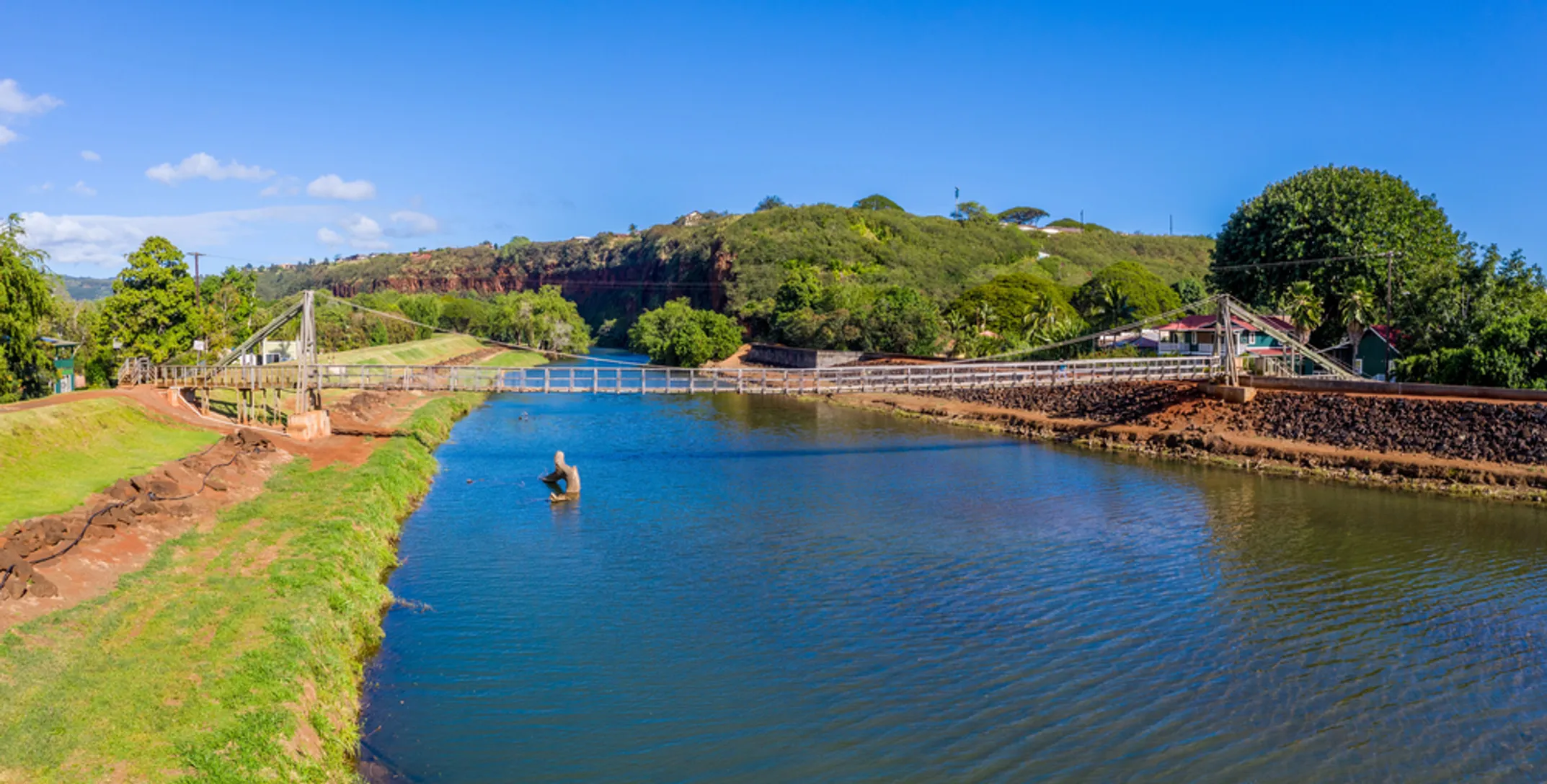
The Hanapepe Swinging Bridge: A Walk Through Time
Tucked away just off Hanapepe Road is icon of town's rustic charm: Swinging Bridge. For over century, suspension bridge has spanned this part of Hanapepe River. Crossing it is thrilling, nostalgic experience.
Gentle sway under your feet, sound of wooden planks, and view of lush river valley connect you instantly to town's past. Original bridge was built around 1911, providing vital crossing for taro farmers and residents living on other side of river.
For decades, it was simply part of daily life. But in 1992, Hurricane Iniki, one of most destructive storms in Hawaii's history, tore through Kauai and severely damaged bridge. Community rallied, and by 1996, bridge was rebuilt and reinforced with steel cables.
Testament to town's resilience. Today, it remains functional crossing for residents and delightful adventure for visitors. My pro-tip: pause in middle. Don't just rush across for photo. Feel the sway. It's not just bridge; it's connection to over century of daily life in this valley.
On Art Night, it's best place to escape crowds and look at stars. When moon is full, its reflection dances on river below, creating natural light show that no gallery can match.
Bridge History Timeline
I remember first time I brought Malia across this bridge. She was three and terrified of sway. I held her hand and told her to imagine all people who had crossed before us. Farmers carrying taro, children walking to school, lovers meeting in middle for stolen kisses.
By time we reached other side, she was giggling with each gentle bounce. Now she races across without hesitation, calling back to Nalu to "hurry up and feel it move!"
The Salt Ponds of Paʻakai: A Sacred Gift from the Earth
In world where everything has price, there are still things that are priceless. Here, beside Salt Pond Beach Park, generations of Hawaiian families practice ancient art of making paʻakai. This salt is not for sale. It is gift—from 'āina (land), from ancestors, and from heart.
To witness this is to understand different kind of wealth. This is one of very last places in all Hawaii where this sacred tradition continues uninterrupted. Stewardship of salt beds, or loʻi paʻakai, is kuleana—sacred responsibility—held by Hui Hāna Paʻakai o Hanapēpē.
Collective of 22 families whose rights to harvest have been passed down through generations. Process itself is intricate dance with nature, performed only during hot, dry summer months.
The Sacred Salt-Making Process
Step 1: Underground Seawater Access
Underground seawater is accessed through deep wells (puna) and transferred to holding pools (waikū).
Step 2: Sun Evaporation
As sun evaporates some water and increases its salinity, brine is moved to shallow, carefully hand-molded clay beds (loʻi paʻakai).
Step 3: Crystal Harvest
Over days or weeks, sun works its magic, leaving behind pure salt crystals. Top, whitest layer is harvested for seasoning.
Step 4: Sacred 'Alaea
Some is mixed with sacred red 'alaea clay from mountains of Waimea, which is believed to impart spiritual power.
Most profound part of this tradition is its core principle: salt cannot be bought or sold. It is strictly for family use, for trade, or to be given as gift. In state so defined by tourism economy, this unwavering commitment to keeping pa'akai non-commercial is powerful act of cultural preservation and resistance.
It is living lesson that most valuable parts of culture cannot be commodified. They are cared for, passed down, and shared with aloha. When I explain this to visitors, I see understanding dawn in their eyes. This isn't just about salt. This is about values, about what we choose to protect from market forces.
My tutu used to say, "Some things more precious when they stay priceless." These salt ponds are living proof of her wisdom.
ℹ️ Visiting Info
- Bridge Access: Free, public
- Best Time: Early morning
- Salt Ponds: Observe only
- Respect: Keep distance
- Season: Summer harvest
📖 Explore This Guide
🙏 Cultural Respect
- Do not enter salt beds
- Observe from distance
- No touching equipment
- Respect working families
- Salt is never for sale