Planning Your Visit
Weather, timing, and making the most of your South Shore adventure

Written by a Local Kauai Expert
Kalani MillerPlanning Your South Shore Adventure
Spouting Horn fits perfectly into a larger South Shore exploration. Here's how I recommend structuring a full day in the area to get the most out of your visit.
Morning: Start with Culture and History
Begin your day at the Kōloa Heritage Trail Visitor Center in Old Koloa Town. This small plantation town was the birthplace of Hawaii's sugar industry, and understanding this history adds depth to everything else you'll see on the South Shore.
Walk through the town's historic sites, including the Koloa Mill remains and the various ethnic community sites that tell the story of Hawaii's plantation era. The diversity of immigrants who came to work the sugar fields—Japanese, Filipino, Portuguese, Puerto Rican, and others—created the multicultural Hawaii we know today.
Midday: Botanical Beauty
Head to either Allerton or McBryde Gardens (or both, if you have time) for a guided tour. These gardens showcase not just the incredible plant diversity of Hawaii, but also demonstrate different approaches to working with the land. The contrast between Queen Emma's 19th-century vision and the Allerton family's early 20th-century landscape design philosophy offers insights into how different cultures have shaped this land.
Afternoon: The Main Event
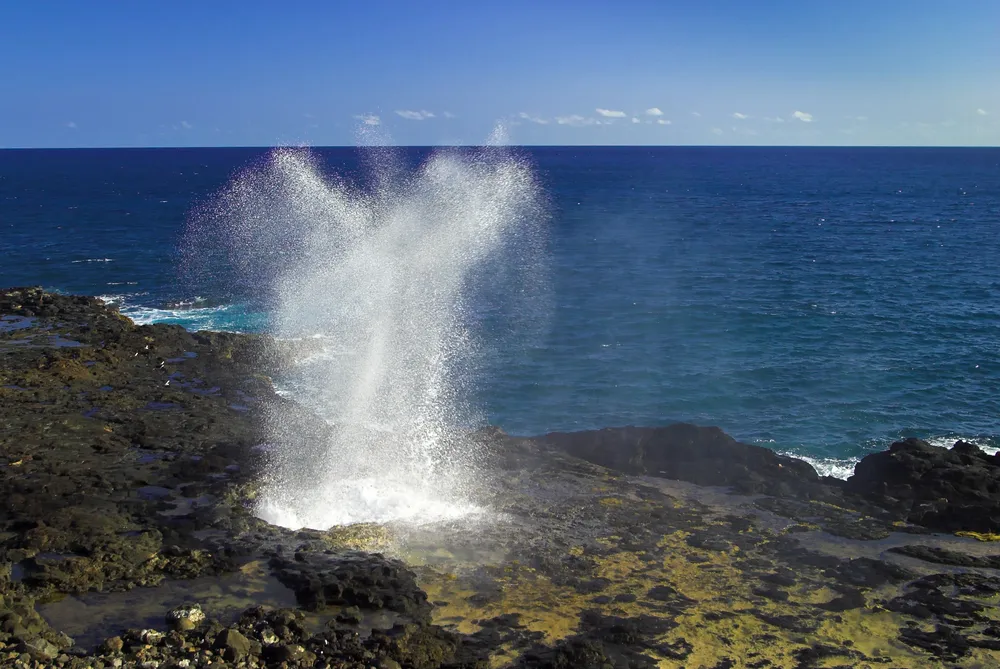
Time your arrival at Spouting Horn for the golden hour before sunset. This gives you the best light for photography and the most dramatic visual experience. Spend time at the viewing area, listening to the rhythm of the spout and watching for the rainbows that form in the mist.
Visit the local artisan market and consider the Weekly Aloha Market if you're there on a Thursday. Supporting local artists and farmers is an important part of traveling with aloha.
Evening: Beach Time and Sunset
End your day at one of the nearby beaches. If you have small children, Poipu Beach Park is perfect. If you're looking for better snorkeling, try Lawai Beach. For the most dramatic sunset views, consider walking out to the end of the breakwater at Koloa Landing.
As the sun sets over the Pacific, you'll have experienced a full day that encompasses the geological, cultural, historical, and natural beauty of Kauai's South Shore.
Weather Patterns and Seasonal Changes
Understanding Kauai's weather patterns can help visitors optimize their Spouting Horn experience and better appreciate the natural forces at work.
Trade Wind Patterns
Kauai's famous trade winds play a crucial role in both the island's overall weather patterns and the specific conditions at Spouting Horn. These northeasterly winds, which blow consistently for much of the year, help moderate temperatures and can influence wave patterns along the South Shore.
When trade winds are strong, they can create choppy conditions on the water's surface, which may affect the appearance of the spout. However, they also help clear the air, often providing excellent visibility for photography and whale watching.
Seasonal Swell Patterns
The most dramatic displays at Spouting Horn typically occur during the summer months when large south swells are most common. These swells originate from storms in the Southern Hemisphere and can travel thousands of miles across the Pacific before reaching Kauai's South Shore.
Winter months tend to bring larger north swells, which primarily affect the island's North Shore. While this can mean smaller spouts at Spouting Horn, it's also the season when humpback whales are present in Hawaiian waters, adding a different dimension to the viewing experience.
Rainfall and Visibility
Kauai's South Shore is generally drier than other parts of the island, making it a reliable destination even during the winter rainy season. However, brief passing showers are common year-round and can create dramatic lighting conditions for photography.
The interplay between sun and rain often creates ideal conditions for rainbow formation in the mist from Spouting Horn. Some of the most spectacular photographic opportunities occur when brief showers pass through the area, creating dynamic sky conditions and enhanced rainbow displays.
☀️ Summer (May-September)
- • Largest south swells
- • Most dramatic spouts
- • Best snorkeling conditions
- • Warmer water temperatures
- • Less rain overall
🐋 Winter (October-April)
- • Humpback whale season
- • Smaller south swells
- • More frequent rainbows
- • Occasional passing showers
- • Excellent whale watching
Connecting Spouting Horn to Other Natural Wonders
Spouting Horn's story connects to natural phenomena found throughout the Hawaiian Islands and around the world, helping visitors understand their place within larger geological and ecological systems.
Other Hawaiian Blowholes
While Spouting Horn is perhaps the most famous and accessible blowhole in Hawaii, similar features can be found on other islands. The Halona Blowhole on Oahu and various blowholes along the volcanic coasts of the Big Island demonstrate how common these features are in volcanic island environments.
Each blowhole has its own unique characteristics based on the specific geological conditions where it formed. Comparing different blowholes helps illustrate the variety of ways that volcanic rock and ocean waves can interact to create these spectacular displays.
Volcanic Features Worldwide
The volcanic processes that created the lava shelf at Spouting Horn are similar to those found at volcanic islands and coastal areas worldwide. From the basaltic coastlines of Iceland to the volcanic islands of the Azores, similar interactions between volcanic rock and ocean waves create comparable features.
Understanding these global connections helps visitors appreciate both the uniqueness of the Hawaiian environment and its connections to geological processes operating worldwide.
Marine Erosion Processes
The erosional processes that carved out Spouting Horn's lava tube system operate along coastlines worldwide. From the limestone coasts of Australia to the sandstone cliffs of California, the fundamental process of wave action gradually wearing away rock creates similar features in different geological settings.
The Enduring Mana of Spouting Horn
Spouting Horn is more than just a stop on a map or a checkmark on an itinerary. It's a place where you can feel the island breathe. It's where the fiery heart of the Koloa volcanics meets the relentless power of the Pacific. It's where the voice of Kaikapu still roars in the wind and waves. It's a place of mana—of spiritual power that connects you to the deep history of this land.
The experience of standing at Spouting Horn—feeling the ground tremble with each surge, hearing the ancient hiss and roar, watching the spray catch the light in momentary rainbows—connects us to something much larger than ourselves. It's a reminder that we are part of a living planet, that the forces that created these islands continue their work today.
"Every time you hear that ancient roar, you're hearing the voice of Kaikapu, still calling from her rocky prison. You're hearing the breath of the island itself, the rhythm that has marked time here for thousands of years."
Conclusion: The Eternal Voice of Kauai
So when you visit, come with an open heart. Listen for the hiss, wait for the roar, and let the magic of Kauai wash over you. Admire its power from a safe distance, support the local artists who share their talents nearby, and explore the incredible beauty of the surrounding coast.
The story of Spouting Horn is ultimately a story about connection—the connection between volcanic fire and ocean power, between ancient legends and modern understanding, between the forces that built these islands millions of years ago and the waves that shape them today. It's about the connection between Native Hawaiian culture and the land that sustained it, between scientific knowledge and spiritual wisdom, between the individual visitor and the larger community of all those who have stood in this place and felt its mana.
Every time you hear that ancient roar, you're hearing the voice of Kaikapu, still calling from her rocky prison. You're hearing the breath of the island itself, the rhythm that has marked time here for thousands of years. You're hearing a sound that connects you to everyone who has ever stood in this place—from the first Polynesian voyagers who arrived centuries ago to the Hawaiian families who fished these waters for generations, from the plantation workers who carved out new lives on these shores to the visitors from around the world who come seeking beauty and connection.
By visiting with respect and a sense of wonder, you become part of its continuing story, helping to preserve its magic for generations to come. The roar of Spouting Horn will outlast us all, but the memories we create here, the respect we show for this sacred place, and the care we take to protect it will determine whether future generations can experience the same awe and wonder that draws us here today.
This is the eternal voice of Kauai—powerful, ancient, and enduring. It speaks to something deep within us, reminding us of our place in the natural world and our responsibility to care for the places that move our souls. Listen closely, and you'll hear not just the sound of water and air, but the heartbeat of the island itself, still strong, still singing, still calling us home to the power and beauty of these sacred Hawaiian shores.
Mahalo for Exploring Spouting Horn
May your visit be filled with wonder, respect, and the spirit of aloha.
📋 Full Day Itinerary
- MorningKoloa Heritage Trail
- MiddayBotanical Gardens tour
- AfternoonSpouting Horn (golden hour)
- EveningBeach & sunset
📅 Best Months
- Big Spouts May-Sep
- Whale Watching Dec-May
- Rainbows Winter showers
- Snorkeling May-Sep
✓ Packing Checklist
- Camera & tripod
- Reef-safe sunscreen
- Water & snacks
- Hat & sunglasses
- Tide chart app
- Cash for artisan market