Spouting Horn Kauai: Ancient Legends Meet Ocean Power
Where volcanic fire meets Pacific fury—experience Kauai's most dramatic natural spectacle

Written by a Local Kauai Expert
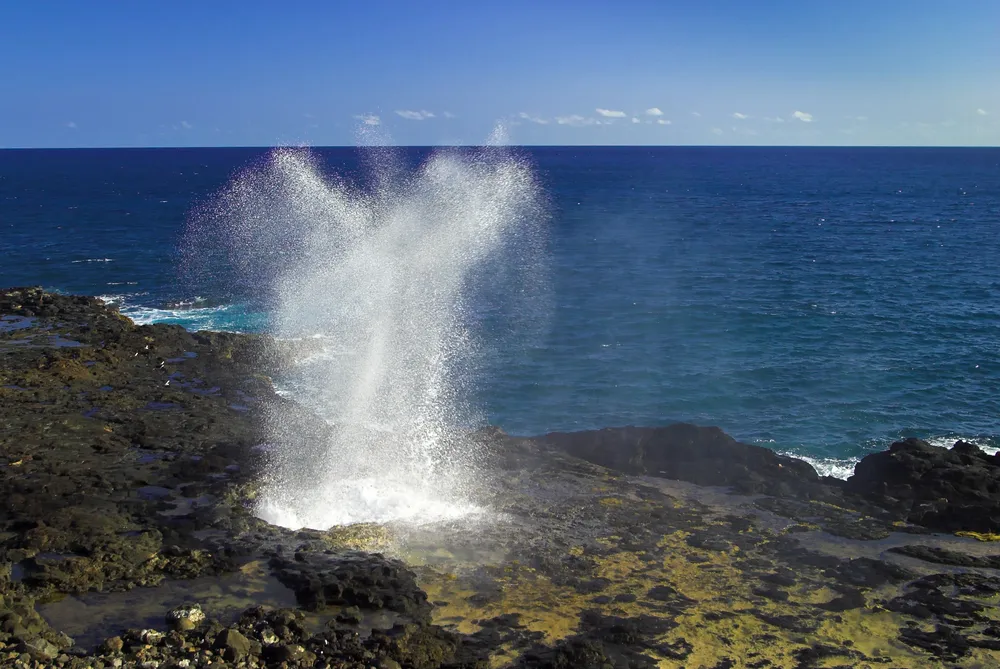
Kalani MillerThe first time you experience Spouting Horn, you don't just see it—you feel it. I remember being a kid, standing at the lookout on the South Shore, and feeling the ground tremble just a little. First comes the hiss, a deep breath drawn by the ocean itself. Then, the roar. It's a sound that feels ancient, primal. It's the voice of Kauai, a powerful reminder that this island is alive, breathing with the rhythm of the tides.
With every surge of the Pacific, a plume of seawater erupts from the lava rock, sometimes reaching as high as 50 feet into the air, catching the sunlight in a fleeting rainbow. As someone who's spent my whole life on these islands, I'm drawn to places where nature's power and beauty are on full display. Spouting Horn is one of those special places.
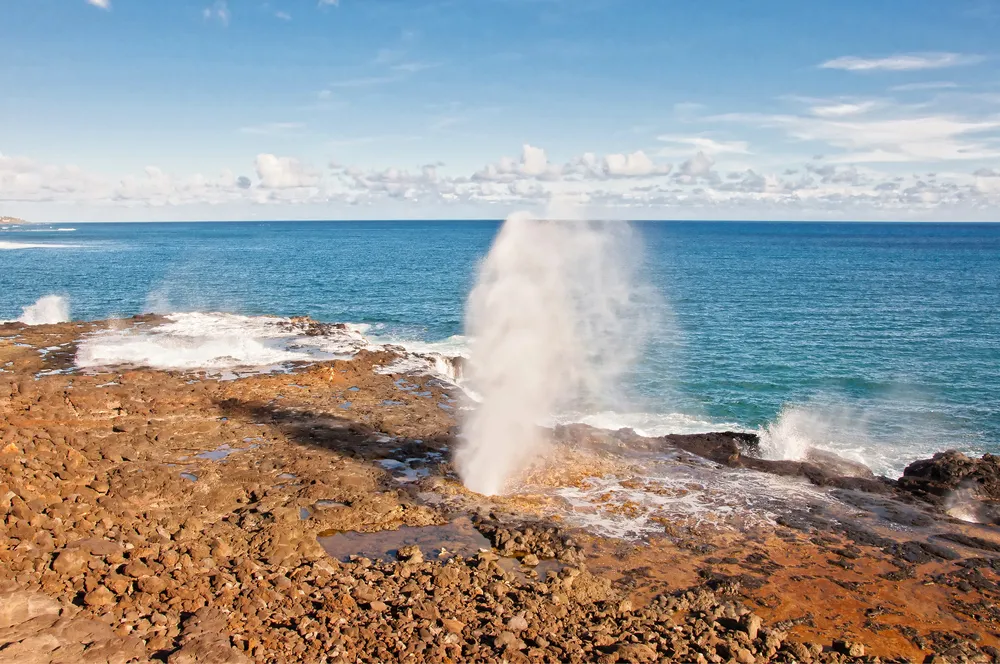
It's a spectacle of raw geology, a testament to the volcanic forces that built these islands and the relentless ocean that continues to shape them. But it's also a place of deep legend, a stage for one of Kauai's most enduring stories. To truly understand Spouting Horn, you have to embrace both sides of its identity: the scientific marvel and the mythological soul.
The Legend of Kaikapu: A Deep Dive into the Moʻo of Poipu
Every hiss and groan that echoes from the lava rock at Spouting Horn tells a story. It's a moʻolelo—a legend passed down through generations—that gives this place its spiritual weight. This isn't just a tale of a monster; it's a story about bravery, respect for the ocean's power, and a guardian spirit who remains here to this day.
The Tale of Liko and the Lizard
According to the legend, this rugged stretch of coastline was once fiercely guarded by a giant moʻo named Kaikapu. Moʻo are powerful, shapeshifting reptilian deities, and Kaikapu was a formidable guardian. She was deeply territorial and was said to devour anyone who dared to fish or swim in her waters. The local people feared her, giving her domain a wide berth.
One day, a clever and courageous young man named Liko decided he would outwit the fearsome creature and reclaim the area for his people. He entered the water, and just as the legend foretold, Kaikapu rose from her lair to attack. But Liko was prepared. As the giant lizard lunged, he thrust a sharp stick into her mouth, injuring her. He then dove beneath the waves and swam into a submerged lava tube under the rock shelf.
The enraged and wounded Kaikapu pursued him, slithering into the narrow underwater cavern. Liko, knowing the passages well, navigated the tube and escaped through a smaller opening on the surface—the very blowhole we see today. The massive moʻo, however, was too large and became permanently trapped within the lava tube.
The legend says that the thunderous roar we hear with each crashing wave is the eternal cry of the trapped Kaikapu, and the dramatic plume of saltwater spray is the furious breath of the lizard, still trying to escape her rocky prison.
🐉 Guardians of the Water
Moʻo are ancient, powerful deities who can shapeshift between giant reptile and beautiful woman forms. They guard freshwater sources and can be revered ancestral guardian spirits.
📖 A Living Tradition
The story serves as a powerful cultural narrative that codifies the very real dangers of this coastline—an ancient form of risk management embedded in a memorable story.
The Science of the Spout: From Fiery Volcanoes to Ocean Power
While the legend of Kaikapu gives Spouting Horn its soul, the science of geology gives it its form. The dramatic display is the result of millions of years of volcanic creation and the relentless, patient sculpting of the sea. To understand the spout, we have to go back to the very formation of Kauai itself.
Birth of a Coastline: The Koloa Volcanics
Kauai is the oldest of the main Hawaiian Islands, the first to rise from the sea floor above the volcanic hotspot that birthed our entire archipelago. After the main shield volcano that formed the island fell dormant, and after a long period of erosion carved out its dramatic canyons and cliffs, volcanism on the island was not finished. A new, later phase of eruptions began, known as the Koloa Volcanic Series.
This "rejuvenated stage" of volcanism, which occurred between roughly 3.65 million and 150,000 years ago, laid down new layers of lava across the eastern and southern portions of the island, creating the coastal shelf where Poipu and Spouting Horn are located. These lavas were geochemically different from the island's original shield-building flows and included distinct rock types like olivine basalt, basanite, and nepheline basalt.
It was the creation of this specific lava shelf, with its unique patterns of cooling joints and layers of varying hardness, that set the stage for the formation of Spouting Horn. Without this specific geological chapter in Kauai's history, the landmark we see today would not exist.
How a Blowhole is Born
The creation of a marine blowhole is a masterclass in the power of marine erosion. The process begins with the constant force of ocean waves crashing against the Koloa Volcanics lava shelf. This is not a gentle lapping but a powerful assault of mechanical force and hydraulic pressure that can quarry away blocks of rock.
Over millennia, the waves exploit natural weaknesses, cracks, and joints in the lava rock to carve out an underwater sea cave, technically known as a littoral cave. As waves surge into this cave, they trap and compress a massive volume of air and water. This immense hydraulic pressure seeks a path of release. If it finds a weak point in the roof of the cave, it will begin to force its way upward, slowly eroding a vertical shaft towards the surface.
Eventually, this shaft breaks through, completing the three-part system of a classic blowhole: the catchment entrance where the wave enters, the compression cavern where pressure builds, and the expelling port—the hole on top through which the spectacular spout erupts.
The Perfect Storm: Tides, Swells, and Sound
The height and power of the spout on any given day are not random; they are dictated by a precise combination of oceanic conditions.
Tides: The most dramatic displays occur during high tide. A higher water level allows the incoming waves to surge further into the lava tube with greater volume and force, resulting in a more powerful eruption.
Swells: The size and direction of the ocean swell are paramount. Spouting Horn is located on Kauai's South Shore, making it perfectly positioned to receive energy from large south swells. These swells are most common and powerful during the summer months, from roughly May through September. A winter visit with a north swell might result in a much less impressive show.
The Hiss and Roar Explained: The iconic sound that gives Spouting Horn its name is actually a two-part acoustic event. The deep, guttural "roar" is the sound of the main column of water being violently expelled from the primary opening. The preceding "hiss" is the sound of highly compressed air escaping through a network of smaller, secondary vents and fissures in the surrounding lava rock just before the main eruption. It is the sound of the pressure building to its breaking point—the breath of the ocean before it roars.
The Complete Visitor Experience at Spouting Horn Park
Spouting Horn is one of the most accessible natural wonders on Kauai, making it a perfect stop for everyone. With a little planning, you can time your visit to witness the most spectacular show possible. Here is everything you need to know for a perfect visit.
When to Go for the Best Show
Timing is everything at Spouting Horn. Depending on what you want to see, your ideal visiting time will change.
For the Most Powerful Spout: The key is to align two conditions: a high tide and a strong south swell. South swells are most frequent in the summer (May to September). Before you go, I recommend checking a local tide chart for Poipu and a surf report to see the swell size and direction. The combination of these two factors creates the towering 50-foot plumes the site is famous for.
For the Most Beautiful Photos: The magic light happens in the late afternoon, during the "golden hour" before sunset. The low-angle sun illuminates the mist from the spout, creating vibrant rainbows and casting dramatic shadows across the black lava rock. A Kauai sunset from this vantage point, with the sky ablaze in color behind the erupting spray, is an unforgettable sight.
For Whale Watching: From December through May, the lookout at Spouting Horn becomes a fantastic vantage point for watching migrating humpback whales. It's an incredible experience to see the spout of a whale in the distance, followed by the roar of the blowhole right in front of you.
For the ultimate experience, try to hit the trifecta: plan your visit on a winter afternoon with a good swell when the tide is high. You could be treated to a powerful spout, a beautiful sunset, and the majestic sight of humpback whales all at once.
Navigating the Site: Parking, Facilities, and Accessibility
Getting to Spouting Horn is straightforward.
Directions: From Koloa Town, head south on Poipu Road until you reach the main roundabout. Take the second exit, following the sign for Spouting Horn onto Lawai Road. Continue for about 2.5 miles, and you'll see the park on your left.
Parking: There is a large, free public parking lot right at the site, making access very convenient.
Facilities: The park is well-equipped with public restrooms, picnic tables, and benches in shaded areas, perfect for taking a break and enjoying the view.
Accessibility: Spouting Horn is very accessible. A short, paved pathway leads directly from the parking lot to the fenced viewing area, making it easy for visitors with wheelchairs, strollers, or mobility challenges to enjoy the spectacle safely.
The Spouting Horn Marketplace: Shopping with Aloha
Adjacent to the parking lot, you'll find a charming open-air market where local Kauai artisans sell their creations. This is a wonderful opportunity to find unique, handcrafted souvenirs like shell jewelry, wood carvings, and other local crafts while directly supporting the island's creative community.
For an even broader selection, I highly recommend the Weekly Aloha Market, which takes place every Thursday from 10 a.m. to 2 p.m. at the National Tropical Botanical Garden's South Shore Visitor Center, located directly across the street. Here you can find everything from fresh local produce, spices, and baked goods to clothing, art, and jewelry. As an added treat, there is often a free hula performance around 12:30 p.m., making it a fantastic cultural experience.
Explore Everything Spouting Horn Has to Offer
From photography tips to cultural history, safety guidelines to nearby attractions—discover the complete guide to Kauai's most dramatic natural wonder.
ℹ️ Quick Info
- Location: Poipu, Kauai
- Cost: Free
- Best Time: High tide
- Duration: 30-60 minutes
- Parking: Free lot
📅 Best Times to Visit
- Biggest Spouts High Tide
- Best Photos Golden Hour
- Whale Watch Dec-May
- South Swells May-Sep
🎒 What to Bring
- Camera with fast shutter
- Reef-safe sunscreen
- Hat and sunglasses
- Water bottle
- Tide chart (optional)