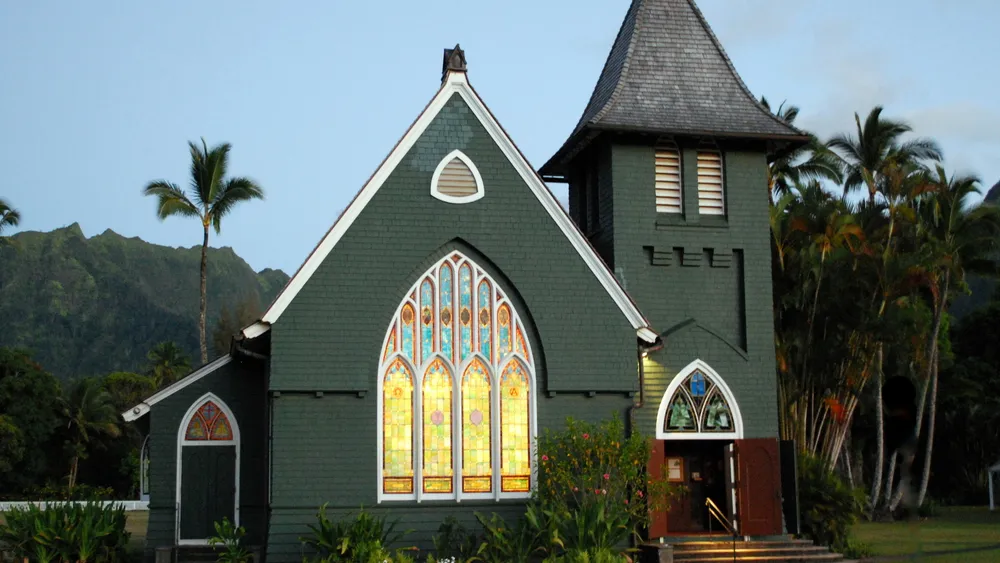
The Sacred Story of Waiʻoli Mission House and Church
Where two worlds collided on the shores of Hanalei, creating ripples that still shape our island today

Written by a Local Cultural Historian
Kalani MillerThe trade winds carry more than just the sweet scent of plumeria through Hanalei Valley. They carry stories—whispered tales of a time when two worlds collided on these shores, creating ripples that still shape our island today. When I stand in my backyard and look toward that iconic green steeple rising against the emerald cliffs, I don't just see a postcard-perfect church. I see the heart of one of Hawaiʻi's most complex and pivotal stories.
That green church, the Waiʻoli Huiʻia Church, and the white Mission House tucked behind it tell a tale that goes far beyond their serene beauty. This is a story of profound faith meeting ancient wisdom, of written words replacing sacred chants, of salvation intertwined with loss. It's the story of how Hanalei—and all of Hawaiʻi—was forever changed by the arrival of American missionaries in the 1800s.
Growing up here, I heard fragments of this story from my papa and other kūpuna. But it wasn't until I started digging deeper, talking to historians, and walking these grounds with fresh eyes that I understood the full weight of what happened here. This isn't just history. It's living memory, carved into the landscape and whispered by the wind.
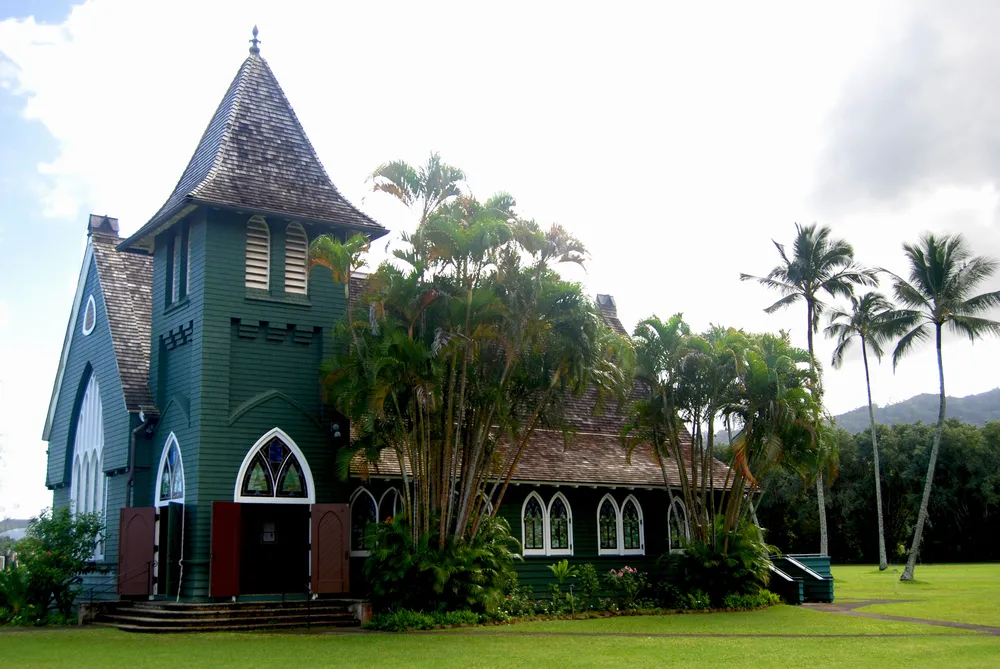
Before the Mission: A World in Perfect Balance
To understand what changed when the missionaries arrived, we need to step back and see what Hanalei was like before. This wasn't empty land waiting for development. This was home to a sophisticated society that had thrived here for over a thousand years.
The Hanalei Valley operated under the ahupuaʻa system—one of the most brilliant resource management systems ever created. Picture a wedge of land stretching from the mountain peaks down to the coral reefs. Each ahupuaʻa was designed so communities had everything they needed: timber from the uplands, fresh water from the streams, fertile soil in the valleys, and fish from the sea.
This wasn't just smart planning. It was a whole way of seeing the world. The ʻāina wasn't something you owned. It was something that owned you, that you belonged to, that you cared for like family. And at the center of it all was kalo—taro—growing in flooded fields that turned the valley floor into a shimmering patchwork of green.
For Hawaiians, taro wasn't just food. It was ʻohana. Our creation stories tell us that kalo grew from the first-born son of the sky father and earth mother, making it the elder brother to all Hawaiian people. This belief created a sacred bond between people and land that shaped every aspect of daily life.
The valley buzzed with activity. Fishermen worked the streams and coast. Farmers tended their taro patches. Craftsmen made tools and canoes from native woods. Children learned traditional skills and stories. The aliʻi provided leadership while the konohiki managed resources to ensure everyone had what they needed.
This was pono—perfect balance between people, nature, and spirit. It was a world that had sustained itself for centuries, adapting and thriving in harmony with the rhythms of the land and sea. But change was coming, carried on ships from distant shores.
New Arrivals: The Alexander Family's Journey
In 1831, a young couple named William and Mary Ann Alexander joined the fifth company of missionaries sent by the American Board of Commissioners for Foreign Missions. He was from Kentucky, she from Pennsylvania, and they shared an unshakeable belief that they were called to bring Christianity to what they called the "heathen" of the Sandwich Islands.
Their journey to Hawaiʻi was an ordeal that tested their faith before they ever began their work. They sailed from New Bedford on the whaleship Averick, enduring 173 days at sea as they rounded the treacherous Cape Horn. Mary Ann was pregnant during much of the voyage, giving birth to their first child shortly after reaching the islands.
The Alexanders first tried to establish a mission in the Marquesas, but that effort failed. In 1834, they were assigned to Kauaʻi's remote north shore—to a place the Hawaiians called Waiʻoli, meaning "joyful water."
They didn't arrive in a grand ship or formal ceremony. Instead, they traveled from the Waimea mission in a traditional double-hulled canoe, a fitting introduction to their new world. What they found was a thriving Hawaiian community that had already built a pole-and-thatch meetinghouse in anticipation of their arrival.
The mission's success depended entirely on Hawaiian support, particularly from two powerful figures. Deborah Kapule, the respected dowager Queen of Kauaʻi and an early convert to Christianity, championed the establishment of the mission. Governor Kaikioʻewa granted the land and offered official protection. These leaders saw strategic value in aligning with the missionaries, who brought knowledge of the written word and connections to increasingly influential foreign nations.
Building a New World: The Mission House Takes Shape
The Alexanders' first years in Hanalei were marked by hardship and determination. They lived in a leaky grass hut that rotted their floor mats. The first two churches they used for worship were destroyed—one by fire, another by a powerful storm. But they persevered, driven by their mission to translate the Bible into Hawaiian and convert the local population.
Frustrated with their crumbling shelter, the Alexanders decided to build a permanent home in 1836. What they created stands today as a remarkable symbol of cultural collision and cooperation. The design was distinctly American—a two-story, L-shaped house reminiscent of New England architecture, with influences from William's Kentucky background.
But the materials and labor were entirely Hawaiian. Under the Alexanders' direction, Hawaiian workers quarried sandstone from the mouth of nearby Waipā stream for the foundation. They harvested native timber like sturdy ʻōhiʻa wood from the mountains for the frame and floors. The iconic lava rock chimney—completely foreign to Hawaiian architecture—was built by William Alexander himself, stone by stone.
This fusion of American design with Hawaiian materials and labor created something entirely new. The house was completed in 1837, topped with an imported zinc roof that gleamed in the tropical sun. It was both a symbol of missionary determination and a testament to Hawaiian skill and generosity.
Explore the Full Story
Dive deeper into the history, cultural impact, and legacy of Waiʻoli Mission House and Church
ℹ️ Quick Info
- Location: Hanalei, Kauaʻi
- Built: 1837 (House)
- Church Built: 1912
- Tours: Tue, Thu, Sat
- Cost: By donation
- Phone: (808) 826-1528
🕐 Visiting Hours
- Mission House Tours By appt
- Church Open 9am-2pm
- Sunday Service 10:00am
📝 What to Know
- Call ahead for tours
- Dress modestly
- Respect active worship
- Street parking only