Plan Your Visit
Experience Grove Farm's Living History

Written by a Local History Expert
Kalani MillerA Journey Through Time: Walking the Grove Farm Grounds
A visit to Grove Farm is an unhurried, two-hour journey into the past, led by passionate docents, many with their own plantation roots. The experience is intentionally intimate, with small tour groups allowing for personal stories and quiet reflection.
Your journey begins as you turn off the busy Nawiliwili Road and onto the property. You'll park and follow a simple path through guinea grass to the historic plantation office, the first building on your right, to check in for your tour. The noise of the modern world fades, replaced by the rustle of trees and the sense that you are stepping across a threshold into another time.
The Wilcox Main House: A Home Frozen in Time
The centerpiece of the homestead is the main house, a beautiful example of evolving architecture. The original structure is a single-story, hipped-roof building dating to the 1850s, predating the Wilcox ownership. In 1915, George N. Wilcox commissioned noted Honolulu architect Clinton B. Ripley to design a grand, two-story Colonial Revival addition. This new wing, with its stately porte-cochère and entryway, reoriented the home and gave it a new sense of dignity and grandeur.
Stepping inside is like entering a perfectly preserved photograph. The air is cool and still. Your eyes are immediately drawn to the rich, gleaming floors and wainscoting made from native koa wood. The rooms are filled with original period furniture, family heirlooms, fine oriental rugs, and a remarkable collection of Native Hawaiian artifacts, including hand-carved calabashes. In the living room, a lava-rock fireplace stands as a testament to the use of materials found on the island, while an 1861 grand piano hints at evenings filled with music and entertaining.
The house tells the story of a family that valued both comfort and culture. Original artwork adorns the walls, including pieces by Hawaiian artists that reflect the family's appreciation for their adopted home. The library contains volumes that reveal the intellectual interests of the Wilcox family, from engineering texts to works of literature and Hawaiian history.
Each room has been maintained exactly as it was when the family lived there, down to the personal items left on dressing tables and the books open on reading tables. This attention to detail creates an almost eerie sense of presence, as if the family had just stepped out for a walk and might return at any moment.
The Heart of the Home: The Kitchen
For many visitors, the highlight of the tour is the kitchen. This is not a sterile exhibit. It is a living space. A massive 1904 oven and a wood-burning stove are still in use today. Here, you are invited to sit at a long wooden table and are served refreshments—often mint iced tea from the garden and fresh-baked sugar cookies—just as guests of the Wilcox family would have been over a century ago. The docents, like the beloved cook Paula Rosa who knew Miss Mabel personally, share stories and anecdotes that make the history palpable. It is in this warm, fragrant space that the homestead truly feels like a home.
The kitchen reveals the self-sufficient nature of plantation life. Shelves lined with preserve jars show how the family processed the abundance from their gardens and orchards. Cast-iron pots and wooden utensils speak to the practical nature of cooking in an era before modern conveniences. The large table served not just for food preparation but as a gathering place where family and workers alike would share meals and stories.
The Homestead Grounds: A Self-Sufficient World
The tour then takes you through the sprawling grounds, which paint a vivid picture of the plantation's social hierarchy and self-sufficiency. You'll visit George N. Wilcox's private cottage, a quiet retreat filled with his personal library and collection of straw hats. This stands in stark contrast to the simple, humble dwelling of Kikunyo Moriwaki, the Japanese laundress who served the family for five decades. Seeing these two homes, just a short walk from one another, powerfully illustrates the different worlds inhabited by the owner and the worker.
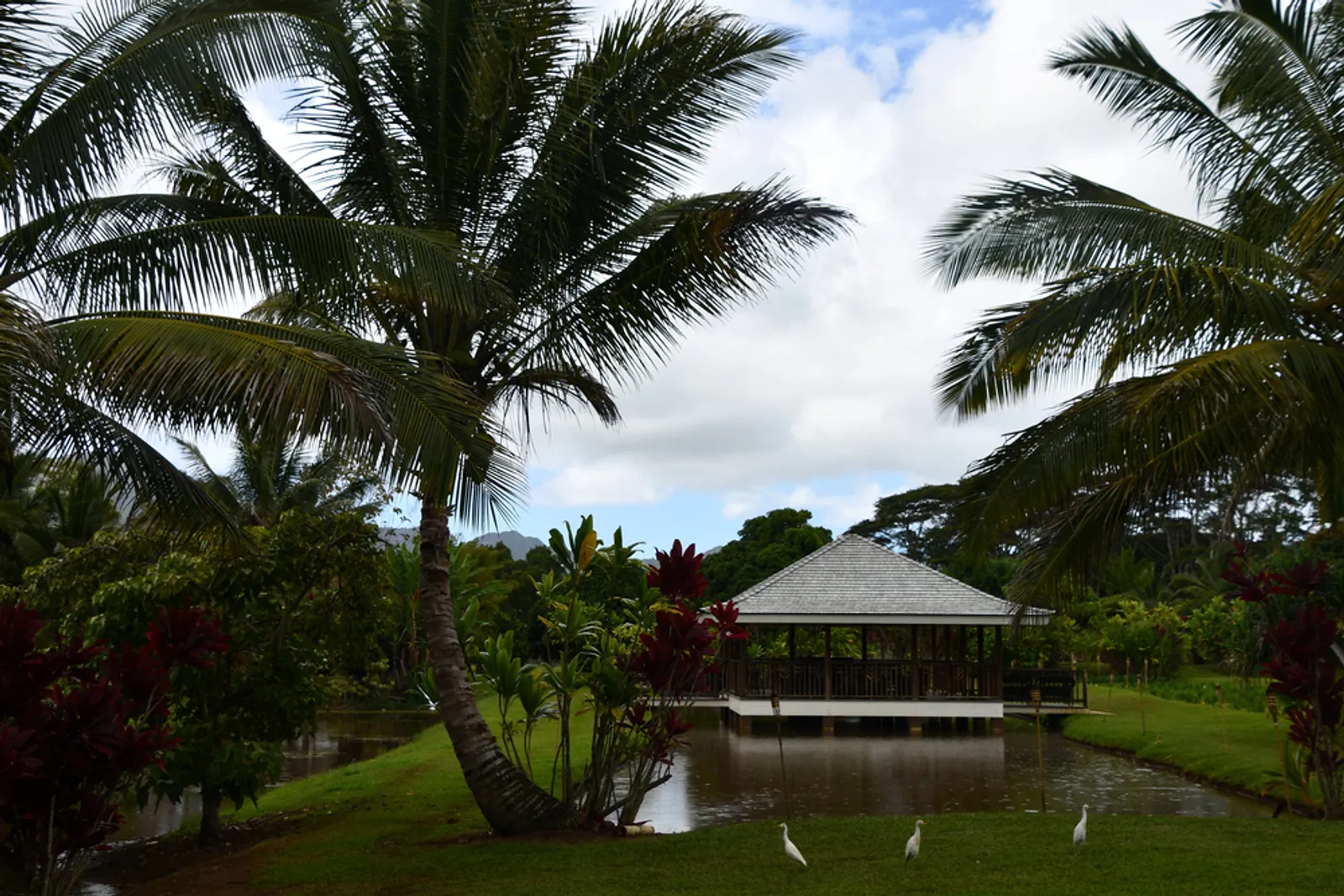
You'll wander past the serene Japanese teahouse, built in 1898, a testament to the aesthetic influence of the plantation's Japanese workers. The structure reflects the adaptation of traditional Japanese architecture to the Hawaiian climate, with modifications to accommodate the island's weather patterns while maintaining the peaceful essence of a traditional tea ceremony space.
The grounds include a lush fernery, extensive orchards heavy with mango, papaya, and macadamia nuts, and animal pens that once housed pigs, chickens, and ducks—all part of the system that made the homestead a self-sufficient world. The gardens showcase plants from around the world, reflecting the global connections of the plantation era and the diverse agricultural knowledge brought by immigrant workers.
The Age of Steam: Grove Farm Locomotives
A final treat for visitors, especially those with an interest in industrial history, is the museum's historic train collection. Grove Farm was the last plantation on Kauaʻi to use steam engines to haul cane, and the museum, in conjunction with the Waioli Corporation, preserves the largest collection of operating Kauaʻi sugar plantation steam locomotives in Hawaiʻi. The collection includes four engines, most notably "Paulo," a German-built locomotive from 1887, the oldest surviving plantation engine in the state.
On the second Thursday of each month, the museum hosts a free "Train Day," firing up one of the vintage engines for a 45-minute ride on restored cane cars along a stretch of original 19th-century track. It's a noisy, thrilling, and unforgettable trip back to the era when steam was king. The sound of the whistle echoing across the fields and the rhythmic chuff of the engine create an authentic connection to the industrial heritage of the plantation era.
A Legacy of Preservation: The Vision of Mabel Wilcox
That Grove Farm exists today in this pristine, living state is due to the foresight and determination of one woman: Mabel Isabel Wilcox (1882-1978). While her uncle George built the plantation, it was Mabel who saved its soul. More than just an heiress, she was a true pioneer.
Defying the conventions of her time and the wishes of her family, Mabel pursued a career in nursing, graduating from Johns Hopkins and becoming one of Hawaiʻi's first registered nurses. Her life was one of relentless public service. She returned to Kauaʻi to establish the island's first public nursing services, spearheading the campaign against tuberculosis, a dreaded disease at the time. Her efforts were instrumental in the founding of two of the island's most important healthcare institutions: the Samuel Mahelona Memorial Hospital and the G.N. Wilcox Memorial Hospital. During World War I, she served with the American Red Cross in France and Belgium, earning decorations for her bravery and compassion in caring for refugee women and children.
In her later years, Mabel turned this same passion and energy toward historic preservation. In the early 1970s, as development pressures grew, she made the pivotal decision to purchase the Grove Farm homestead to save it from being subdivided and lost forever. Her vision was not to create a static, roped-off gallery of antiques. Her philosophy was to create a "living museum," a place where the daily household and agricultural routines of the 19th century would be actively maintained, keeping the spirit of the place alive. She understood the importance of the complete story, preserving everything from the fine art in the main house to the humble pay ledgers of the plantation workers in the office archives.
To ensure this legacy would endure long after she was gone, Mabel Wilcox established the Waioli Corporation in 1975. This non-profit organization became the perpetual steward of Grove Farm, as well as the family's ancestral Waiʻoli Mission House in Hanalei and other historic properties. It was her ultimate act of philanthropy, a gift of history to the people of Kauaʻi and all who visit, ensuring these irreplaceable stories would never be forgotten.
Planning Your Visit to Grove Farm
A visit to Grove Farm is a rewarding experience, but it requires a bit of planning. The museum operates on a limited schedule to preserve the intimate nature of the tours and protect the historic buildings from excessive wear.
📍 Location & Contact
Address:
4050 Nawiliwili Road
Lihue, Kauai, Hawaii 96766
Phone: (808) 245-3202
Website: grovefarm.org
🕐 Tour Schedule
Days: Monday, Wednesday, and Thursday
Times: 10:00 AM & 1:00 PM
Duration: Approximately 2 hours
Type: Guided walking tour
💵 Pricing
Adults: $20
Children (5-12): $10
Kamaʻāina (with ID):
$10 adult / $5 children
(suggested donation)
📅 Booking
Reservations: Required
Tours are popular and fill up quickly, especially during peak tourist seasons.
Book well in advance to secure your spot.
🎒 What to Bring
- Comfortable walking shoes (essential)
- Hat for sun protection
- Sunscreen for outdoor portions
- Camera (no flash inside buildings)
- Water bottle
- Respectful attitude
Note: The tour involves walking on unpaved paths and uneven ground. Photography is allowed, but no flash inside the historic buildings to protect artifacts.
🚂 Special Event: Train Day
Don't miss Train Day on the second Thursday of each month, when visitors can ride the historic plantation locomotives for free. These events are extremely popular and require separate reservations.
- • 45-minute ride on restored cane cars
- • Original 19th-century track
- • Operating steam locomotives
- • Free admission (reservation required)
Connecting Grove Farm to Hawaii's Broader Story
A visit to Grove Farm provides deep insight into the 19th-century agricultural history that shaped the islands, but it's part of a larger historical narrative that continues to unfold. To understand how plantation-era Hawaiʻi transitioned into the modern state, consider visiting other sites that tell different chapters of this story.
Pearl Harbor on Oʻahu marks the moment that thrust Hawaiʻi onto the world stage and forever changed the course of history. The events of December 7, 1941, represent a pivotal transition from the territorial period dominated by plantation agriculture to statehood and modern development.
For those wishing to explore plantation history further, the University of Hawaiʻi at Mānoa Library holds extensive Hawaiian Sugar Planters' Association (HSPA) Plantation Archives, which include records from Grove Farm and other Kauaʻi plantations. These archives provide detailed documentation of daily plantation life, labor contracts, and the business operations that shaped Hawaiian society.
On Kauaʻi itself, Grove Farm connects beautifully with other historical and cultural sites that offer a more complete picture of the island's heritage. The nearby Kilohana Plantation, developed by Albert Spencer Wilcox, provides another perspective on plantation life and has been converted into a shopping and dining destination that maintains its historical character.
The Enduring Significance of Grove Farm
As I walk away from Grove Farm, the scent of the red dirt always follows me. It's a reminder that this place is more than a museum. It is a memorial. It is a living testament to the kuleana of the Wilcox family, the ingenuity of George, the compassion of Mabel, and the civic leadership of Elsie. But even more, it is a monument to the thousands of unnamed people whose stories are written in the soil—the Hawaiians who first knew this land, the Chinese who pioneered the work, the Japanese who endured with gaman, the Portuguese who brought their families and music, and the Filipino sakadas, like my own ancestors, who fought for a better life and, in doing so, transformed Hawaiʻi forever.
Grove Farm stands as a bridge between past and present, helping visitors understand how the complex social dynamics of the plantation era continue to influence Hawaiian society today. The multicultural harmony that defines modern Hawaiʻi didn't emerge spontaneously. It was forged through decades of shared struggle, mutual accommodation, and gradual understanding between different ethnic groups thrown together by economic necessity.
The museum also serves as a reminder of the importance of historical preservation. Mabel Wilcox's foresight in saving Grove Farm demonstrates how individual action can preserve irreplaceable pieces of history for future generations. Her concept of a "living museum" continues to influence how historical sites around the world approach preservation and interpretation.
For many visitors, Grove Farm provides their first deep encounter with the complexity of Hawaiian history. The story it tells challenges simple narratives about colonialism and progress, revealing instead a nuanced tale of adaptation, survival, and transformation. The plantation system was undeniably exploitative, yet it also created the conditions for the unique multicultural society that makes Hawaiʻi special.
Preserving and understanding this history is a shared responsibility, for those of us lucky enough to call this island home and for those who visit with an open heart. Grove Farm doesn't just show you what Kauaʻi was. It helps you understand what Kauaʻi is.
The lessons of Grove Farm extend beyond its boundaries. The story of how diverse groups of people learned to live and work together despite language barriers, cultural differences, and economic inequality offers insights relevant to communities everywhere. The development of pidgin English, the sharing of food traditions, and the eventual emergence of a unified "local" identity provide a model for how societies can overcome division and create something new and beautiful from diversity.
Come, walk these grounds. Listen to the stories in the wind. Experience this vital piece of Kauaʻi's soul for yourself. You'll leave with more than just memories. You'll leave with a piece of our history in your heart, and a deeper understanding of how the past continues to shape the present in these beautiful islands we call home.
🗺️ Grove Farm Guide
The founding story
Plantation Life StoriesWorkers & community
You are here
📞 Contact Info
Address:
4050 Nawiliwili Road
Lihue, Kauai, HI 96766
Phone:
(808) 245-3202
Website:
grovefarm.org
🕐 Tour Schedule
Regular Tours:
Mon, Wed, Thu
10:00 AM & 1:00 PM
Duration:
Approximately 2 hours
Train Day:
2nd Thursday of month
Free (reservation required)
🔗 Related Sites
More things to do
Another Wilcox property
Hanalei, North Shore
💡 Visitor Tips
- Book well in advance during peak season
- Wear comfortable walking shoes
- Allow full 2 hours for tour
- Bring sun protection
- Ask docents questions